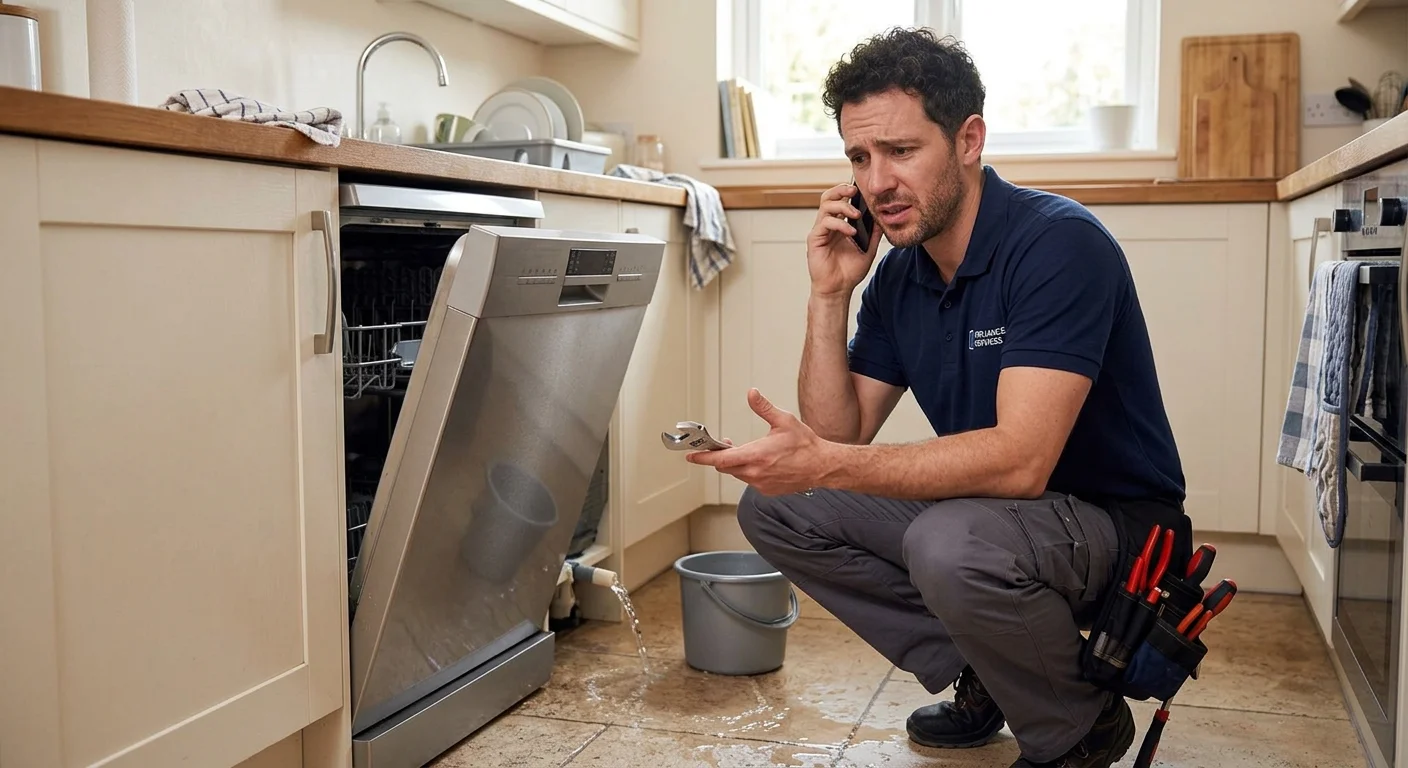
When an appliance breaks, it’s easy to panic. You rely on these machines daily, and a sudden malfunction can disrupt your entire household. The big question is: do you need immediate help, or can it wait until tomorrow?
The safety checklist: leaks, sparks, and gas smells
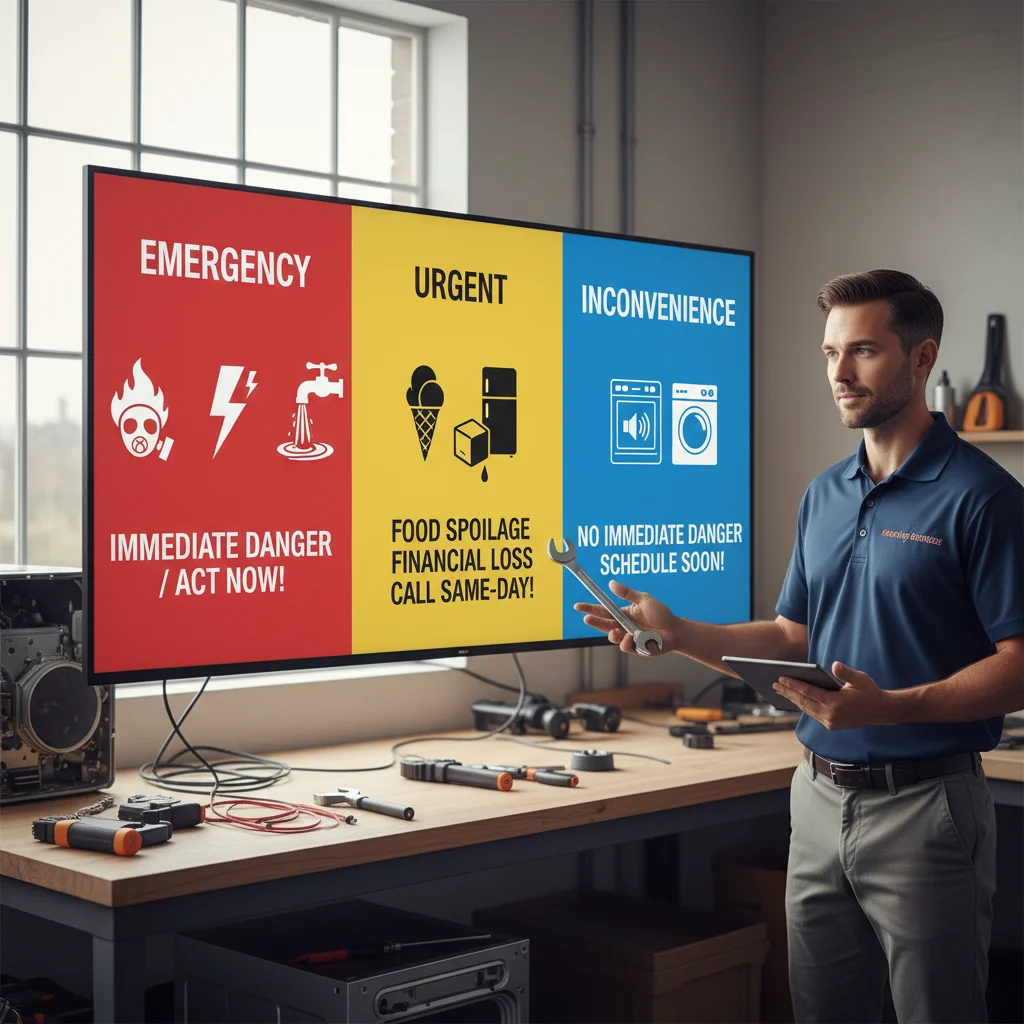
Some appliance problems go beyond inconvenience; they pose serious safety risks to your home and family. Knowing when a malfunction crosses into emergency territory can protect your property and even save lives. When you detect any of these issues, your first priority is always safety.
Gas leaks: the scent of danger
If you see, hear, or smell signs of a possible gas leak, leave the area immediately. From a safe location, call 911 or SDG&E at 1-800-411-7343. Do not use odor intensity to decide whether it is safe to stay, and do not delay the emergency call to request appliance service. This follows SDG&E’s gas-appliance safety guidance. After emergency authorities or the utility have addressed the hazard, use our gas range safety checklist when arranging any needed appliance service.
Electrical hazards: sparks, smoke, and strange smells
Electrical problems are another clear sign of an emergency. If you notice sparks, smoke, burning odors, or buzzing from an appliance, it’s critical. This could indicate a short circuit, faulty wiring, or overheating, all fire hazards. Unplug the appliance immediately if safe. If not, turn off the breaker connected to that appliance. Then leave a voicemail at (858) 988-7787 or use our emergency appliance repair page to request a match.
Water leaks: protecting your San Diego home
An uncontrolled water leak from an appliance like a washing machine, dishwasher, or refrigerator can quickly cause significant damage to your floors and cabinets. In San Diego, water damage is costly. If you see substantial water flow, turn off the water supply to the appliance immediately. For washing machines, use valves behind the unit. For others, you might need to turn off the main water supply. Unplug the appliance, then clean up the water to prevent mold. Our article on refrigerator leaking water offers more specific advice. Once contained, call us to fix the leak.
When it’s urgent: refrigerator not cooling, freezer thawing
While gas leaks and electrical fires are immediate threats, other appliance failures present a different urgency. These issues might not be a direct danger, but they can quickly lead to substantial financial loss, health risks, or major inconvenience. When these appliances fail, quick action is often needed.
Refrigerator not cooling: a race against time for your food
Your refrigerator is vital, especially in San Diego’s warm climate. If it stops cooling, the clock starts ticking on your groceries. Perishable foods spoil rapidly, leading to wasted food and potential foodborne illnesses. This impacts both finances and health.
To mitigate damage, keep the refrigerator door closed as much as possible. Transfer highly perishable items to coolers with ice. This buys you time. A non-cooling refrigerator is a definite candidate for urgent service.
Freezer thawing: preventing a costly mess
Similar to a failing refrigerator, a thawing freezer presents an urgent situation. A freezer full of food represents a significant investment. As items thaw, they can spoil and create a watery mess, damaging the freezer and surrounding floors.
If your freezer isn’t keeping things frozen, keep the door shut. Consolidate items into a smaller freezer or well-insulated cooler with dry ice. Both a non-cooling refrigerator and a thawing freezer demand timely attention to prevent health risks and financial losses. These situations qualify for prompt service.
When it’s an inconvenience (but not an emergency): noisy dishwasher, slow dryer
Not every appliance hiccup requires a frantic call. Many common issues, while annoying, don’t pose a safety risk or threaten significant property damage. These problems can typically wait for a scheduled service appointment.
A noisy dishwasher: more annoying than dangerous
Is your dishwasher making strange sounds (grinding, humming, or rattling)? While disruptive in an open-plan San Diego home, it’s rarely an emergency. Noise usually indicates a worn pump, motor, or foreign object. These should be fixed to prevent further wear and restore quiet, but they don’t demand immediate attention like a leak. You can still handwash dishes.
A slow or inefficient dryer: frustrating, but usually not urgent
A dryer taking multiple cycles wastes energy and time. Common culprits include a clogged lint trap, failing heating element, or vent obstruction. While a severely clogged dryer vent can become a fire hazard over time (leaning towards urgent), a simply slow dryer isn’t an immediate emergency. You can manage with longer cycles or air-drying until a technician performs dryer repair. Regular vent cleaning helps prevent bigger issues.
Other common non-emergencies:
- Ice maker not working.
- Oven light out.
- Range hood not ventilating well. Our guide on range hood not working offers basic troubleshooting.
- Minor cosmetic damage.
The key distinction is whether the issue presents immediate danger to life or property, or causes rapid, significant loss. If not, it’s an inconvenience for a regular appointment.
How we define an emergency service call
At Repair Pro San Diego, we understand that when an appliance breaks down, it feels urgent. This guide groups common problems by the risk they carry, so you can decide what needs attention today and what can wait. It is general information, not a dispatch ranking. Repair Pro San Diego does not dispatch or rank intake, and the matched technicians do the repairs, not us.
Our definition of an emergency:
An emergency service call typically involves situations that:
- Pose an immediate safety risk: Active gas leaks, electrical sparking/smoking, or any situation leading to fire, shock, or carbon monoxide. Your safety is paramount.
- Are causing or could cause significant property damage: Uncontrolled water leaks from washing machines, dishwashers, or refrigerators. Prompt intervention can save thousands.
- Create an imminent health hazard or major financial loss: A refrigerator or freezer that has completely stopped cooling. Food spoilage leads to health risks and substantial financial waste.
- Make an essential system unusable with no reasonable alternative: A complete oven/stove failure before a major holiday, or a washing machine malfunction for a large family with no other laundry options.
What an emergency call means for you:
When food, water, or fire risk is present, leave a voicemail at (858) 988-7787 to request a match. Repair Pro San Diego does not run after-hours dispatch or publish business hours. Ask the matched technician about after-hours rates.
What to do while you wait for a technician
Once you’ve identified your appliance issue and determined it needs professional attention, take these steps while you wait for an appliance repair technician. These actions prevent further damage, ensure safety, and help us diagnose the problem more efficiently.
1. Prioritize safety:
For gas, sparks, or significant water leakage, immediate action matters most.
- Gas: Evacuate, call the gas company.
- Electrical: Unplug if safe. Otherwise, turn off the circuit breaker.
- Water Leaks: Turn off the appliance’s water supply. If needed, turn off your home’s main water supply.
2. Contain and mitigate damage:
- Water: Mop up standing water immediately to prevent damage and mold. Place towels or buckets. The San Diego County Water Authority often shares tips on water conservation and leak prevention.
- Food: For a non-cooling refrigerator/freezer, transfer perishables to coolers with ice or a neighbor’s fridge. Keep appliance doors closed.
3. Gather information:
Have key details ready. Note the brand, model, and serial number. Describe what happened, when, and any sounds, smells, or error codes.
4. Clear the area:
Ensure the area around the broken appliance is clear of clutter. This allows technicians safe and efficient access.
5. Avoid unqualified DIY repairs:
Tempting as it is, complex DIY repairs can worsen problems, void warranties, or create new hazards. Stick to basic troubleshooting. Leave anything beyond that to certified professionals. Verify an appliance repair company’s registration via the California Department of Consumer Affairs lookup.
Frequently asked questions
What makes an appliance breakdown a true emergency?
Three situations need an immediate safety response: a suspected gas leak, electrical sparking or smoke, and an uncontrolled water leak spreading across the floor. For a suspected gas leak, leave the area immediately and call 911 or SDG&E from a safe location. Follow separate official guidance for electrical or water hazards.
Is a refrigerator that stopped cooling an emergency?
It’s urgent rather than a safety emergency, but it needs quick attention. Perishable food enters the danger zone above 40 degrees F within a few hours, so spoilage and potential foodborne illness are the real risks. Keep the door closed, move what you can to a cooler with ice, and call as soon as you can.
Can a slow dryer become a fire hazard?
A severely clogged dryer vent can, yes. Restricted airflow lets heat build up in the cabinet, which is a genuine fire risk over time. A dryer that’s simply slow or running multiple cycles is less urgent, but if the exhaust duct is partially or fully blocked, that crosses into urgent territory and should be cleared before the next use.
Do emergency appliance calls cost more?
Emergency dispatch, especially outside standard business hours, may carry a different rate than a scheduled appointment. That said, preventing a gas leak, major water damage, or a full refrigerator of spoiled food almost always outweighs the cost difference. The matched technician gives you a written quote before any work starts.
When to call us
Whether you’re facing a genuine appliance emergency or an irritating inconvenience, Repair Pro San Diego is here to help. The technicians in our network serve San Diego County. They diagnose and quote in writing. Efficiency and outcome are not promised. If you’re unsure how urgent your situation is, compare it against the risk groups in this guide; when in doubt, treat it as urgent. Call us at (858) 988-7787 to get matched with a local technician.