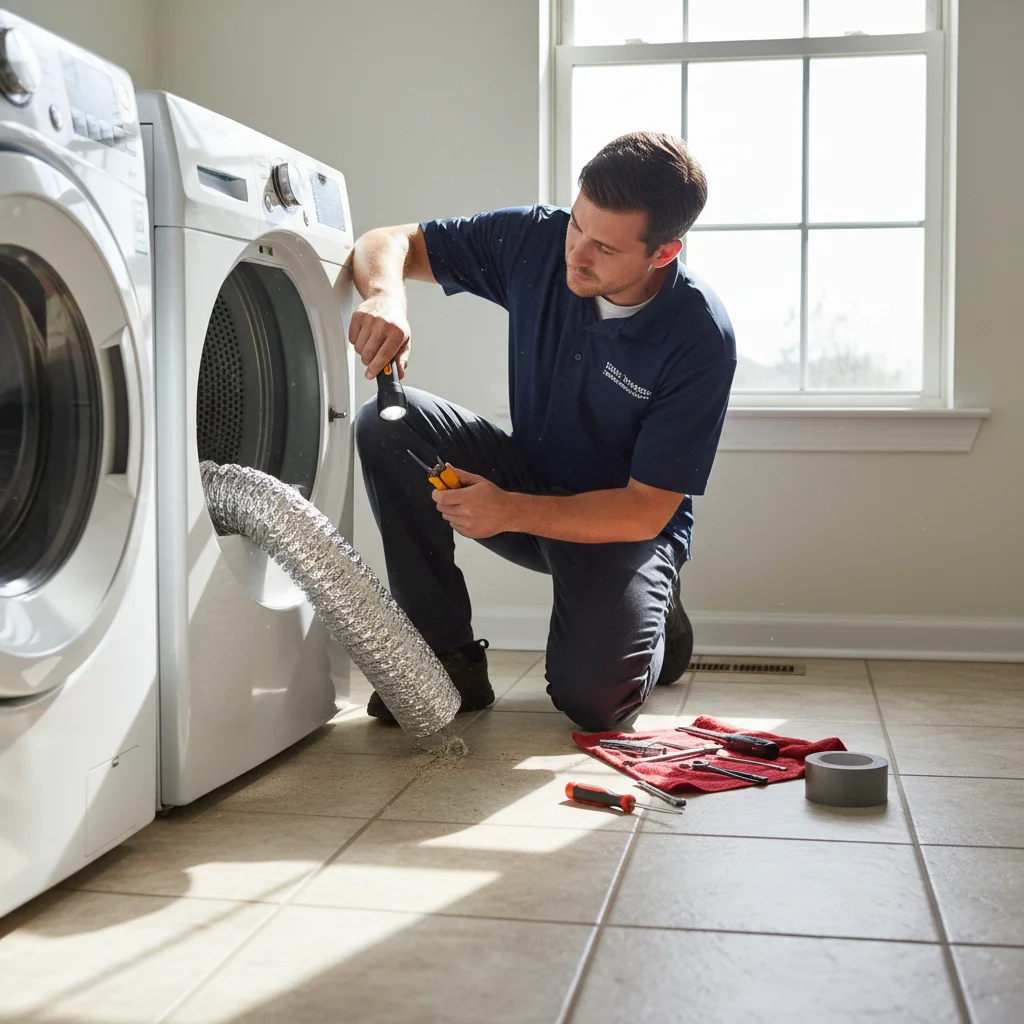
Your clothes came out soaking wet, again. Or maybe the dryer stopped mid-cycle and now smells faintly like burnt plastic. These aren’t signs to wait on; they’re signs to act on.
Dryer problems San Diego homeowners describe
San Diego homes run dryers hard. Coastal humidity means clothes don’t air-dry well on a marine-layer morning, so the dryer picks up the slack nearly every day of the year. Those uses show up as heat, noise, smell, or start faults. This page does not rank how often each one arrives.
No heat. The dryer runs, the drum turns, but clothes come out damp after a full cycle. This points to a failed heating element, a blown thermal fuse, or a tripped high-limit thermostat. It can also mean a blocked vent, more on that below.
Loud noise. A thumping, squealing, or grinding sound during the cycle usually means a worn drum bearing, a fraying drum belt, or a seized idler pulley. Left alone, any one of those turns a cheap repair into a far more expensive one.
Burning smell. This one warrants stopping the dryer immediately. Lint near the heating element is one possible source. It is also a fire hazard. If you smell burning, don’t run another cycle until a technician has cleared and inspected the machine and vent line.
Won’t start. A dryer that clicks but doesn’t run often has a broken door switch or a failed start capacitor. Both are defined part replacements after diagnosis. Same-visit completion is the provider’s availability, not a Repair Pro promise.
If you’re not sure which category your problem falls into, our dryer repair service page has a quick symptom guide that can help you narrow it down before you call.
Gas vs electric dryer repair (and why it matters in older neighborhoods)
San Diego’s housing stock is diverse in age. Neighborhoods like North Park, La Mesa, and Coronado have plenty of homes built decades ago. Those older properties often have gas lines already stubbed into the laundry area, which means gas dryers are common, even in houses that newer buyers assume are all-electric.
The repair distinction matters for a few reasons.
Gas dryers have an igniter, a gas valve coil set, and a flame sensor that electric dryers don’t. When a gas dryer stops heating, the fault is usually the igniter or one of the valve coils, not the heating element. A technician needs to confirm the gas type before quoting or sourcing parts.
Electric dryers, meanwhile, run on a 240-volt circuit. If the breaker is half-tripped (one leg of the 240-volt supply is live, the other isn’t) the drum will spin but there’s no heat. That looks exactly like a failed heating element, but the fix is a panel reset or an electrician, not a dryer part.
For homes in older San Diego neighborhoods, gas line integrity is also worth a quick inspection during any dryer service call. Flexible gas connectors degrade over time, and a corroded fitting in a 1960s laundry closet is the kind of thing that’s easy to miss and expensive to ignore.
Bottom line: always tell the technician whether your dryer is gas or electric when you book. It affects parts, tools, and safety protocol.
Heating element, thermal fuse, drum belt: inspection points
Those three parts are frequent inspection points. This page does not rank how often each one fails. Understanding them helps you describe what you see to whoever diagnoses the machine.
Heating element (electric dryers only). It’s a coiled resistance wire that generates heat when current passes through it. Over time, the coil develops a small break and the circuit opens. The result is zero heat. The part itself is inexpensive; labor brings the total repair to a moderate range depending on the brand.
Thermal fuse. Both gas and electric dryers have one. It’s a one-time safety device that blows if the dryer overheats, and it will not reset itself. Once it’s gone, the dryer won’t run or won’t heat, depending on where it sits in the circuit. A thermal fuse itself is an inexpensive part, but if it blew, something caused it to overheat. Replacing the fuse without clearing a restricted vent can send the next fuse out again.
Drum belt. It’s a long, thin belt that wraps around the drum and drives it from the motor. Belts crack and snap after years of heat cycling. When it goes, the motor runs but the drum sits still. Replacement is a technician job after diagnosis. Duration depends on the model and access.
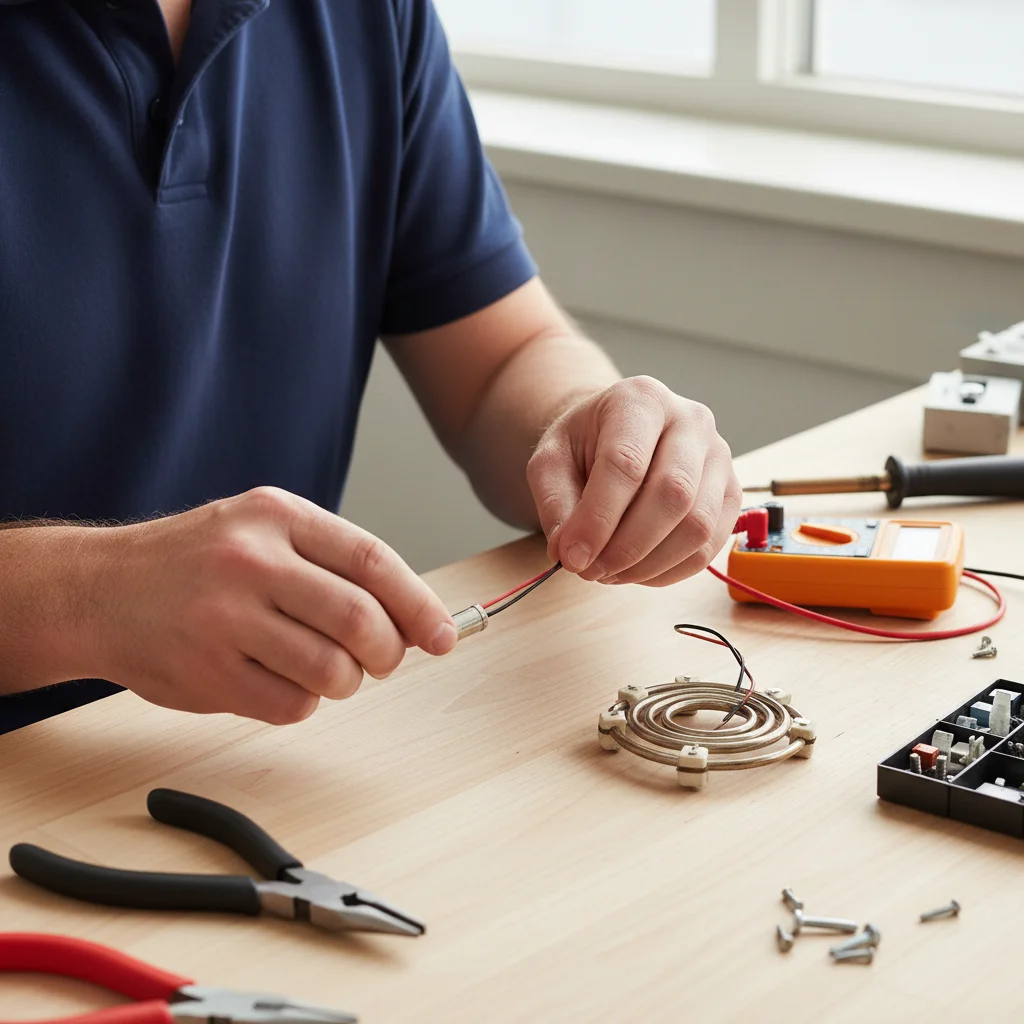
Idler pulleys and drum bearings wear out too, usually announcing themselves with noise before they fail completely. Catching them early saves the belt and the drum seal.
What drives the cost of a dryer repair here
Cost tracks with which part failed and how deep it’s buried. Here’s the rough order, cheapest to priciest, for common repairs:
- Thermal fuse replacement: among the least expensive fixes, parts and labor
- Door switch or start switch replacement: low cost
- Drum belt replacement: low to moderate cost
- Heating element replacement: moderate cost
- Gas igniter or valve coil replacement: moderate to higher cost
Ask the technician about their diagnostic fee and whether it’s credited toward the repair.
These rough rankings assume standard residential brands, Whirlpool, LG, Samsung, Maytag, GE. If you run an LG, our guide to common LG dryer problems covers the brand-specific faults and error codes seen most. High-end or less-common brands can push part costs up. Compare the written quote to a comparable new dryer. This site does not use a 50% replacement rule. Our post on when to repair or replace an appliance walks through that decision.
A thermal fuse, a belt, or a heating element can be an economical fix on a machine that otherwise still has useful life. Compare the written quote with replacement. There is no 50% replacement rule on this site.
When the vent (not the dryer) is the real problem
This is the section most online dryer-repair content skips, and it’s the most important one to read.
A clogged or restricted exhaust vent is one possible cause of a dryer that runs without heat. It is not a ranked share of San Diego calls. Lint builds up in the duct over time, restricts airflow, and the dryer overheats. The thermal fuse blows. The dryer stops. The homeowner assumes the dryer is broken.
Replace the fuse without clearing the vent, and you’re back to the same failure within a few weeks.
Coastal San Diego adds a specific wrinkle here. Marine-layer humidity makes lint in the duct retain more moisture, which causes it to pack more tightly than it would in a dry inland climate. Coastal laundry rooms can collect more lint in long or humid vent runs. Cleaning interval is not a city rule. Follow the maker guidance and have a technician inspect the full duct if heat or smell is off.
Longer runs, extra elbows, and a termination into a closed cabinet can restrict airflow. Those are risk factors to mention to the technician, not a published length or elbow limit from this page. Older homes in North Park and La Mesa sometimes have vent runs that were patched and extended over decades, a technician needs to trace the full path, not just clean the accessible section.
We’ve put together a detailed resource on this: our dryer vent safety guide covers owner-safe vent checks and when to request a technician. It’s worth a read before you assume your dryer itself needs parts.
If you see, hear, or smell signs of a gas leak near a dryer, leave the area immediately and call 911 or SDG&E at 1-800-411-7343 from a safe location. Do not delay that call to request appliance service. This follows SDG&E’s gas-appliance safety guidance. After the hazard has been addressed, our emergency appliance repair service can help with a repair referral.
Booking service across the county
We cover all of San Diego County, from Chula Vista and National City in the south to Escondido and San Marcos in the north, and from El Cajon and Santee in the east to the beach communities on the coast.
When you call, have your dryer’s brand and model number handy (usually on a sticker inside the door frame). That helps the matched technician look up the model. Parts on the truck are the provider’s, not a Repair Pro promise.
Frequently asked questions
Why does my dryer run but produce no heat?
On electric dryers, possible no-heat paths include a burned-out heating element, a blown thermal fuse, or a restricted vent that overheated the machine. Those are inspection points, not a ranked cause list. A technician confirms which one applies.
What causes a burning smell from a dryer?
Lint near the heating element is one possible source. It is also a fire hazard, so stop the dryer immediately and don’t run another cycle until a technician has cleared the machine and inspected the full vent line.
Why does my electric dryer spin but not heat even though the breaker looks fine?
A 240-volt electric dryer needs both legs of the circuit to generate heat. If one leg of the breaker is half-tripped, the drum will spin on the remaining power but there’s no heat. That looks exactly like a failed heating element, but the fix is a panel reset or an electrician, not a dryer part.
How much does a dryer repair typically cost in San Diego?
Cost depends on which part failed. A thermal fuse and a door or start switch are among the least expensive dryer repairs, a drum belt runs low to moderate, and a heating element or a gas igniter or valve coil cost more, since the part and labor run higher. Ask the technician about their diagnostic fee and whether it’s credited toward the repair.
When to call us
A dryer that won’t heat, makes grinding noises, or smells like burning isn’t a wait-and-see situation, lint near a heat source is a real fire risk, and running a struggling motor to failure turns a simple repair into an expensive one. A professional technician can diagnose the root cause, not just swap the part that failed downstream of it.
Running a laundromat, apartment complex, or gym instead of a house? See our commercial laundry repair guide for coin-op and card-reader machines.
Call us at (858) 988-7787 to get matched with a technician.