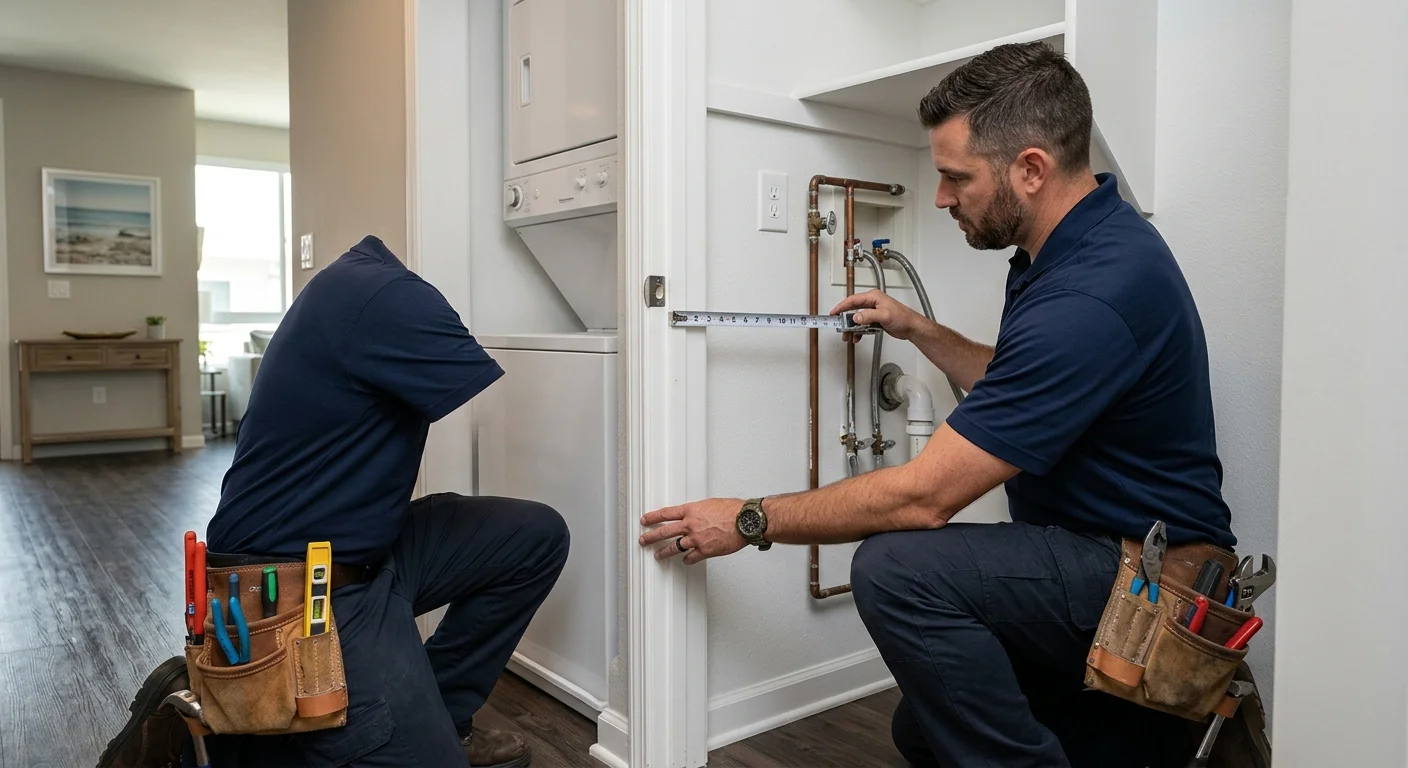
A ventless dryer can fit a condo without an exterior dryer duct. The exact model must still fit the space, delivery path, electrical connection, drainage setup, and building rules. Repair Pro San Diego can match you with an independent local professional who evaluates and performs the installation.
Decide whether a ventless dryer fits the space
“Ventless” only describes how the dryer handles exhaust. It doesn’t confirm that the appliance fits your closet or existing hookups. Heat pump, condenser, compact, and washer-dryer models can have different installation instructions.
Start with the complete model number. Download its current installation manual from the manufacturer. The sales-page dimensions aren’t enough. Installation documents may show separate measurements for the cabinet, door swing, hoses, cords, drainage, and required surrounding space.
Then compare those instructions with the condo itself. A downtown high-rise laundry cabinet may present different limits than a garage laundry area in Chula Vista. A coastal North County condo may have a narrow interior closet, while another unit has side-by-side machines behind folding doors. The address alone can’t answer whether a model fits.
Check these points before purchasing:
- The full appliance dimensions
- The required space around each side
- The dryer door’s direction and open position
- The location of controls and lint access
- The planned washer and dryer arrangement
- The outlet and drain positions
- The closet door’s closed position
Don’t assume removing an exhaust duct creates usable depth. An outlet, valve, drain, shelf, baseboard, or door trim can still interfere.
Our appliance installation and hookup service connects San Diego County homeowners with licensed, insured independent local technicians. The matched professional can compare your chosen model with the actual space. If you’re replacing a conventional machine, this gas and electric dryer guide can help organize the questions to ask.
Measure the closet, doorway, and delivery path
Measure more than the opening where the dryer will sit. A machine that fits the closet may not pass through the condo entrance, hallway, elevator, or laundry door.
Record the closet width, depth, and height. Measure each dimension in several places because walls, trim, and flooring may not be perfectly even. Note the narrowest measurement rather than the largest. Include door hinges, handles, shelves, utility boxes, and any raised threshold.
Next, map the full delivery path. Begin at the building entrance or loading area. Continue through every doorway, turn, corridor, elevator, and stair landing. In a Mission Valley complex, that path might begin inside a parking garage. In a UTC tower, it might include a reserved elevator. In a smaller Encinitas building, stairs or tight exterior walkways may control the route.
Photograph each tight point with the tape measure visible. Give those photos to the seller and installer. Also ask whether the machine’s door, packaging, or another removable part changes its delivery dimensions. The manufacturer or seller should confirm that for the exact model.
Don’t forget working room. The installer needs access to the connections and the appliance’s final position. Ask the matched professional how much space their installation process requires. Don’t move fixed shelves, doors, counters, or utility connections until the proposed work is reviewed.
If coastal conditions or an older laundry area are part of your decision, our guide to appliance service in Encinitas and Carlsbad explains why property details matter. Your model manual and an on-site assessment remain the final references.
Verify the model’s electrical and drainage needs
A ventless dryer doesn’t automatically match the outlet or drain already inside the condo. Verify every connection against the exact manufacturer’s installation manual. Similar-looking models can require different setups.
Photograph the receptacle, breaker label, drain, water connections, and back of the current machine. Don’t treat those photos as proof of compatibility. They give the installer a useful starting point. The matched professional must inspect the connections and compare them with the model’s requirements.
Ask these questions before booking:
- What electrical supply does this exact model specify?
- Does the existing receptacle match its approved cord and plug?
- Does the dryer collect water internally or support direct drainage?
- If it drains through a hose, where may that hose connect?
- Does the chosen configuration need any manufacturer accessories?
- Can the doors close without pressing against cords or hoses?
Some ventless models handle collected moisture differently from others. Don’t buy a drain kit, splitter, adapter, or extension based only on a retailer photo. Confirm the approved parts and arrangement through the manufacturer and installer.
If the current dryer uses an exterior exhaust duct, decide what happens to that opening. Ventless installation doesn’t make every existing duct problem disappear. Building management may have instructions for unused openings or shared building components. The dryer vent safety guide explains conventional vented setups, but it doesn’t replace property-specific direction.
Electrical, plumbing, cabinetry, or building alterations may fall outside the appliance installer’s scope. Ask who will handle each part before work begins. If another qualified trade is needed, get that answer before the dryer arrives.
Check building and HOA requirements before booking
No universal San Diego condo installation rule could be confirmed for every building and unit. Requirements may depend on the property, governing documents, proposed alterations, and responsible local authority. Building management is the right starting point for property-specific instructions.
Send management the exact model number and installation manual. Describe the current appliance and every proposed change. State whether the plan affects an outlet, drain, door, cabinet, exhaust opening, or shared area. Ask for a written response.
Your questions should cover:
- Whether an alteration request is required
- Which installer documents management wants
- Whether building access must be reserved
- Which delivery entrance and elevator may be used
- Whether protective coverings are required
- When installation work is allowed
- Whether management must inspect the completed setup
- Whether another local approval applies
Don’t rely on a neighbor’s installation as permission. The neighboring unit may have different hookups, ownership boundaries, appliance specifications, or prior approvals. A salesperson’s statement also doesn’t confirm your building’s rules.
San Diego County includes towers, courtyard complexes, converted buildings, and low-rise communities. Access procedures can differ even within the same neighborhood. Ask who controls the laundry closet’s electrical, drainage, and exterior components. If management says a permit or other approval applies, ask them to identify the responsible authority. Confirm the current requirement directly with that authority before booking alterations.
Keep the approval, model documents, installer information, and photos together. Share the same packet with the seller, delivery team, and matched professional. That reduces conflicting assumptions at the condo door.
What to ask the matched independent installer
Give the installer the exact model number, manual, measurements, photos, and written building instructions. Ask for a clear scope before accepting the job. Repair Pro San Diego makes the referral, while the independent professional evaluates the unit and performs any agreed installation.
Start with experience. Ask whether the professional has installed that dryer type and whether they can follow the manufacturer’s current instructions. A heat pump dryer installation shouldn’t be booked from the word “ventless” alone.
Clarify what the quoted scope includes. Relevant tasks may include delivery-path review, unpacking, placement, leveling, approved connections, control checks, and cleanup. Don’t assume removal of the old dryer, packaging disposal, cabinetry work, or alteration of existing utilities is included. Ask about each item separately.
You should also ask:
- Who confirms electrical compatibility?
- Who confirms the approved drainage arrangement?
- Will another qualified trade be needed?
- How will existing exhaust components be handled?
- Which building documents will the installer provide?
- What happens if the appliance doesn’t fit?
- What written warranty applies to the installer’s work?
- Who handles damage found before installation?
- What records will you receive after completion?
The independent technician controls their own scope, pricing, scheduling, and warranty terms. Repair Pro San Diego doesn’t set those terms or perform the work. You can check California professional records through the Department of Consumer Affairs lookup when applicable.
If the dryer later stops heating, turning, or completing cycles, our dryer repair service can match you with a local technician. Installation planning and fault diagnosis are separate tasks.
Ask for every exclusion in writing. The matched technician diagnoses first and quotes in writing before work begins.
When to call us
Call when your ventless dryer plan needs an on-site fit, hookup, or installation review from a licensed appliance professional. We match San Diego County homeowners with licensed, insured independent local technicians, while the matched pro evaluates and performs the work. Call (858) 988-7787 to leave a voicemail requesting a match with a local appliance repair pro.