Living on the North County coast is a dream. The ocean breeze, the sound of the waves, the sunsets, it’s what makes places like Encinitas and Carlsbad so special. But that same salty sea air you love is waging a quiet war on your home appliances, causing them to fail years earlier than they would just a few miles inland. We see this every single week.
A homeowner in Cardiff will call us about a three-year-old refrigerator that’s stopped cooling, while the exact same model in Escondido is still running perfectly after eight years. The difference isn’t the appliance; it’s the environment. The persistent, corrosive salt air is a unique challenge for coastal homeowners, and understanding how it works is the first step in protecting your investment.
Salt air and what it does to compressors, control boards, and metal trim
That refreshing ocean mist is a mixture of water and microscopic salt particles (mostly sodium chloride). When this mist settles on your appliances, it creates a highly conductive, corrosive film. This film accelerates a process called oxidation, you know it as rust. It doesn’t just affect the shiny exterior; it gets into the most critical and expensive components.
Here’s a breakdown of the parts we see fail most often from salt air appliance damage:
- Compressors and Condenser Coils: These are the heart of your refrigerator or freezer. Located at the back or bottom of the unit, they are constantly exposed to air. The salt film attacks the metal fins and copper tubing, causing them to degrade. This corrosion acts like an insulator, preventing the coils from releasing heat properly. Your compressor has to work harder and run longer to keep things cool, leading to premature burnout and a costly refrigerator repair bill.
- Electronic Control Boards: Modern appliances are packed with sensitive electronics. The circuit boards that control everything from your oven’s temperature to your dishwasher’s cycles are vulnerable. The salty, moist air can creep inside the appliance chassis, causing microscopic corrosion on solder points and electrical traces. This leads to short circuits, phantom error codes, and eventual total failure. A dead control board can often cost hundreds of dollars to replace.
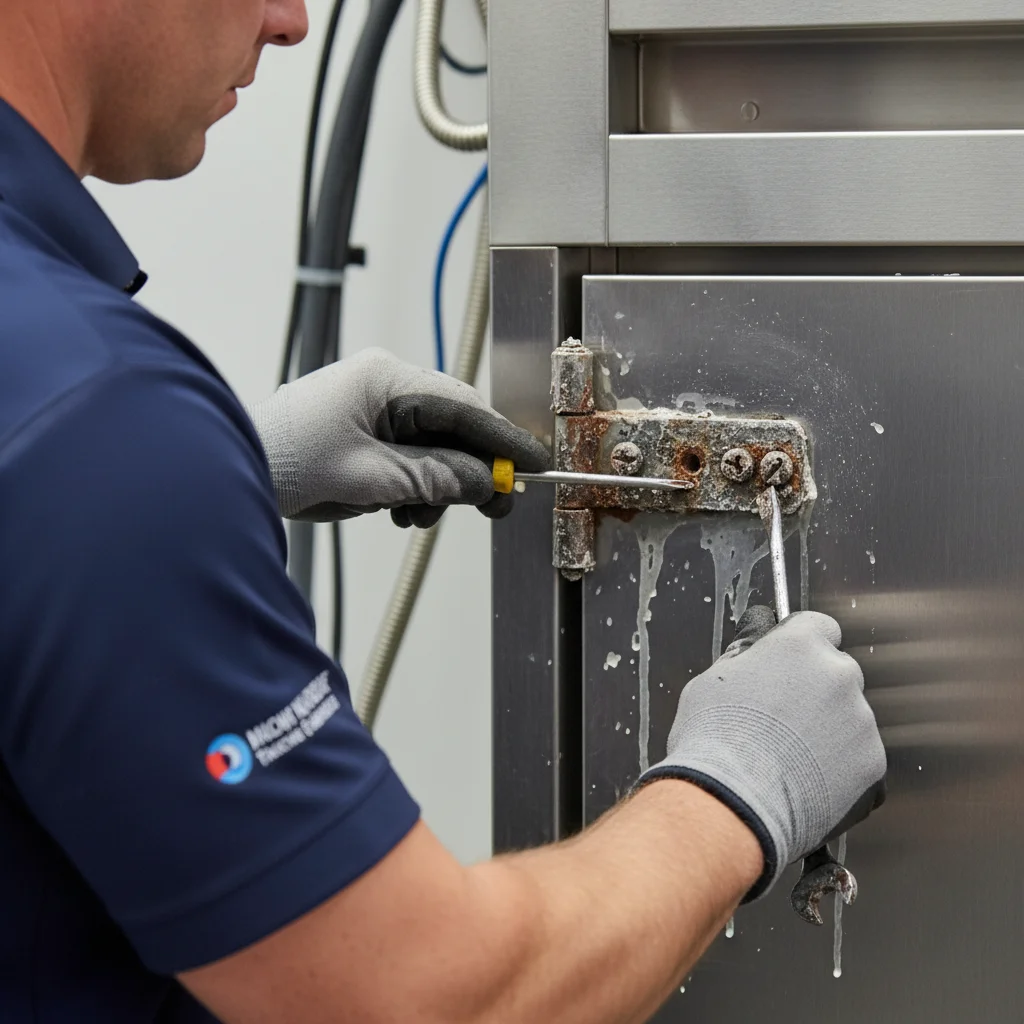
- Metal Trim and Hardware: This is the most visible damage. You’ll see it as little rust spots or “pitting” on your stainless steel dishwasher front, refrigerator handles, and oven trim. While stainless steel is rust-resistant, it’s not rust-proof, especially against the constant assault of chloride. Hinges can seize up, screws can corrode and fail, and what was once a sleek appliance begins to look old and worn out far too soon.
Which appliances fail first within a mile of the coast
Proximity to the ocean matters, a lot. We see a dramatic increase in corrosion-related failures for homes west of I-5, and the effect is even more pronounced for properties within a few blocks of the beach. Some appliances are simply more exposed or have more vulnerable components than others.
Here’s the typical order of failure we see in coastal Encinitas and Carlsbad homes:
- Refrigerators & Freezers: Their condenser coils are constantly circulating air, pulling in the salty atmosphere 24/7. Outdoor refrigerators and wine coolers in backyard kitchens are often the first to go, sometimes failing in just two or three years. Indoor units last longer, but their lifespan is still significantly shortened.
- Dishwashers: The combination of internal moisture from the wash cycles and external salt air is a brutal one-two punch. We frequently see corroded door latches, rusted-out dish racks, and failed control panels on units that should have years of life left.
- Washers & Dryers: Like dishwashers, they deal with internal moisture. But their metal drums, exterior casings, and especially the electronic panels are all susceptible to the salty air that drifts in through open laundry room windows or vents.
- Ovens & Ranges: The control panels are the main point of failure here. The sensitive electronics that manage temperature and timers are easily damaged by moisture and salt. We also see corrosion on gas burners, igniters, and the metal trim around the cooktop and doors.
The closer you are to the surf, the more aggressive you need to be with preventative maintenance.
The maintenance routine coastal homeowners should run twice a year
You can’t stop the ocean breeze, but you can fight back against its corrosive effects. A simple, consistent maintenance routine can add years to the life of your appliances. Think of it like washing the salt off your car; you have to do the same for your kitchen. We recommend performing this routine every six months, typically in the spring and fall.
This process complements the tips in our general guide to seasonal appliance maintenance in San Diego but with a specific focus on combating salt.
Your coastal maintenance checklist:
- Wipe Down All Exterior Surfaces: Use a soft cloth with a mild solution of soap and warm water to wipe down the entire exterior of your appliances. This includes the sides and back, not just the front. Pay special attention to handles, control panels, and trim.
- Rinse with Fresh Water: After cleaning, use a different cloth dampened with only fresh water to wipe everything down again. This removes any lingering salt and soap residue.
- Dry Thoroughly: This is a critical step. Use a dry, soft towel (microfiber is great) to completely dry the appliance. Leaving any moisture behind can accelerate corrosion. For stainless steel, consider finishing with a specialized polish that leaves a protective barrier.
- Clean Refrigerator Coils: This is non-negotiable for coastal homes. Unplug the refrigerator. Use a long, flexible coil brush to gently remove dust and debris from the condenser coils. Use a vacuum with a brush attachment to suck up all the loosened gunk. Clean coils allow the fridge to run efficiently, reducing wear on the compressor.
- Inspect and Clean Seals: Check the rubber gaskets around your refrigerator, freezer, and dishwasher doors. Salt can make them dry and brittle. Wipe them down with a damp cloth and check for any cracks or tears that could compromise the seal.
Brands that hold up better in Encinitas, Carlsbad, Solana Beach, Del Mar
Over the years, our technicians have noticed that some brands seem to fare better in the harsh coastal environment. This isn’t an official endorsement, but rather an observation from being in hundreds of kitchens from Del Mar to Oceanside. The difference often comes down to the quality of materials and the level of protection for sensitive components.
Brands that focus on heavy-duty engineering and high-grade materials, like Miele, Sub-Zero, and Thermador, often use better-quality stainless steel (like 304 or even 316 grade in some outdoor models), thicker coatings, and more effectively sealed electronic components. Their control boards might be encased in a conformal coating, a thin polymeric film that protects against moisture and contaminants. This extra level of protection, while costing more upfront, can translate into a longer, more reliable service life in a home on Neptune Avenue or near Tamarack State Beach.
On the other hand, some budget-friendly brands may cut costs by using thinner-gauge metal that’s more prone to pitting or by leaving electronic boards more exposed within the appliance chassis. While these appliances work perfectly well in less demanding environments, they simply don’t have the same defenses against the persistent, corrosive attack of salt air. When you’re shopping for a new appliance, ask about the grade of stainless steel and look for any features that mention protection against humidity or moisture.
When the corrosion is past saving
Unfortunately, there comes a point where the damage from coastal appliance corrosion is too extensive to be repaired cost-effectively. Recognizing this can save you from sinking money into an appliance that is bound to fail again soon.
Here are the signs that it’s likely time to replace, not repair:
- Structural Rust: If the corrosion has eaten through the frame of the appliance, the door hinges, or the support brackets for key components, it’s a safety issue. A rusted-out dishwasher door could fall, or a compromised refrigerator frame could cause a coolant leak.
- Widespread Electronic Failure: If a control board has failed due to corrosion, we can often replace it. But if we open the machine and see that the corrosion extends to the wiring harnesses, connectors, and multiple sensors, it becomes a game of whack-a-mole. Fixing one part just puts stress on another failing component.
- Sealed System Leaks: In refrigerators and freezers, salt can cause microscopic pinholes in the refrigerant lines. A sealed system repair is one of the most labor-intensive and expensive jobs in appliance repair. On an older unit that already shows significant external corrosion, the cost of this repair is rarely a sound investment.
- The 50% Rule: A good general guideline is this: if the cost of a single repair is more than 50% of the price of a new, comparable appliance, replacement is almost always the smarter financial choice.
How we service the North County coast
At Repair Pro San Diego, we’re not just a generic repair service. We are your neighbors, and our technicians live and work in North County. We understand the specific issues that homeowners in Encinitas, Carlsbad, and Solana Beach face because we see them every day. Our experience means we can diagnose problems faster and more accurately.
When you call us for an appliance repair in Encinitas, we know to look for the tell-tale signs of salt damage first. We know which parts are most likely to fail on a five-year-old dishwasher in Leucadia versus one in San Marcos. This local expertise allows us to carry the right parts on our trucks, often enabling us to complete a repair in a single visit.
Whether you’re dealing with a refrigerator that won’t cool or a dishwasher that’s showing rust spots, we provide honest assessments. We’ll tell you if a repair is a solid investment or if you’re better off putting that money toward a replacement. When a critical appliance like your fridge or freezer goes down, you can’t wait. We offer prompt service, including emergency appliance repair, to get your kitchen back up and running as quickly as possible.
When to call us
If you’re noticing rust spots, hearing unusual noises from your refrigerator’s compressor, getting strange error codes on your oven, or your appliances are just not performing like they used to, don’t wait for a small problem to become a major failure. Addressing corrosion early can often prevent a much more expensive repair down the road.
Call us at (858) 925-5546 for a same-day estimate.