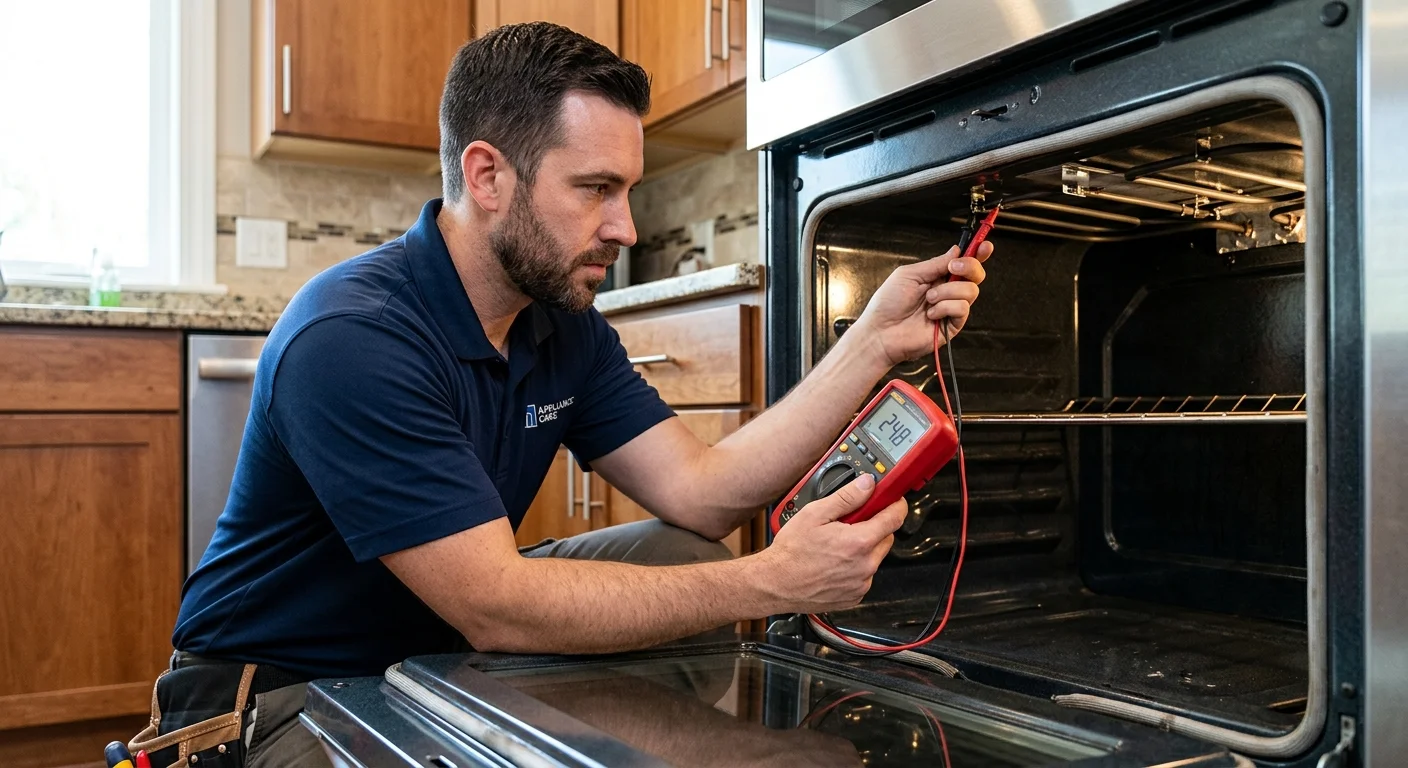
An oven that won’t hold temperature ruins dinner and wastes groceries. The techs we match get it working again. Most ovens fail in a handful of predictable ways. A bake element burns through. A gas igniter glows but never lights. A temperature sensor drifts and your roast comes out raw or charred. We see these same failures every week across San Diego County, from Chula Vista to Escondido. Here’s how a technician diagnoses them, what parts usually fail, and where gas safety matters most.
Is your oven not heating? Here’s what it could mean
On an electric oven, the usual culprit is a burnt-out bake or broil element. You’ll often see a blistered spot or a clean break in the metal loop. A dead element won’t glow orange end to end. The technician tests it with a multimeter for continuity. An open circuit means it’s done, and a new element drops in. If the element looks fine, the technician checks the temperature sensor next. That’s the thin metal probe in the back wall, an RTD whose resistance the technician checks against the manufacturer’s spec. If it reads way off, the control board gets bad data and the heat goes wrong. A blown thermal fuse can also cut power after a hot self-clean cycle.
On a gas oven, no heat almost always points to the igniter. It’s the bar-shaped or round glow-bar element that has to draw enough current to open the safety gas valve. Here’s the trap: a weak igniter still glows, so it looks fine, but it never gets hot enough to release gas. The oven sits cold while the igniter glows away. The technician measures the current draw against the manufacturer’s spec; if it’s too weak, the valve never opens and the part needs replacing. Other causes are a failed gas safety valve or a control board that isn’t sending the signal. Anything involving the gas valve or supply line is a job for a qualified tech, not a DIY fix. If your oven is not heating, it’s not a problem you should ignore. We even have a dedicated guide on oven not heating troubleshooting for common issues.
Gas vs. electric oven repair: what’s the difference?
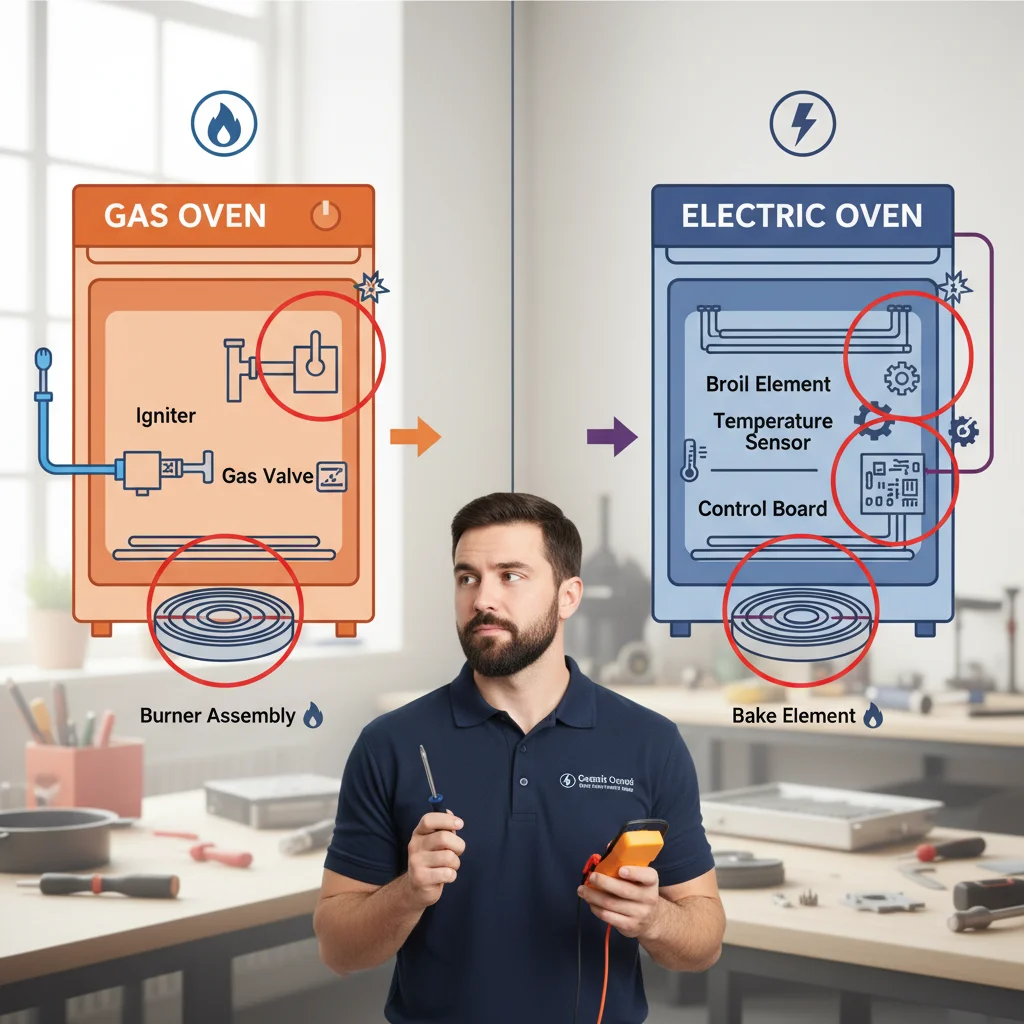
Both ovens bake bread the same way, but the parts that get them hot are nothing alike. That changes how a technician diagnoses the problem and what’s safe to touch.
Electric Oven Repair Electric ovens make heat by pushing current through metal elements. The bake element sits at the bottom, the broil element up top, and many convection models add a third element ringed around the fan. When one fails, the technician pulls power and tests continuity and resistance with a meter to find the dead part. The fix is usually a new element, a new RTD temperature sensor, or the control board. It’s all electrical work, so the danger is shock, not gas, and the technician kills the circuit at the breaker before opening anything.
Gas Oven Repair Gas ovens burn natural gas or propane and need an ignition source. The parts involved can include the igniter, gas safety valve, burner, and controls. When a gas oven quits, a technician needs to diagnose the actual cause. If you see, hear, or smell signs of a gas leak, leave immediately and call 911 or SDG&E at 1-800-411-7343 from a safe location, as directed by SDG&E’s gas-appliance safety guidance. After the hazard has been addressed, the technicians we match handle both gas oven repair in San Diego and electric models.
Common oven issues local techs handle in San Diego County
These are oven symptoms homeowners describe. Call volume is not ranked here. Each one has a short list of usual suspects, and that’s where diagnosis starts:
- Oven not heating: Bad heating element, igniter, or control board.
- Uneven heating: Failing temperature sensor, partially faulty element, or convection fan issues.
- Oven won’t turn on: Power supply, tripped circuit breaker, defective control panel, or main board failure.
- Door problems: Broken hinge, faulty latch, or worn-out gasket leading to heat loss.
- Self-cleaning function failure: Door latch issue, control board problem, or blown thermal fuse.
- Strange noises or smells: Banging, buzzing, clicking, or burning smells indicating wiring issues.
- Temperature control problems: Oven runs too hot or cold due to a faulty thermostat or sensor calibration.
One more we see a lot: an oven that’s off by 25 to 50 degrees even though nothing’s broken. That’s calibration drift, and most control boards let the technician re-calibrate the offset instead of swapping parts. Techs in the network work on Whirlpool, GE, Samsung, LG, KitchenAid, Frigidaire, and the rest, and can quote stove repair in San Diego together when the cooktop’s acting up too.
What does it cost to repair an oven?
Oven repair cost comes down to what part failed and how long it takes to reach it. A bake element on an electric range is one of the cheaper, faster fixes. A control board or gas safety valve runs higher. Here’s what moves the bill:
- Type of oven: Gas oven repairs can be more involved due to specialized gas fitting knowledge. Electric oven repairs often deal with expensive electronic components.
- The specific part needed: Simple component replacements, like an element or igniter, are less expensive than complex control board or gas valve repairs.
- Labor time: More complex diagnostics and repairs require more technician time.
- Brand and model: Premium brands may have more expensive parts or require specific expertise.
- Diagnostic fee: Most reputable companies charge a diagnostic fee, often applied towards the total repair cost.
The technician diagnoses the oven first, then gives you the part-and-labor number before touching a wrench for your oven repair in San Diego. With gas models especially, hire someone qualified and registered. You can check an appliance repair company’s BHGS registration through the California Department of Consumer Affairs lookup. That lookup confirms registration status, not an individual technician’s skill.
What to expect for San Diego oven repairs
Here’s how an oven call goes, gas or electric:
- Local techs who work these brands: Techs in the network cover homes from La Mesa to Carlsbad. Parts on the truck are the provider’s.
- Written quote after diagnosis: A dead oven still waits on the independent technician’s schedule. Repair Pro San Diego is voicemail matching. There is no priority dispatch or same-week promise from this brand.
- Estimate before the wrench: You get the part-and-labor number after diagnosis, before any work starts. No surprises on the invoice.
- Parts: Ask the matched technician which parts they use and get the choice and price in writing.
- Warranty: Warranty terms come from the tech who does the work, so ask before you approve the quote.
For oven repair in San Diego County, call Repair Pro San Diego and we’ll match you with a technician who gets your oven holding temperature again.
Frequently asked questions
Why does my gas oven igniter glow but never light the burner?
A glowing igniter that won’t light the gas is almost always a weak igniter, not a dead one. The igniter has to draw enough current to open the gas safety valve, and the exact spec varies by model. As it ages and its resistance rises, it can still glow without reaching that threshold, so the valve never opens. The technician’s current measurement confirms it, and a replacement fixes it.
What is an RTD temperature sensor and how do I know if mine is failing?
An RTD (resistance temperature detector) is the thin metal probe in the back wall of the oven cavity. At room temperature its resistance should match the manufacturer’s spec. A reading that’s way off tells the control board the oven is at the wrong temperature, which causes uneven or inconsistent heating. Testing it with a multimeter takes about two minutes.
How long does an oven repair usually take?
A bake element, igniter, temperature sensor, or door switch can be a defined job after diagnosis. Parts on the truck and a first-visit finish are the provider’s availability, not a Repair Pro promise. More complex jobs like a control board replacement may require ordering a specific part.
Is it safe to use my oven if it smells like gas?
No. If you see, hear, or smell signs of a gas leak, leave the area immediately and call 911 or SDG&E at 1-800-411-7343 from a safe location. Do not try to light or diagnose the oven. Wait until emergency authorities or the utility have addressed the hazard before arranging appliance service.
When to call us
Do not swap a 240-volt bake element yourself. Leave cabinet electrical work to a qualified technician. Anything involving the gas valve or supply line needs a qualified professional. For a suspected gas leak, leave immediately and call 911 or SDG&E from a safe location before requesting appliance service. For other gas no-heat problems, the technician diagnoses the appliance and explains the proposed repair before work starts. Call us at (858) 988-7787 to get matched with a technician.