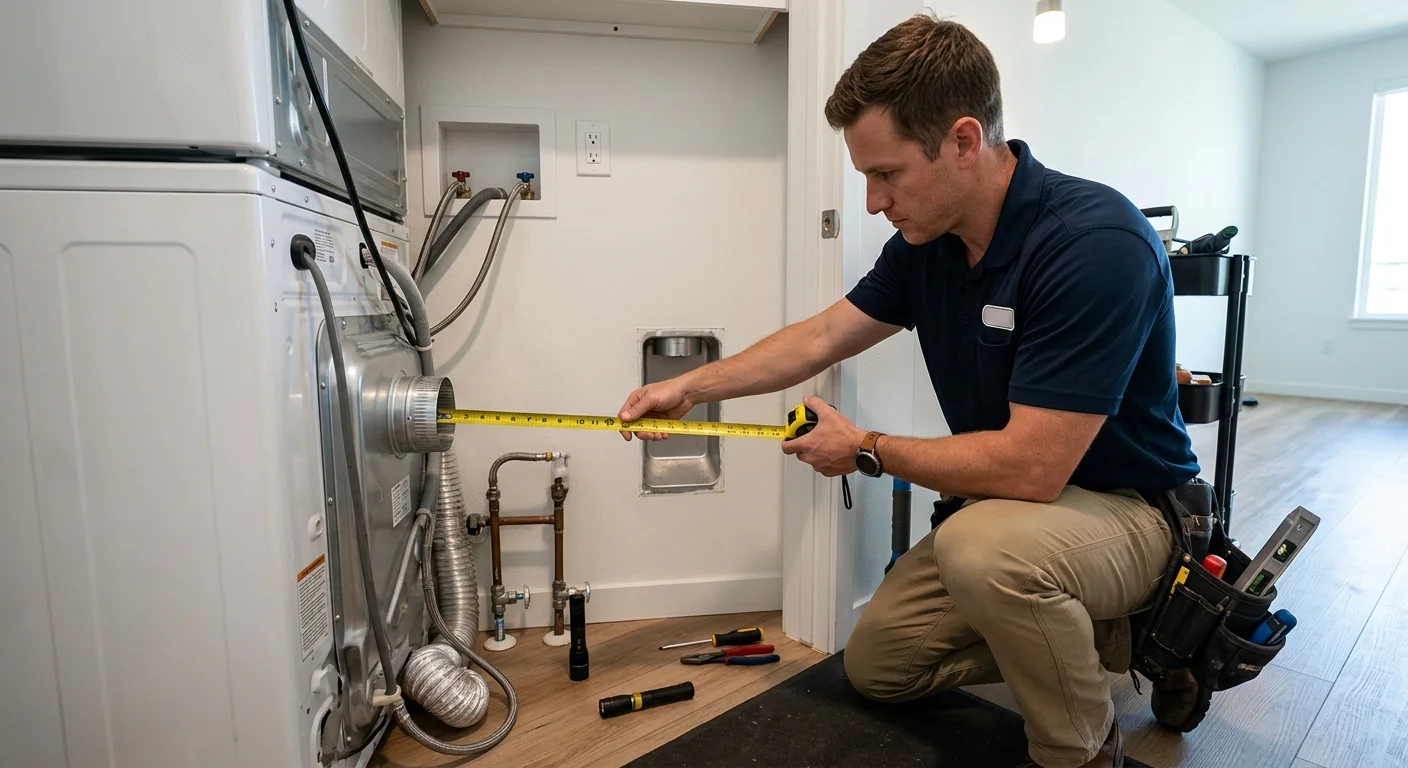
A magnetic dryer vent may help when reaching behind the dryer is difficult. It’s often considered for tight San Diego laundry closets, but the connector must fit the dryer, wall opening, and existing vent path.
Measure everything before buying a connector or moving the appliance. The product instructions, dryer manual, and property requirements should guide the final decision.
How magnetic dryer vent connections differ
A magnetic dryer vent uses two mating connection pieces. One attaches near the dryer exhaust opening, while the other meets the wall connection. The pieces are designed to align as the dryer moves toward its operating position.
That setup changes how the final connection is reached. A conventional connection may require working behind the dryer before pushing it back. A magnetic connection is intended to join as the appliance approaches the wall.
It doesn’t replace the entire vent path. The duct behind the wall, ceiling, or cabinet remains part of the installation. The connector only addresses the transition between the dryer and that existing route.
Product designs aren’t identical. Dimensions, attachment methods, materials, and approved dryer configurations can vary. The approved claims for this site don’t establish one universal clearance or compatibility rule. Check the instructions for the exact connector before purchasing it.
A tight installation isn’t automatically a suitable installation. The dryer still needs to sit where its manufacturer allows. Controls, doors, utility connections, and service access also need enough room for normal use.
This distinction matters in San Diego condos. A laundry closet in Downtown, Mission Valley, or UTC can have a very different layout from a garage laundry area in Chula Vista or Oceanside. A connector that works in one setting may be unsuitable in another.
Treat the product as one possible connection method. Don’t treat it as a guaranteed solution for every shallow closet.
Measure the laundry space and dryer position
Start with the dryer in its intended operating position. Measuring only the empty closet can hide the clearance problem you’re trying to solve.
Record the opening’s width, depth, and height. Then measure the dryer’s full cabinet depth. Include projecting controls, the door, and anything attached at the rear. Note whether the door can open without striking a wall, cabinet, or nearby washer.
Next, locate the dryer exhaust opening and wall connection. Measure their heights from the floor and their horizontal positions from the same side wall. Matching reference points make the two measurements easier to compare.
Also photograph the space before moving anything. Capture the wall connection, dryer data plate, electrical receptacle, and any gas connection without disturbing them. These images can help an installer understand the layout before examining it in person.
Access deserves its own check. A narrow hallway, closet frame, stair landing, or condo elevator can affect how the dryer reaches the space. Ask the property manager about loading access and any building-specific work restrictions.
San Diego layouts vary even within the same neighborhood. A stacked laundry cabinet in a Little Italy high-rise presents different access issues than a side-by-side setup in a North Park home. Don’t rely on a product photo showing a larger room.
Write each measurement down. Avoid choosing by sight or by the connector’s advertised shape alone. An independent installer can compare your measurements with the dryer manual and the connector’s instructions.
For help with appliance positioning and connections, request a match through our appliance installation and hookup service.
Check the dryer model and existing vent path
Find the dryer’s exact model number before selecting a connector. The brand name alone isn’t enough. Models from the same manufacturer can have different cabinet shapes, exhaust locations, and installation instructions.
Use the model number to locate the manufacturer’s current installation manual. Confirm which exhaust positions the manufacturer permits. If the manual doesn’t address an accessory or configuration, contact the manufacturer for a written answer.
Check the magnetic connector documentation separately. Compare its listed dimensions and supported configurations with your dryer. Don’t assume a connector shown with one machine has been approved for another.
The wall opening also needs attention. Its visible position doesn’t reveal the complete route behind the surface. In a condo, the path might enter a wall, ceiling, shaft, or another managed building area. Ask the property manager which portions belong to the unit owner and which belong to the association.
No property-specific vent route can be confirmed from appearance alone. An installer may need to inspect the accessible path and compare it with the appliance and connector instructions.
If the dryer already has weak performance, unusual operation, or an error message, solve that issue separately. A new connection shouldn’t be treated as a diagnosis. Our dryer repair and vent service can match you with an independent local technician.
Review our dryer vent safety guide before changing the existing setup. For model-specific safety notices, search the appliance model through the Consumer Product Safety Commission recall database.
Bring the dryer manual, connector instructions, photos, and measurements to the appointment. That gives the installer specific documents to evaluate.
What condo owners should confirm before installation
Condo ownership adds another decision layer. Before buying a magnetic dryer vent, ask the HOA or property manager for the building’s current alteration rules.
Describe the proposed work accurately. State whether the plan touches only the dryer connection or could affect a wall, cabinet, shared shaft, exterior outlet, or building-managed vent path. Ask who owns each part of that route.
Request written answers to several points:
- Is prior approval required for this connection change?
- Does the building require a named vendor or registration document?
- May the existing wall connection be altered?
- Are there access, elevator, parking, or work-hour restrictions?
- Does management need photos or product instructions?
- Who must inspect work affecting a shared area?
The approved claims for this article don’t confirm a blanket permit rule for magnetic dryer vent installation across San Diego County. Property location and the proposed work matter. Confirm the current answer with the City of San Diego or County of San Diego building office serving the address, as applicable.
Don’t rely on a neighbor’s approval from an earlier project. Their dryer, unit layout, vent route, and HOA decision may differ from yours.
If the existing vented setup can’t accommodate the dryer, compare other manufacturer-approved options. Our guide to ventless dryer installation in San Diego condos explains another path to discuss. A ventless model is a separate appliance decision, not an automatic substitute.
Keep copies of the HOA response, appliance manual, connector instructions, and installer’s written scope. Those records reduce confusion about what was reviewed and approved.
What to ask the matched independent installer
Repair Pro San Diego makes the referral. The licensed and insured independent professional evaluates the space and performs any approved installation.
Give the installer your measurements and property documents. Then ask direct questions about the proposed connection:
- Does this exact connector match my dryer model?
- Do the dryer and connector instructions agree?
- Will the appliance sit in the position shown in its manual?
- Can the existing vent path remain unchanged?
- Does any work extend beyond the connection itself?
- Which parts of the setup will remain accessible afterward?
- What should I confirm with the HOA or building authority?
- What product or labor warranty does the installer provide?
- What is included in the written quote?
- What conditions could change that quote?
Ask the installer to identify the connector by manufacturer and model. You should be able to compare the proposed part with its published instructions before authorizing work.
California appliance repair businesses must register with the Bureau of Household Goods and Services. You can check a business through the state’s Department of Consumer Affairs lookup. That lookup confirms registration status, not an individual technician’s skill with a specific connector.
The brand has no installation fee schedule. Product choice, access, vent condition, dryer position, and any approved changes can affect the scope. The matched technician diagnoses first and quotes in writing before work begins.
A good fit decision should be easy to explain. You should know what connects, what stays unchanged, and which instructions support the plan.
When to call us
This work needs a licensed and insured appliance repair pro when the dryer doesn’t align, the vent path is uncertain, or the appliance needs diagnosis. Repair Pro San Diego can match you with an independent local professional who evaluates the installation.
Call (858) 988-7787 to leave a voicemail requesting a match with a local appliance repair pro.