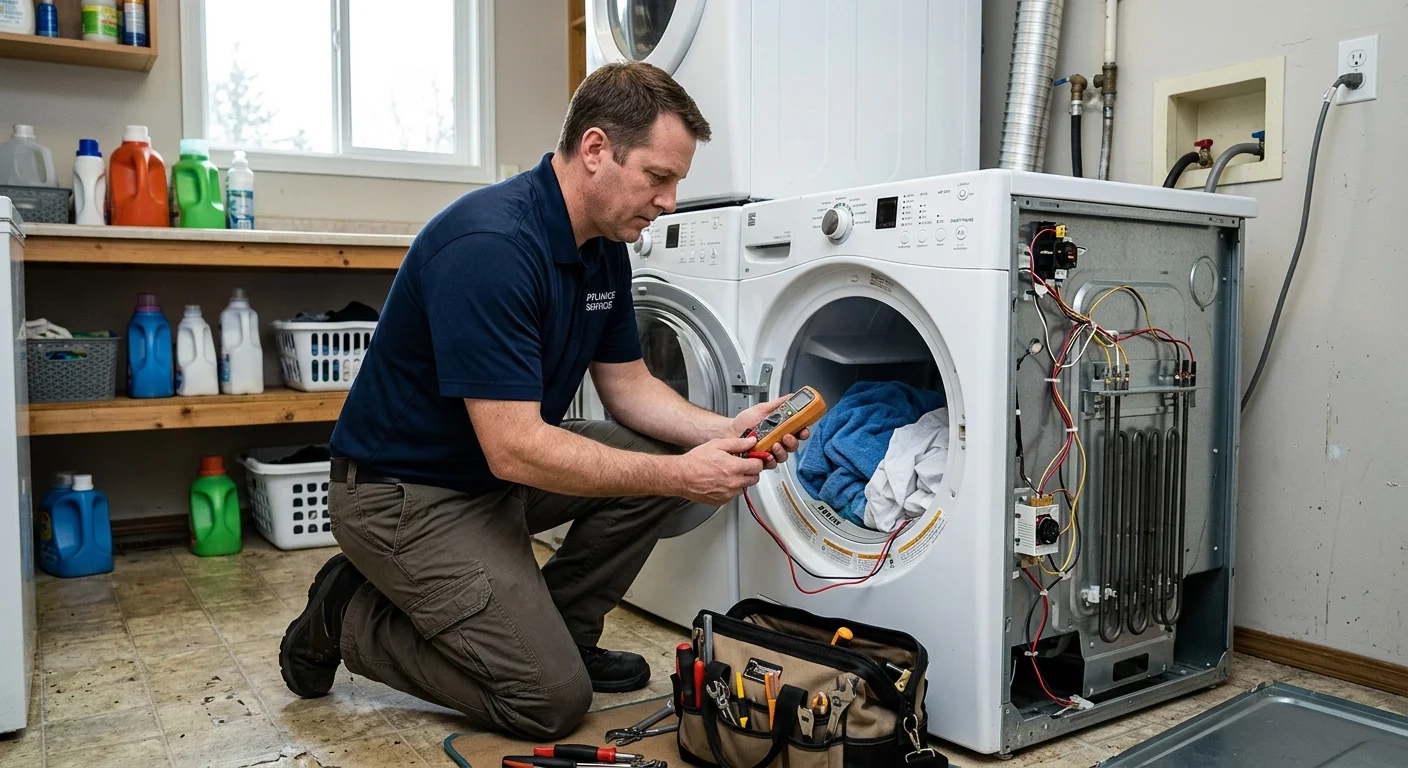
An Electrolux dryer that tumbles without useful heat needs a staged check. Confirm the cycle, model, supply, and visible airflow before requesting Electrolux dryer repair. If those checks don’t explain the problem, a matched independent technician can test the model’s internal systems.
Confirm the model and no-heat pattern
Start by identifying what “no heat” means for this dryer. A drum that stays cool differs from one producing weak or intermittent warmth. That distinction helps the technician avoid chasing the wrong symptom.
Record these details before changing anything:
- The complete model and serial information from the appliance label
- Whether the dryer is electric, gas, or a heat-pump model
- The selected cycle, temperature, and dryness level
- Any letters, numbers, or symbols shown on the display
- Whether the drum turns normally throughout the cycle
- Whether the problem began suddenly or became worse gradually
Use the owner’s guide to locate the appliance label. Don’t assume two similar-looking Electrolux dryers share the same design. Controls, diagnostic codes, and heating systems can vary by model.
Next, run a cycle that the model’s guide identifies as heated. Electrolux dryers may offer settings called Air Fluff, Air Dry, or Eco Dry with no heat. A dryer operating normally on one of those settings will tumble without warming the load. Electrolux lists that setting issue among its official checks for a dryer that runs without heating.
Also note when warmth disappears. Heat that starts and stops differs from a drum that remains cool. Clothes that feel slightly warm but stay damp suggest another pattern. Share the exact observation when requesting dryer repair service.
What owners can observe before requesting service
Keep the owner checks external and model-specific. Don’t remove panels or diagnose parts from a symptom alone. The useful goal is to rule out settings and document what the dryer does.
First, confirm that a heated cycle is selected. Check the temperature choice instead of relying only on the cycle name. Some combinations restrict which temperatures are available. The model’s guide should show which options produce heat.
For an electric dryer, inspect the home’s electrical panel for a tripped dryer breaker. Electrolux explains that an electric dryer uses two house circuits or fuses. One interruption can leave the drum turning while the heater doesn’t operate. A qualified electrician can verify the required supply if the panel doesn’t explain the problem.
For a gas model, compare the gas supply valve’s position with the installation instructions. If its position or connection isn’t clear, leave that check for a qualified pro. Also note whether another gas appliance has an apparent supply interruption.
Clean the lint filter according to the owner’s guide. Look for a crushed or sharply bent transition duct behind a vented dryer. If the exterior vent hood is safely accessible, note whether airflow seems present while the dryer runs. Don’t apply vented-dryer instructions to a model identified as ventless or heat pump.
San Diego County laundry spaces vary widely. A coastal condo may place the dryer inside a compact closet. An inland home may have it in a garage. Tell the technician about stacked units, tight cabinetry, stairs, gates, or unusual vent routing. Those details help the matched pro prepare for access without promising a particular repair time.
How airflow and control symptoms affect diagnosis
Airflow observations help separate missing heat from poor drying. A dryer can produce warmth yet leave clothes damp when air isn’t moving properly. That isn’t the same symptom as an Electrolux dryer that stays cool from beginning to end.
Start with the air near the drum opening after stopping a verified heated cycle. Describe it as cool, slightly warm, or clearly warm. Don’t try to judge an exact temperature by touch. Record whether the load feels evenly damp or has dry and wet areas.
A warm drum with slow drying can direct attention toward the lint filter, duct, exterior outlet, load, or moisture sensing. Electrolux says high humidity can also extend drying. That matters during damp marine-layer conditions near the San Diego coast, but humidity alone doesn’t explain a truly cold heated cycle.
Control information matters too. Photograph any displayed code before clearing it. Electrolux’s current dryer error-code guide lists EF1 for a ventilation blockage. It also lists H4 or B4 for incorrect wiring, H2 or B2 for a power supply issue, and E4 for a humidity sensor failure. Code availability can vary, so use the manual for your exact model.
Automatic and timed cycles can also behave differently. If the manual allows both, note whether the symptom changes between them. A timed heated cycle can help separate an early automatic-cycle stop from a complete loss of heat. This broader dryer not heating checklist explains how those symptom groups differ across brands.
What technicians inspect during a no-heat visit
A no-heat visit should begin with the model number, dryer type, settings, and recorded symptom. The technician can then test the actual failure instead of replacing parts based on a guess.
On an electric model, the pro can verify the electrical supply with proper test equipment. Drum movement doesn’t prove that the full supply needed by the heater is present. If the supply is correct, the technician can follow Electrolux service information for that model’s heating and control circuits.
On a gas model, the technician can confirm the supply and inspect the heating sequence shown in its service documentation. Gas and electric dryers don’t share the same heating parts. A diagnosis that ignores the dryer type isn’t specific enough.
The pro may also inspect the complete airflow path. That can include the lint filter, transition duct, accessible wall duct, and exterior termination on a vented model. For a heat-pump dryer, the technician should use the maintenance and diagnostic instructions written for that design.
Internal testing depends on the model. It may cover the heating circuit, temperature-sensing devices, control outputs, wiring connections, and protective devices shown in the service information. There isn’t one confirmed parts map that applies to every Electrolux dryer.
Don’t order a thermal fuse from the symptom alone. Electrolux documentation refers to a thermal limiter on some electric models, and its role depends on the circuit. Our guide to dryer thermal fuse symptoms and testing explains why model-specific measurements matter.
California appliance repair businesses must register with the Bureau of Household Goods and Services. That registration is separate from CSLB licensing. Consumers can check a business through the California Department of Consumer Affairs lookup.
When to request Electrolux dryer repair
Request Electrolux dryer repair when a verified heated setting still produces no useful warmth. Service also makes sense when heat is intermittent, a power or ventilation code returns, or external checks don’t explain the problem.
Prepare a short service note containing:
- Complete model and serial information
- Electric, gas, or heat-pump configuration
- The cycle and temperature used
- Any display code or control behavior
- Whether the drum stays cool or becomes partly warm
- Recent installation, moving, or electrical work
- The dryer’s closet, garage, or stacked layout
That information is especially helpful across San Diego County. A stacked laundry closet in Chula Vista presents different access from a garage installation in Santee. The appliance may show the same symptom, but the setup changes what the pro must inspect.
There isn’t a verified San Diego-wide price for an Electrolux no-heat repair in the approved sources. The brand has no fee schedule. Parts, access, and the confirmed fault can change the quote. The matched technician diagnoses first and quotes in writing before work begins.
Warranty coverage also can’t be assumed from the Electrolux name. We couldn’t confirm one warranty term that applies to every model and purchase date. Check the model’s warranty document, proof of purchase, and current manufacturer guidance before approving paid work. Ask the matched technician to state any repair warranty in writing.
Repair Pro San Diego is a referral service. We match customers with insured, independent local technicians. The matched pro performs the diagnosis, sets the price, completes the work, and provides any repair warranty. Our San Diego dryer repair guide explains what information to gather before requesting a match.
When to call us
A persistent no-heat condition needs an appliance repair pro when settings, supply, and visible airflow checks don’t explain it. Repair Pro San Diego can match you with an insured independent technician serving San Diego County. Call (858) 988-7787 to leave a voicemail requesting a match with a local appliance repair pro.