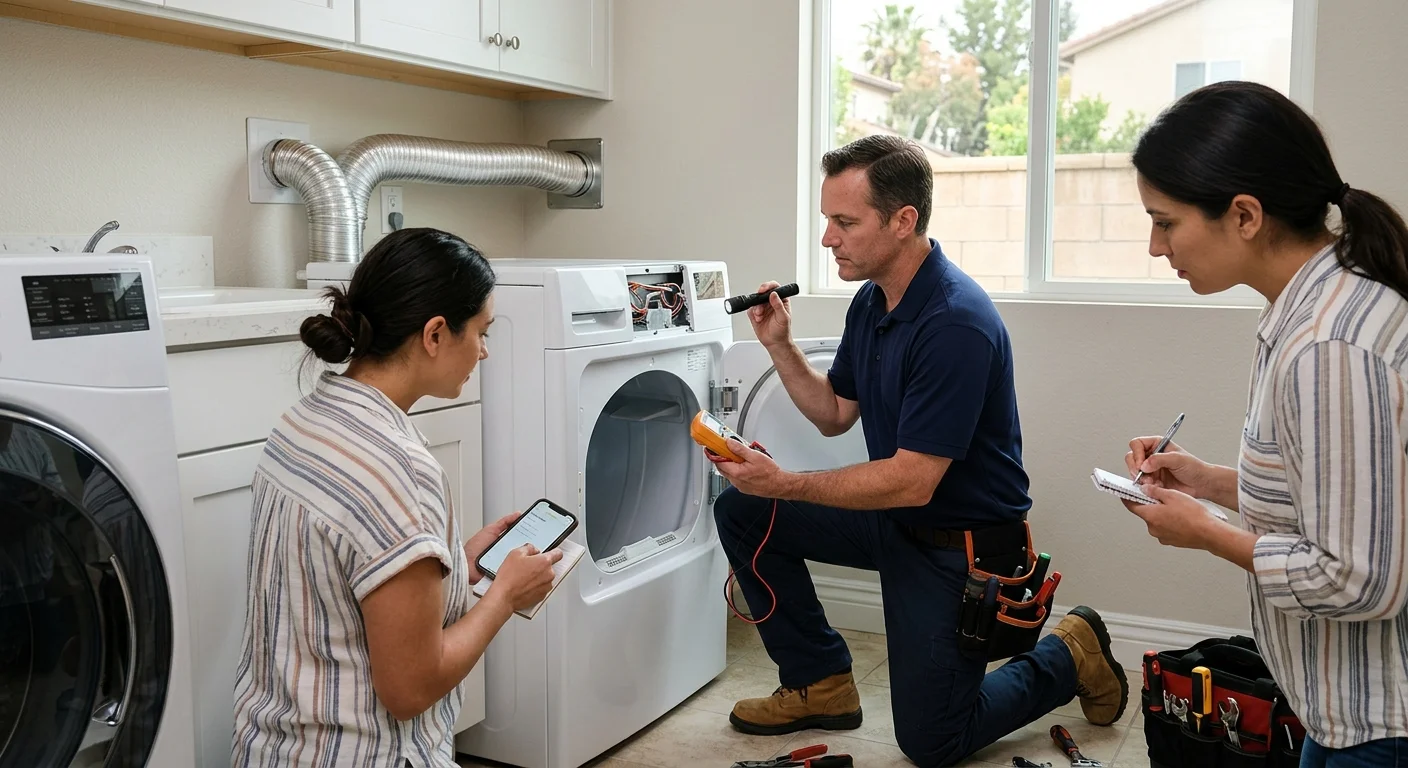
A hot or unusual dryer smell can turn laundry day into an urgent decision. Emergency dryer repair starts with documenting what happened, avoiding guesses, and giving a qualified technician clear details.
Describe the smell, heat, and cycle behavior
Start with the smell itself. Words such as burnt, rubbery, metallic, dusty, chemical, or gas-like give a technician more useful context than “hot.” Don’t identify a failed part based on odor alone. Different problems can produce similar smells.
Write down when you first noticed it. Note whether it appeared immediately, during the heated portion, or near the cycle’s end. Include whether the smell faded after stopping the cycle or remained around the machine.
Describe the heat without touching internal parts. Was the laundry unusually hot? Did the room feel warmer than normal? Did the smell seem strongest near the door, controls, rear wall, or external vent area? These are observations, not a diagnosis.
Cycle behavior also matters. Record whether the dryer:
- Finished the selected cycle
- Stopped before the cycle ended
- Kept running longer than expected
- Tumbled without producing the expected result
- Displayed an error code
- Made a new scraping, buzzing, or clicking sound
Include the load type and approximate size. A technician may interpret a small towel load differently from a packed load of bedding. Note anything recently changed, including the selected setting, vent arrangement, installation position, or laundry products.
San Diego homes place dryers in many settings. These include condo closets, attached garages, utility rooms, and outdoor-access laundry spaces. Tell the technician where the machine sits and how easily its exterior connections can be reached.
The smell alone doesn’t confirm a particular repair. A detailed timeline helps the matched pro decide what needs inspection.
What owners can observe without opening the dryer
You can collect useful information without removing a panel. Begin with the control display. Photograph any code before it clears. Record the selected cycle, temperature setting, and remaining time.
Next, find the model and serial label if it’s externally accessible. Its location varies by manufacturer. Check the owner’s manual rather than pulling the dryer away from the wall. A clear photo helps the technician identify the correct product family.
Look around the laundry space without moving connections. Record visible lint near the machine, changes in the external vent area, or marks around the outlet or control panel. Don’t label what caused those signs. Describe only what you can see and smell.
Documentation doesn’t require another test cycle. If the unusual smell appeared during normal use, that event already gives the technician meaningful information. Write down the time, cycle, load, and behavior while they’re fresh.
The surrounding area also matters. A stacked dryer in a Downtown condo presents different access questions from a side-by-side unit in an East County garage. Homes near the I-5 corridor may have compact laundry closets, while detached homes farther inland may place equipment in garages. The location won’t diagnose the problem, but it helps the pro prepare for access.
If the machine has a visible error code, keep the wording exact. Don’t translate it into a suspected part failure. Manufacturer codes can have model-specific meanings.
For broader service details, review the dryer repair and vent service page. The independent technician you’re matched with will inspect and diagnose the appliance.
Which official safety guidance needs verification
No official guidance classifies a hot dryer smell, on its own, as an emergency. One odor, temperature sensation, or cycle change does not identify the cause.
That matters. Fire, gas, electrical, and ventilation directions shouldn’t come from an unsupported blog claim. Check the manufacturer’s manual for instructions tied to your exact model. The manual may be available through the manufacturer’s official support site if your printed copy is missing.
You can also search the U.S. Consumer Product Safety Commission recall database. Use the brand and model number from the appliance label. A similar-looking dryer isn’t enough, since recall coverage can depend on a precise model or production group.
A suspected gas leak has a clear local response: leave the area immediately, then call 911 or SDG&E at 1-800-411-7343 from a safe location. Follow SDG&E’s gas-appliance safety guidance before arranging appliance service. For visible smoke, flames, or sparking, follow the appliance manufacturer’s instructions and official emergency directions for your location.
The phrase “emergency dryer repair” also describes search intent, not guaranteed availability. Repair Pro San Diego doesn’t promise round-the-clock service, a response time, or an arrival window. Our emergency appliance repair referral page explains how to request a match without making those promises.
For more context, read what counts as an appliance emergency. It separates documentation and referral options from unsupported safety conclusions.
What technicians inspect after a heat complaint
A technician begins with the reported symptoms and the machine’s configuration. The inspection may cover the heating system, drum movement, airflow path, controls, external connections, and visible wiring. The exact order depends on the model and what the technician observes.
An electric dryer and a gas dryer don’t have identical components. A vented dryer also differs from a ventless model. Give the pro the fuel type and installation style if you know them. If you’re unsure, provide the model number and avoid guessing.
The technician may compare your description with the appliance’s current operation. Details about when the smell appeared can narrow the inspection. A smell at startup may lead to different checks than one reported late in a cycle. An error code, unexpected shutdown, or new sound provides another diagnostic clue.
A heat complaint can involve more than one area. That’s why a single symptom shouldn’t be treated as proof of a failed heating element, motor, belt, control, or vent component. The technician needs to inspect the actual machine before recommending work.
Access conditions can affect the appointment. Mention a stacked installation, tight closet, elevated platform, locked utility room, or shared condo laundry area when requesting the match. San Diego properties range from South Bay apartments to inland single-family homes, so laundry layouts vary widely.
Ask the technician about their diagnostic fee before authorizing a visit. Also ask whether that fee is credited toward an approved repair. Repair Pro San Diego has no fee schedule and doesn’t set the independent pro’s terms. The matched technician diagnoses first and quotes in writing before work begins.
California appliance repair businesses must register with the Bureau of Household Goods and Services. Consumers can check a business through the state’s Department of Consumer Affairs lookup. Registration confirms status, not an individual technician’s technical ability.
How to request a matched technician
A useful request starts with facts. Say that the dryer smells hot or unusual, then describe the odor in your own words. Include the brand, model number, fuel type, and any visible error code.
Add the cycle details. Tell us whether the dryer stopped, completed the cycle, ran differently, or left the load unusually hot. Mention visible smoke or sparking without converting those details into a diagnosis. If you suspect a gas leak, leave immediately and make the emergency call from a safe location before preparing a service request.
Provide the San Diego neighborhood or county city where the dryer is located. That helps with matching across the county. Include installation details such as stacked, closet-mounted, garage-based, ventless, or commercial. Access notes are especially helpful in gated buildings and shared laundry rooms.
Repair Pro San Diego is a referral service. We match homeowners and businesses with insured independent local appliance technicians. We don’t diagnose the dryer, perform repairs, set prices, or warranty the work.
Ask the matched pro these questions before approving service:
- What diagnostic fee applies?
- Is that fee credited toward an approved repair?
- Will I receive a written quote before work begins?
- What warranty, if any, covers the completed work?
- Can you show current BHGS registration on the California Department of Consumer Affairs lookup? That lookup confirms business registration status, not an individual technician’s skill.
You can also review the local San Diego dryer repair guide before requesting a match. It explains the referral process and common information technicians need.
No referral request guarantees a particular response or arrival time. Clear notes simply help the independent technician understand the complaint before diagnosing it.
When to call us
Request a match when a hot or unusual smell returns, the cycle changes, or the dryer needs a licensed Appliance Repair pro’s diagnosis. Call (858) 988-7787 to leave a voicemail requesting a match with a local appliance repair pro.