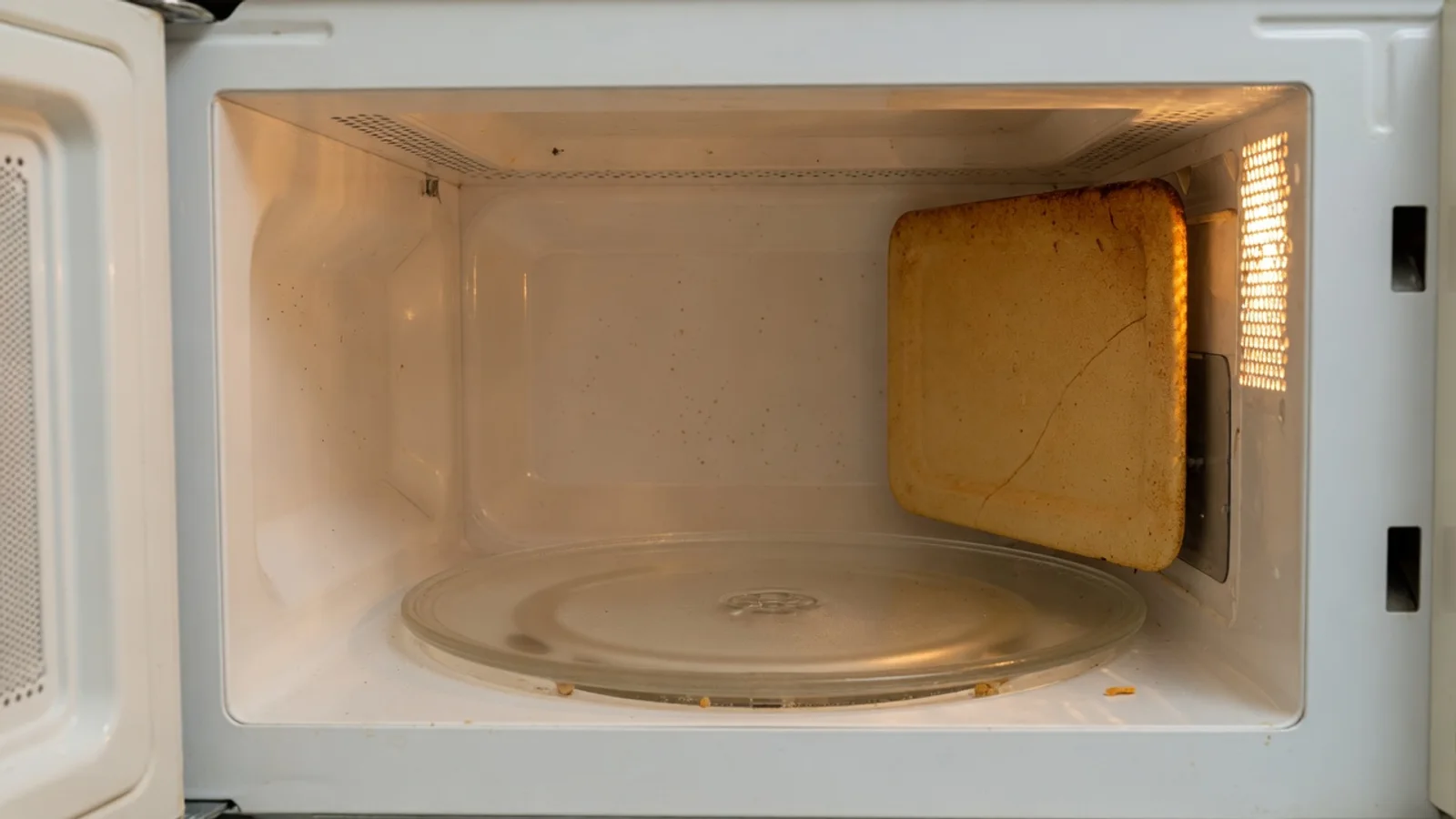
Sparks inside a microwave are a stop-use problem. Metal, foil, a cracked mica waveguide cover, or a burned ceiling coating can all throw an arc. You do not need to name the failed part from the doorway. You need the cycle off, the cavity unplugged, and a record of what you already saw.
Brand not-heating pages mention sparking in passing. This page is the spark itself. If the oven runs and the food stays cold with no arc, use a not-heating guide.
Stop the cycle, then cut power
Open the door or hit cancel. Unplug the unit if you can reach the cord safely. On an over-the-range microwave, switch that circuit off at the breaker if the cord is not reachable without climbing onto a hot cooktop.
Do not keep running it to “finish the plate.” Do not put a cup of water in to “test if it still sparks.” One observed arc is enough.
If you see flames or smell heavy burning plastic, treat it as a fire emergency for your location. Leave if you need to. This page is not a fire-department protocol.
Once the cavity is cool and power is off, look without touching high-voltage parts. There are none you should service from this page. The magnetron, capacitor, and diode stay inside the cabinet.
What you can record from the doorway
Look for:
- Foil, a metal twist tie, a gold-rim plate, or a fork left in the cavity
- A blistered or missing waveguide cover, the thin mica or plastic sheet on a side wall
- A burned spot on the ceiling coating or on the door screen
- Food soil on the waveguide cover, which can carbonize and arc
A dirty or cracked waveguide cover is a common spark source. Replacement covers are model-specific. Fitting one still leaves a live high-voltage system behind the cover. Do not remove the cover from this page if it is fastened into the cavity wall. Photograph it.
Over-the-range units spark the same way countertop units do. The install is irrelevant to the arc. If the unit was recently hung, still treat sparking as a cavity problem unless the installer left metal shavings in the oven, which you would photograph.
Do not operate a microwave with a damaged door or a collapsed door screen. That is a containment issue, not a mica-sheet issue.
What a technician inspects after sparking
The independent technician you match with should inspect the waveguide cover, the cavity coating, the stirrer or turntable, and only then the magnetron path if the cover is not the whole story. High-voltage testing is technician work. The capacitor in a microwave can hold a charge after unplugging. That is why this page stops at the doorway.
National cost guides such as Angi put most microwave repairs between $100 and $200, with a typical figure near $175. Magnetron replacement is listed separately in those guides. Those figures are named national guides, not a San Diego fee. A waveguide cover is a different job from a magnetron. The matched technician diagnoses first and quotes in writing before work begins.
A small countertop unit can be cheaper to replace than to open. That comparison belongs to you after a written quote. There is no 50-percent government cutoff on this site.
Repair Pro San Diego matches you with insured local technicians for microwave repair. We do not perform the repair. Confirm BHGS registration on the DCA lookup.
If sparking started after a failed install, say so. Otherwise request the sparking-microwave match, not a generic no-heat visit.
When to call us
If a microwave in San Diego County sparked, stop using it and match with a licensed local appliance repair pro. Call (858) 988-7787 to leave a voicemail requesting a match with a local appliance repair pro. The technician you are matched with inspects the unit, quotes in writing, and does the work.