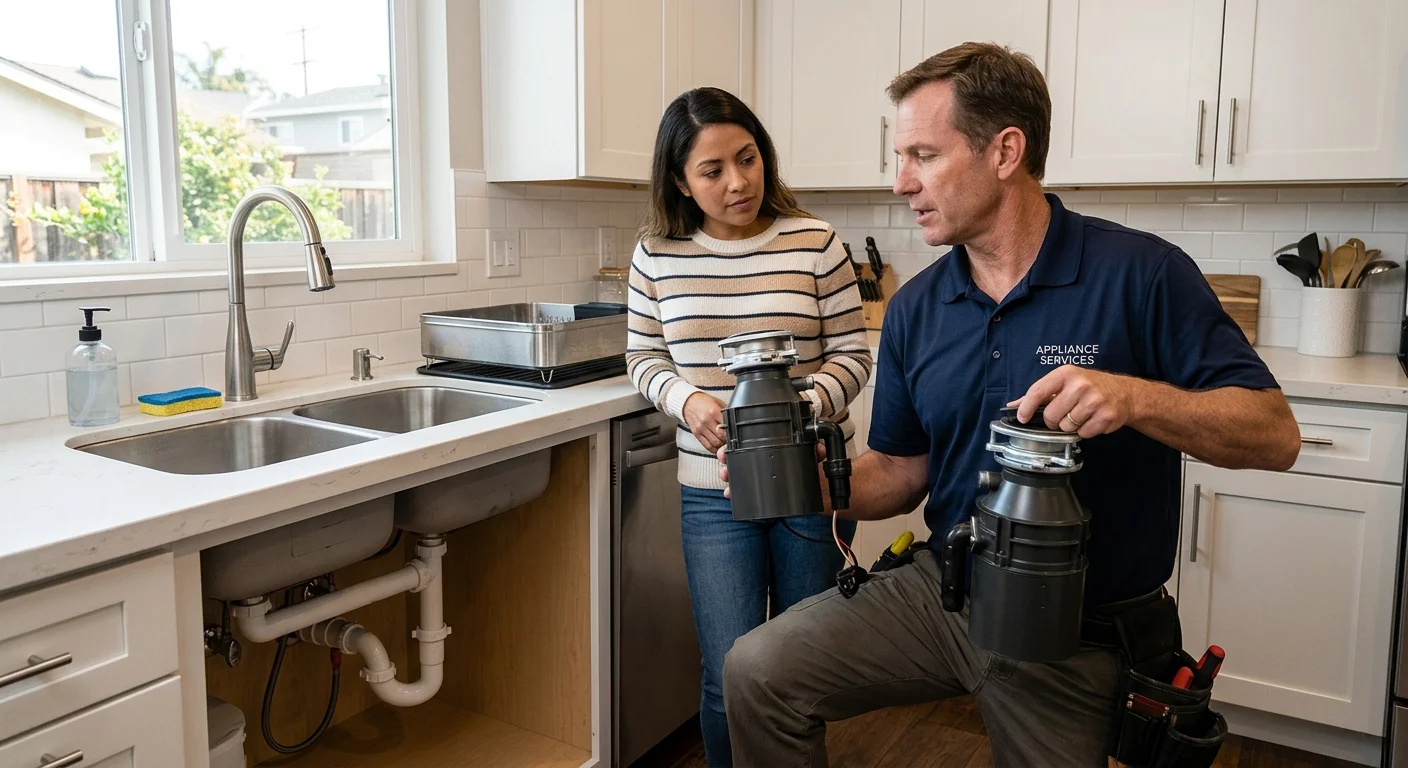
Replacing a failed disposal brings one basic choice into focus. A continuous feed garbage disposal runs differently from a batch feed model. The right option depends on your routine, sink cabinet, controls, and exact product.
How continuous and batch feed models differ
A continuous feed model operates through a separate control. That’s commonly a wall switch or a compatible air switch. Once switched on, the disposal keeps running while food enters the opening. You can add scraps gradually without stopping between small loads.
A batch feed model uses its stopper as the control. You place food in the chamber while the unit is off. Inserting or positioning the stopper then starts the grinding cycle. Removing or moving it stops the unit. The stopper covers the sink opening while the motor operates.
The practical difference is the workflow:
- Continuous feed lets you add scraps while the disposal runs.
- Batch feed processes food after you load and close the opening.
- Continuous feed depends on a separate operating control.
- Batch feed depends on its matching activation stopper.
These descriptions come from current manufacturer guidance, including Moen’s disposal selection information. Exact controls still vary by model. Check the manual and specification sheet before buying anything.
Feed type doesn’t tell you everything about performance. Motor design, chamber size, mounting system, dimensions, and accepted food waste can differ. Two continuous feed models may fit and operate differently. The same applies to two batch feed models.
Don’t choose from the feed label alone. Start with how you prepare meals and clear dishes. Then confirm that the exact model matches the existing sink area. That sequence prevents a convenient operating style from becoming a difficult installation.
Which design fits your kitchen and household
Continuous feed often suits kitchens where scraps arrive throughout meal preparation. You can turn it on, add permitted waste gradually, and stop it afterward. That pattern may feel natural when several cutting boards and dishes are being cleared.
Batch feed creates a more deliberate sequence. You load the chamber, position the stopper, and process that batch. It may suit someone who prefers a covered sink opening during operation. It also avoids depending on a wall switch for normal activation.
Consider the people using the kitchen. A cook handling several ingredients may value continuous operation. A household that prefers a defined load-and-start routine may favor batch feed. Neither style is automatically right for every San Diego home.
Physical space matters just as much. If your Pacific Beach condo has a crowded sink cabinet, measure around filters, supply lines, drain parts, and stored items. A Chula Vista kitchen with more cabinet room may still have a drain alignment that limits choices. In either setting, the model’s dimensions matter more than the neighborhood.
Also consider these daily details:
- How often food preparation creates small scraps
- Whether users prefer a wall control or stopper control
- Whether the stopper can be stored without getting misplaced
- How much usable cabinet space must remain
- Whether a dishwasher connects near the disposal
Keep brand-specific features separate from feed type. Noise treatments, included cords, mounting parts, and accepted materials can change between products. Read the current product manual instead of relying on a store label.
If the existing unit works but feels inconvenient, first identify whether the problem is its feed type or its condition. A jam, leak, worn control, or poor fit may change the decision.
What technicians check before replacement
A technician first determines whether replacement is actually needed. A disposal that won’t run may have a jam, an overload condition, a failed control, or another repairable fault. A leak could come from the sink connection, discharge area, dishwasher connection, or disposal body.
Our San Diego garbage disposal repair guide explains common symptoms. You can also review the signs in our guide on when to replace a garbage disposal. A matched professional can then inspect the actual unit and separate a repair issue from a replacement decision.
Before recommending a model, the technician may check:
- The existing feed type and activation method
- The old unit’s model information
- Space beneath and around the sink
- Sink flange and mounting compatibility
- Drain position and discharge alignment
- Any dishwasher drain connection
- The existing power and control arrangement
- Visible leakage, corrosion, or cabinet damage
Those checks matter when changing feed types. Moving from continuous feed to batch feed changes how the unit starts. Moving the other direction introduces a separate control question. The exact product instructions and property conditions determine what work is involved.
This is also the point to discuss recurring symptoms. Repeated resets, persistent leaking, or frequent clogs may involve more than the feed design. The professional should inspect the full sink setup before blaming the disposal alone.
Repair Pro San Diego doesn’t perform that inspection or physical work. We match homeowners with licensed, insured, independent local technicians. The matched pro evaluates the disposal, explains the options, and performs any approved repair or replacement. Our garbage disposal repair and replacement service explains how that referral works.
What installation details need confirmation
A disposal must fit the actual sink cabinet, not just the shopping list. Product photos rarely show enough detail. Before ordering, compare the model’s specification sheet with measurements from your kitchen.
Confirm these items for the exact model:
- Overall disposal height and width
- Position of the discharge connection
- Space around nearby plumbing and filters
- Sink opening, flange, and mounting details
- Maximum sink thickness listed by the manufacturer
- Dishwasher connection details, when applicable
- Included cord or listed connection arrangement
- Required wall, air, or stopper-based control
- Parts included with that specific model
Don’t assume two units from the same brand share one mount. Don’t assume a replacement will meet the existing drain at the same height. Even a small dimensional change can affect cabinet clearance or drain alignment.
A feed-type change deserves extra review. A continuous feed model needs its specified control arrangement. A batch feed model needs the correct activation stopper and matching components. The installer should follow the current manual for the exact model, not instructions remembered from another unit.
Property rules can also differ across San Diego County. This article doesn’t state a single countywide permit or inspection rule because one couldn’t be confirmed from the approved sources for every address and scope. Ask the building department serving your exact property to confirm current requirements. Condo owners should also check their building documents and management procedures. Renters should get the property owner’s approval before arranging changes.
Don’t buy first and investigate later. Send the model number or product sheet to the professional when possible. Ask what can remain, what must change, and whether the selected unit fits. For work involving a new unit or changed connections, review our appliance installation and hookup service.
How to request a matched local professional
Start with a clear description of the decision. Say whether the current disposal is continuous feed or batch feed. If you’re unsure, describe how it starts. Mention a wall switch, air switch, or stopper activation.
Share the details that help a professional prepare:
- Disposal brand and model number, if readable
- Whether the unit runs, hums, leaks, or stays silent
- Where any water appears
- Whether a dishwasher connects to it
- Photos of the sink and cabinet interior
- The feed type you’re considering
- Any model you’ve already researched
Tell us your San Diego County location and whether this is a house, condo, rental, or commercial property. We’ll match you with an independent local technician for the evaluation. The technician, not Repair Pro San Diego, performs the work and discusses their terms.
You can check a California appliance service dealer through the Department of Consumer Affairs lookup. Ask the matched professional which registration or credential applies to the proposed scope. You should also request the exact model number and written scope before approving installation.
Pricing depends on diagnosis, product choice, parts, access, and any changes the setup needs. Our San Diego disposal installation cost guide explains those factors without presenting a Repair Pro price list. The matched technician diagnoses first and quotes in writing before work begins.
A useful written scope identifies the unit, included parts, removal plans, connection work, and responsibility for disposal of the old appliance. Read the manufacturer’s current warranty document separately. Repair Pro San Diego doesn’t sell the unit, install it, or provide the workmanship warranty.
When to call us
Call when your disposal leaks, repeatedly stops, won’t start, or needs a feed-type change. A licensed Appliance Repair pro should evaluate the unit when replacement involves the sink, drain, controls, or power connection. Call (858) 988-7787 to leave a voicemail requesting a match with a local appliance repair pro.