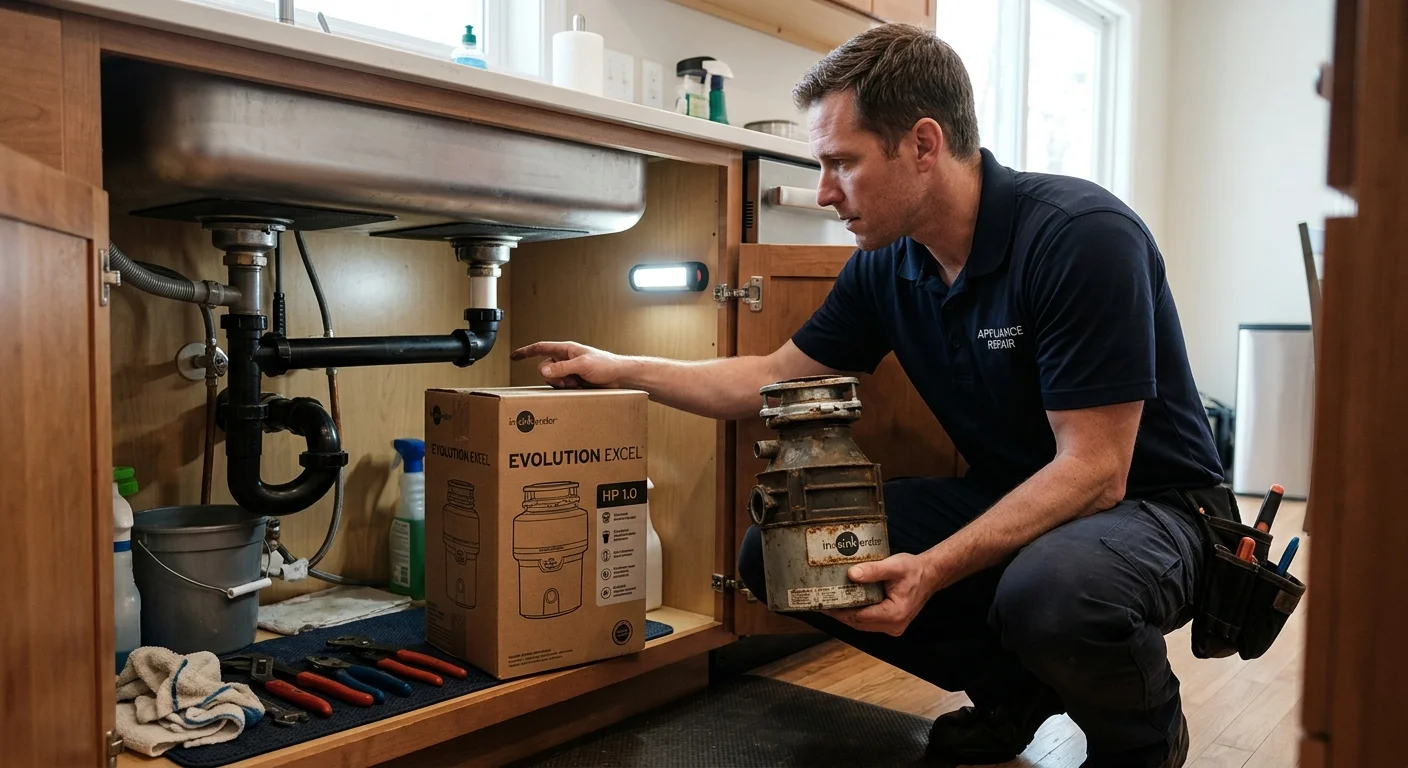
Garbage disposal replacement usually makes sense when the housing leaks, the motor keeps failing, or repair won’t correct the core damage. A jam, loose connection, or isolated component fault may still be repairable. The right choice starts with the symptom, the unit’s condition, and a written diagnosis.
Signs a garbage disposal may be repairable
Some disposal problems begin outside the unit’s main housing. That can make repair a reasonable first step.
A disposal that hums but doesn’t grind may be jammed. The motor is receiving power, but something could be blocking movement. A technician can inspect the grinding chamber and determine whether the mechanism remains usable.
A silent disposal doesn’t automatically need replacement. The issue could involve the reset protection, wall switch, outlet, wiring connection, or the unit itself. Testing the power path helps separate a control problem from an internal failure.
Leak location also matters. Water near the top can come from the sink flange. Moisture near a side connection may involve the discharge pipe or dishwasher hose. Those connections can be evaluated separately from the disposal body.
Slow drainage can also be misleading. Food debris may be sitting in the disposal, trap, or nearby drain line. Replacing the unit won’t solve a restriction located farther along the drain.
Rattling can point to an object inside the chamber or loose mounting hardware. A matched professional can identify the source before recommending a new unit.
These signs don’t guarantee that repair is practical. They show why diagnosis should come before ordering a replacement. Our garbage disposal repair and replacement service connects San Diego County homeowners with independent local technicians. You can also review our guide to garbage disposal repair in San Diego for more symptom-based guidance.
Problems that can point toward replacement
Replacement becomes the stronger option when the disposal’s main structure or internal assembly has failed. The technician’s findings should support that decision.
Water appearing through the bottom housing can indicate an internal leak. However, water can travel along the outside of the unit. A technician should trace the source before treating the housing as damaged.
Cracks, heavy corrosion, or damage around the body also change the decision. Repairing a connection won’t correct a compromised housing. Replacement may offer a clearer path when the damaged section isn’t a serviceable component.
A disposal that won’t restart after its power supply, reset protection, and grinding chamber are checked may have an internal motor or electrical fault. Persistent grinding or scraping can also point to internal wear. The exact cause matters because a lodged object can produce a similar sound.
Repair history deserves attention. One isolated fault differs from repeated failures involving several parts. Write down prior repairs, dates, and symptoms. That record helps the technician see whether the current problem is new or recurring.
Don’t replace a disposal based on age alone. No verified lifespan cutoff in our approved sources determines when every unit must go. Condition, parts availability, installation fit, and the written repair quote provide better evidence.
The same approach applies to other household machines. Our broader repair-or-replace appliance guide explains how to compare a specific fault with the condition of the full appliance.
What to check before choosing a new unit
Start with the information already inside the sink cabinet. Find the existing model label and photograph it clearly. Also photograph the mount, drain connection, dishwasher hose, power connection, and available cabinet space.
Write down how the disposal is controlled. Note whether it uses a wall control or another operating setup. Record any unusual movement, leaking, humming, or grinding. These details help a technician compare the existing installation with a possible replacement.
A new unit should be checked against the current sink and cabinet. Compare its physical dimensions, mounting system, power rating, control type, and manufacturer installation instructions. Don’t assume that every disposal fits every sink opening or drain layout.
Local kitchens vary widely. A compact Little Italy condo may have limited cabinet clearance. A Chula Vista family kitchen may need room for cleaning supplies or water equipment. A custom sink in La Mesa can introduce another mounting question. The address doesn’t decide which disposal fits, but the cabinet setup often narrows the options.
If a dishwasher drains through the disposal, mention that connection. If building management, a landlord, or another party controls changes to the property, confirm their approval process before scheduling work.
Check the model number in the CPSC recall database before deciding to keep or replace the unit. Read any written manufacturer coverage that came with the product. Don’t assume a repair, part, or replacement is covered without confirmation from the responsible company.
When the project includes a new appliance and changed connections, our appliance installation and hookup service can help you request a matched local professional.
Repair and replacement factors to compare
Begin with a diagnosis that names the failed part or damaged area. “It doesn’t work” isn’t enough information for a sound decision. Ask what failed, what caused the symptom, and whether the rest of the disposal appears serviceable.
A repair comparison should include the needed part, labor, and any related connection work. A replacement comparison should include the selected unit, removal, installation, and any changes the existing setup requires. Ask for both scopes in writing when both options remain practical.
Repair can make sense when one serviceable component caused the problem and the housing remains sound. Replacement may make more sense when the body leaks, several internal problems exist, or the required part can’t be obtained. These are comparison factors, not automatic rules.
We couldn’t confirm a government-backed percentage that decides when a disposal must be replaced. We also don’t have a verified San Diego market price for this specific job. Ask the matched technician what sets the quote and who supplies the new unit.
Our San Diego garbage disposal installation cost guide explains the work factors behind a replacement quote without presenting Repair Pro San Diego as the contractor. The brand has no fee schedule and doesn’t set an independent technician’s prices.
Ask whether the proposed work carries written coverage from the technician or manufacturer. Confirm what it includes, who provides it, and how a future claim would be handled. The matched technician diagnoses first and quotes in writing before work begins.
How to request a matched local professional
Gather the disposal’s make, model, and visible condition before requesting a match. Describe the exact symptom and when it occurs. Include any leak location, sound, reset result, drainage change, and prior repair.
Share clear cabinet photos when available. A wider image can show sink bowls, pipes, nearby outlets, and storage limits. A close image can capture the model label and connection points. These details help the independent professional understand what needs evaluation.
Tell us whether you’re seeking repair, replacement, or an honest comparison. You don’t need to choose before the technician examines the unit. A diagnosis can reveal whether the disposal itself failed or whether the problem sits in a nearby connection.
We match homeowners with licensed, insured, independent local appliance technicians across San Diego County. That includes the central city, South Bay, East County, coastal North County, and inland North County. Repair Pro San Diego makes the referral but doesn’t diagnose, remove, repair, or install the disposal.
California requires appliance repair businesses to register with the Bureau of Household Goods and Services. You can check a service dealer’s current record through the California Department of Consumer Affairs lookup.
Before approving work, confirm the written scope, technician’s fee, replacement model, connection work, and any coverage offered. Keep a copy of the diagnosis and quote with your appliance records.
When to call us
Call a licensed appliance repair pro when the cause is unclear or replacement requires checking the sink, drain, controls, or connections. Call (858) 988-7787 to leave a voicemail requesting a match with a licensed local tech.