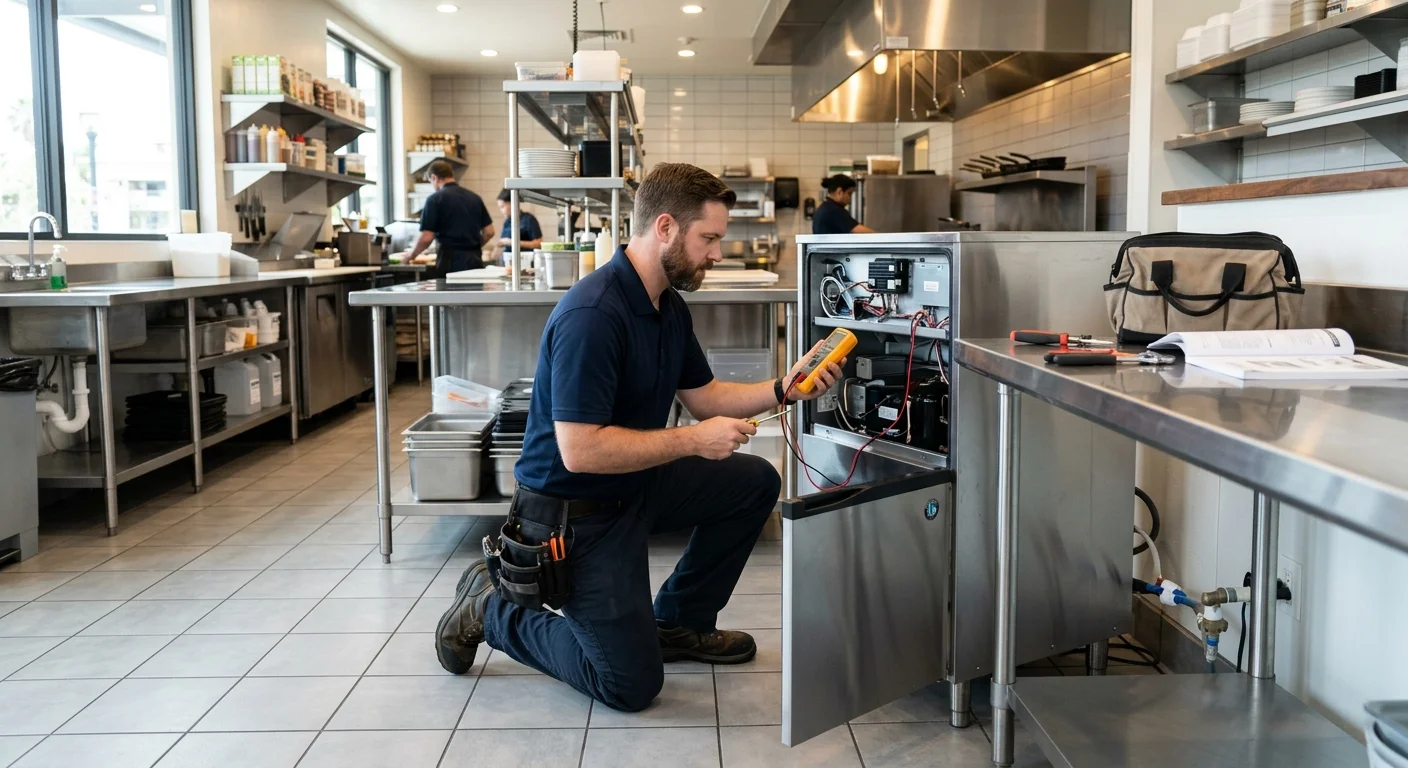
A stalled ice machine can turn a normal San Diego shift into an equipment decision. Repair may make sense when the problem is isolated, the machine has been dependable, and parts remain available. Replacement deserves more weight when failures repeat, deterioration spreads, or the unit no longer fits the operation.
When a repair may still make sense
Start with a diagnosis, not the machine’s age or appearance. A control, valve, pump, sensor, fan, or water-system problem may be limited to one component. A technician can test the machine and separate that fault from a broader refrigeration or electrical problem.
Repair deserves consideration when several conditions line up:
- The machine met the operation’s ice demand before this failure.
- Its recent production and cube quality were otherwise consistent.
- Service records don’t show the same problem returning.
- The cabinet, bin, and major assemblies remain in usable condition.
- The needed part can be identified and sourced for that model.
- The installation still works for the kitchen or facility.
Context matters. A restaurant may experience a sudden shutdown after weeks of normal operation. A hotel may notice one error code without a longer pattern. A facility manager may find that a filter change, cleaning visit, utility interruption, or equipment move happened shortly before the symptoms began. Those details don’t prove the cause, but they help the technician narrow the inspection.
Don’t authorize a broad repair based only on a symptom. Low output can have several possible causes. So can unusual cube shape, incomplete cycles, noise, or water beneath the machine. Record the symptom, then let the technician test the relevant systems.
Our commercial ice machine repair guide explains how technicians approach common service calls. It’s useful when the immediate question is what may have failed. The repair-or-replace decision goes further. It weighs that diagnosis against the machine’s history, current role, and future fit.
Signs replacement deserves a closer look
Replacement becomes more reasonable when the present failure is part of a larger pattern. Repeated service on the same system matters more than one unrelated repair. Widespread corrosion, recurring leaks, damaged assemblies, declining output, and multiple unresolved faults can also change the calculation.
Parts status deserves special attention. Ask the technician to identify the exact component and confirm whether it remains available. A similar-looking substitute isn’t enough. Commercial machines differ by model, voltage, refrigerant system, control design, capacity, and installation requirements.
Replacement also deserves review when the machine no longer serves the operation. A restaurant may have added seats or expanded its beverage menu. A hotel may now rely on a machine for more guest areas. A healthcare, office, or event facility may have changed its usage pattern. Repairing the present fault won’t correct a basic mismatch between demand and equipment.
Installation conditions can narrow replacement choices. Document the available space, electrical connection, water connection, drain arrangement, ventilation clearance, and bin configuration. Don’t assume a new machine will fit because its advertised width appears similar. Have the proposed unit checked against the actual site.
The federal refrigerant transition isn’t, by itself, a reason to discard working equipment. The EPA says existing refrigeration equipment may continue operating and receiving service. However, the exact refrigerant and parts situation may affect a specific repair. Ask the technician to verify both.
No authoritative commercial equipment price guide was confirmed in the approved research. That means a generic online threshold shouldn’t decide the job. The matched technician diagnoses first and quotes in writing before work begins.
What to document before calling a technician
Good records make the first conversation more useful. Start with a clear photo of the model and serial plate. Don’t rely on a number copied from the front badge. The data plate may sit behind a panel, near the controls, or inside another manufacturer-designated area.
Write down what the machine is doing in plain language. Include when the symptom started and whether it is constant or intermittent. Note visible error messages exactly. Photos or short videos can preserve a display code, noise, water pattern, or incomplete batch.
Gather these details before requesting service:
- Manufacturer, full model number, and serial number
- Ice head and bin information, if they’re separate
- Exact installation address and equipment location
- Electrical, water, drain, and filter details you can safely observe
- Recent filter, cleaning, and service dates
- Previous invoices, replaced parts, and technician notes
- Changes in production, cube appearance, cycling, or noise
- Any recent equipment move, renovation, or utility interruption
- Current business demand and expected future demand
San Diego County conditions vary by site. An Oceanside or Point Loma location may need to document coastal air exposure. An El Cajon kitchen may have a warmer equipment area than a conditioned dining space. A Miramar warehouse can present a different ventilation setting from a compact Hillcrest restaurant. Record the actual room conditions instead of assuming geography caused the failure.
Water information also helps. Your utility bill identifies the local provider, while building records may show filtration or treatment equipment. Note the filter model and last recorded change. If several machines use the same water line, tell the technician whether other equipment shows similar symptoms.
Avoid dismantling panels to collect information. The model plate, service records, visible connections, and operating symptoms usually provide a strong starting file.
How service history affects the decision
A chronological service record is more useful than a stack of unsorted invoices. List each visit by date, reported symptom, diagnosis, replaced part, and result. Include cleaning and filter records separately from mechanical repairs. This makes recurring patterns easier to see.
One repaired water valve followed much later by an unrelated control issue doesn’t automatically show that the machine is failing throughout. Several calls for the same unresolved symptom tell a different story. Ask the technician whether the current diagnosis connects to previous work or represents a separate fault.
Look for incomplete records too. An invoice that says only “fixed ice machine” offers little guidance. Request the failed component, test findings, part number, and observed condition in writing. If a previous company recommended replacement, ask what specific finding supported that recommendation.
Age can provide context, but it shouldn’t act as an automatic cutoff. The approved primary-source research didn’t confirm a universal commercial ice machine lifespan or replacement age. Manufacturer documents, parts availability, actual condition, and repair history provide stronger evidence for a particular unit.
Review any manufacturer coverage using the documents tied to the exact model, serial number, purchase, and installation. General warranty terms weren’t confirmed for this article, and they vary. Contact the manufacturer or authorized administrator when coverage is uncertain.
Cost comparisons also need job-specific facts. Commercial equipment lacks a verified universal repair range in the approved ledger. Our commercial appliance repair cost guide explains the factors that shape a quote without inventing a San Diego market price.
For a broader framework, see the general appliance repair-or-replace guide. With commercial ice equipment, add production demand, installation fit, parts support, and the operational effect of another failure.
How San Diego operators can request a matched pro
Repair Pro San Diego connects businesses with licensed, insured, independent local technicians. We don’t diagnose machines, perform repairs, set service fees, stock parts, or provide the technician’s warranty.
When requesting a match, share the model, serial number, site address, and recorded symptoms. Explain whether the machine serves a restaurant, hotel, bar, office, healthcare site, or another facility. Mention access instructions, loading areas, security procedures, and any times when the equipment area can’t be entered. These details help identify an appropriate pro without promising an arrival window.
Ask the technician about their diagnostic fee and whether it is credited toward approved work. Request the diagnosis, proposed work, parts, charges, and payment terms in writing before authorizing service. If replacement is recommended, ask for the specific findings behind that recommendation.
Refrigerant work requires the appropriate EPA Section 608 certification. Confirm that credential when the diagnosis involves opening or servicing the refrigerant circuit. California appliance repair businesses must also register with the Bureau of Household Goods and Services. Operators can check a service dealer through the California Department of Consumer Affairs lookup.
Our commercial appliance repair matching service covers San Diego County. We can match operators from North County and central San Diego through East County and the South Bay. The independent technician evaluates the equipment and discusses the available repair or replacement paths with you.
When to call us
Call when a commercial ice machine has stopped, produces inconsistent ice, repeats a prior fault, or needs a professional repair-or-replace assessment. This kind of diagnosis needs an appliance repair pro, especially when electrical or refrigerant systems may be involved. Call (858) 988-7787 to leave a voicemail requesting a match with a local appliance repair pro.