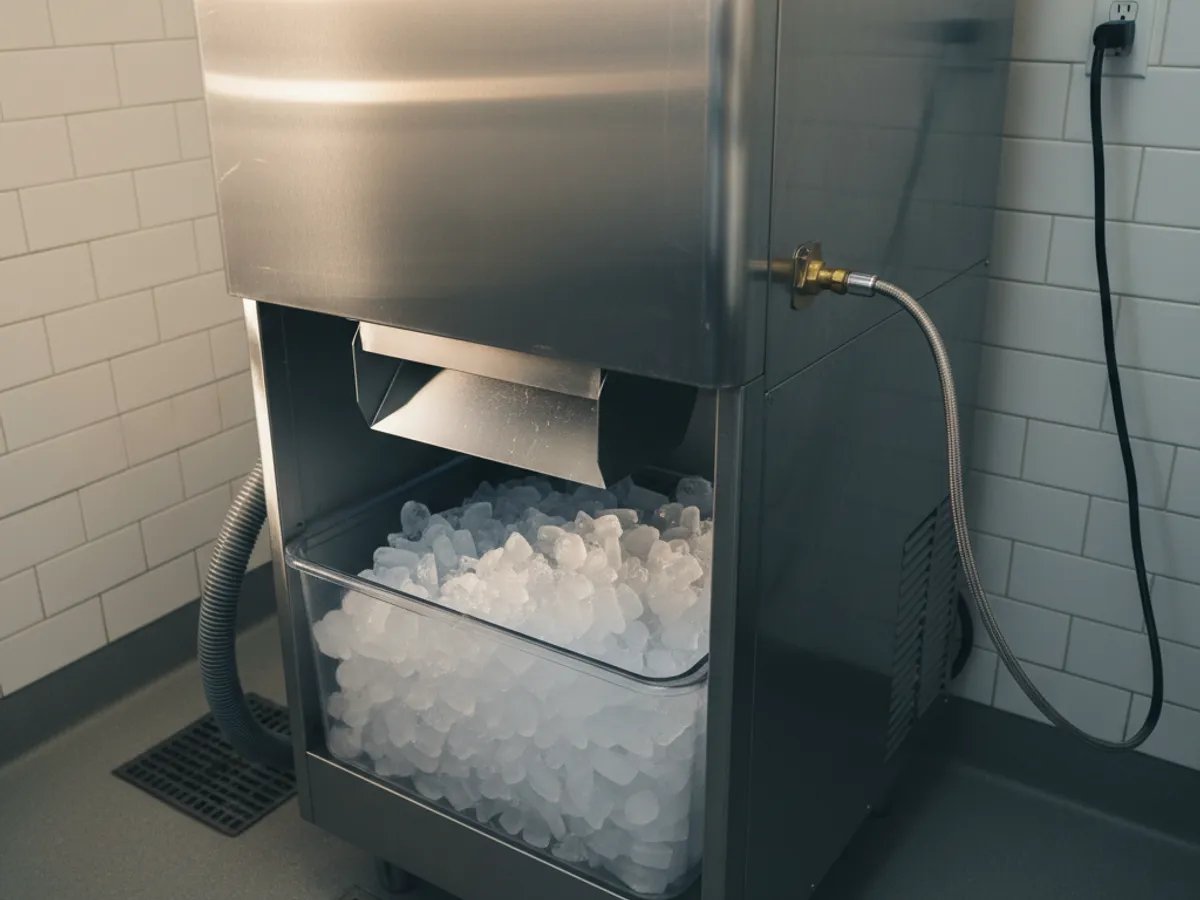
Commercial appliance repair cost depends heavily on the equipment and what failed. Walk-in and reach-in refrigeration sit at the top of the range, since a compressor job involves refrigerant recovery and more labor. Warewashers and ice machines land mid-to-high, and hard-water scale often drives them toward the higher end. Ovens, ranges, and laundry equipment tend to land in the middle. A simple fan or thermostat swap is the low end. Commercial diagnostics cost more than residential because of three-phase power, refrigeration controls, and access in a working kitchen, and the technician quotes it upfront.
What drives commercial appliance repair costs in San Diego
Commercial kitchens, cafes, laundromats, and offices across San Diego County run equipment that works harder and longer than anything in a home. A residential fridge cycles a handful of times a day. A commercial reach-in in a busy kitchen runs constantly, with the door opening dozens of times an hour during service. That duty cycle is the main reason commercial repair costs sit above residential pricing across nearly every category.
From there, cost depends entirely on what broke and how central it is to your operation. Here’s how the categories stack up against each other, and what typically drives the cost within each one:
Commercial appliance repair cost by equipment type
| Equipment type | Relative cost | What drives it |
|---|---|---|
| Commercial refrigeration (reach-in, walk-in) | Highest | Compressor and refrigerant work, walk-in door and defrost components |
| Commercial dishwasher / warewasher | High, scale-dependent | Heating elements and spray arms fouled by hard-water scale |
| Commercial ice machine | High, scale-dependent | Evaporator plate scale and descaling needs |
| Commercial oven or range | Moderate | Which component failed and access inside the unit |
| Commercial laundry equipment | Moderate | Motor, belt, or control component involved |
| Simple fan or thermostat swap | Lowest | Straightforward parts-and-labor job |
Emergency and after-hours service, meaning outside standard business hours, or an urgent visit for equipment that’s already down, typically adds a premium on top of standard pricing. The technician quotes that premium upfront before starting work.
Why downtime usually costs more than the repair itself
For a home fridge, a two-day wait for a part is an inconvenience. For a restaurant walk-in, a two-day wait can mean thousands of dollars in spoiled inventory and lost covers, on top of the repair bill itself. That’s the math that should actually drive your repair decisions in a commercial setting: the cost of the fix is almost never the biggest number in the equation, the cost of staying down is.
Commercial calls like these often need a faster response than a home appliance that can wait until tomorrow. A restaurant with a dead walk-in during dinner service, a laundromat with three washers down on a Saturday, or a cafe whose espresso machine’s ancillary refrigeration failed during the morning rush are the kind of calls where downtime is the real cost. If your business genuinely can’t operate without the equipment, our emergency appliance repair service covers that situation, and it’s often worth the after-hours premium when the alternative is closing your doors.
Commercial refrigeration: the highest-cost category, for good reason
Commercial refrigeration covers reach-in coolers, walk-in units, prep tables, and under-counter refrigeration, and it’s the widest range on this list for a reason. A fan motor or thermostat swap on a reach-in cooler is a relatively quick job. A compressor failure on a walk-in, which involves refrigerant recovery, a larger compressor, and often more labor to access, sits at the top of the range. Walk-in units also carry door gasket, evaporator coil, and defrost system components that don’t exist on residential fridges, each with its own failure pattern and cost.
Because commercial refrigeration failures directly threaten food safety and inventory, getting a fast diagnosis matters more here than on a scheduled-around-the-week home appointment.
Ice machines and warewashers: San Diego’s hard water is a real cost driver
San Diego County water is hard enough that scale is a fact of life for commercial kitchens, and that mineral content builds up inside any equipment that heats or evaporates water repeatedly: ice machines, warewashers, and steam equipment especially. Scale buildup on an ice machine’s evaporator plate reduces output long before the machine actually fails, and once it does fail, technicians often find the real root cause is months of scale nobody addressed. Ice machine repair costs climb further when a full descaling service is needed alongside the repair itself.
Commercial dishwashers and warewashers face the same scale problem on heating elements and spray arms. A basic sprayer or door seal issue sits at the low end. A heating element or control board failure driven by years of scale buildup sits higher. If your ice machine or warewasher has been losing output gradually rather than failing outright, that’s usually scale talking, and a maintenance visit now is cheaper than an emergency call later. The ice maker repair technicians in our network handle both residential and commercial units and can flag scale issues before they become a full breakdown.
Preventive maintenance: the cheapest line item on this whole page
Every category above gets more expensive when equipment runs to failure instead of getting serviced on a schedule. Cleaning condenser coils, descaling ice machines and warewashers, checking door seals, and testing refrigerant charge on a routine basis catches small problems while they’re still cheap fixes. For a restaurant or laundromat running equipment daily, a maintenance visit a few times a year is a fraction of the cost of an emergency compressor replacement, and it avoids the lost-revenue problem entirely by keeping the equipment from failing during business hours in the first place.
Getting a firm quote for your commercial equipment
Commercial pricing depends on the specific equipment, its age, and what’s actually failed, which is why a diagnostic visit comes before any phone estimate. The matched technician identifies the exact issue and gives a written quote covering parts and labor before any work begins, so you can weigh the repair against downtime and make the call that’s right for your business. Call Repair Pro San Diego at (858) 988-7787 for commercial appliance repair across San Diego County, including emergency appliance repair when your equipment can’t wait.
Frequently asked questions
How much does commercial appliance repair cost in San Diego?
Commercial repair cost depends heavily on the equipment. Commercial refrigeration has the widest range, from a quick fan or thermostat swap up to a walk-in compressor job at the top end. Ice machines and warewashers land in that same high range once hard-water scale is factored in.
Why is the commercial diagnostic fee higher than residential?
Commercial equipment often runs on three-phase power, uses more complex refrigeration controls, and takes more time to access in a working kitchen. That’s why commercial diagnostics cost more than a residential visit, and the technician quotes it upfront.
Does San Diego’s water quality affect commercial repair costs?
Yes. Hard water causes mineral scale buildup in ice machines and warewashers, which reduces output and eventually causes component failures. Regular descaling helps avoid the higher end of the ice machine repair range.
Is emergency commercial repair worth the after-hours premium?
For a business that can’t operate without the equipment, usually yes. The premium is almost always smaller than the lost revenue from staying closed or throwing out spoiled inventory during a longer wait.
Do you offer preventive maintenance for commercial equipment?
Yes. The technicians in our network handle scheduled maintenance for commercial equipment.