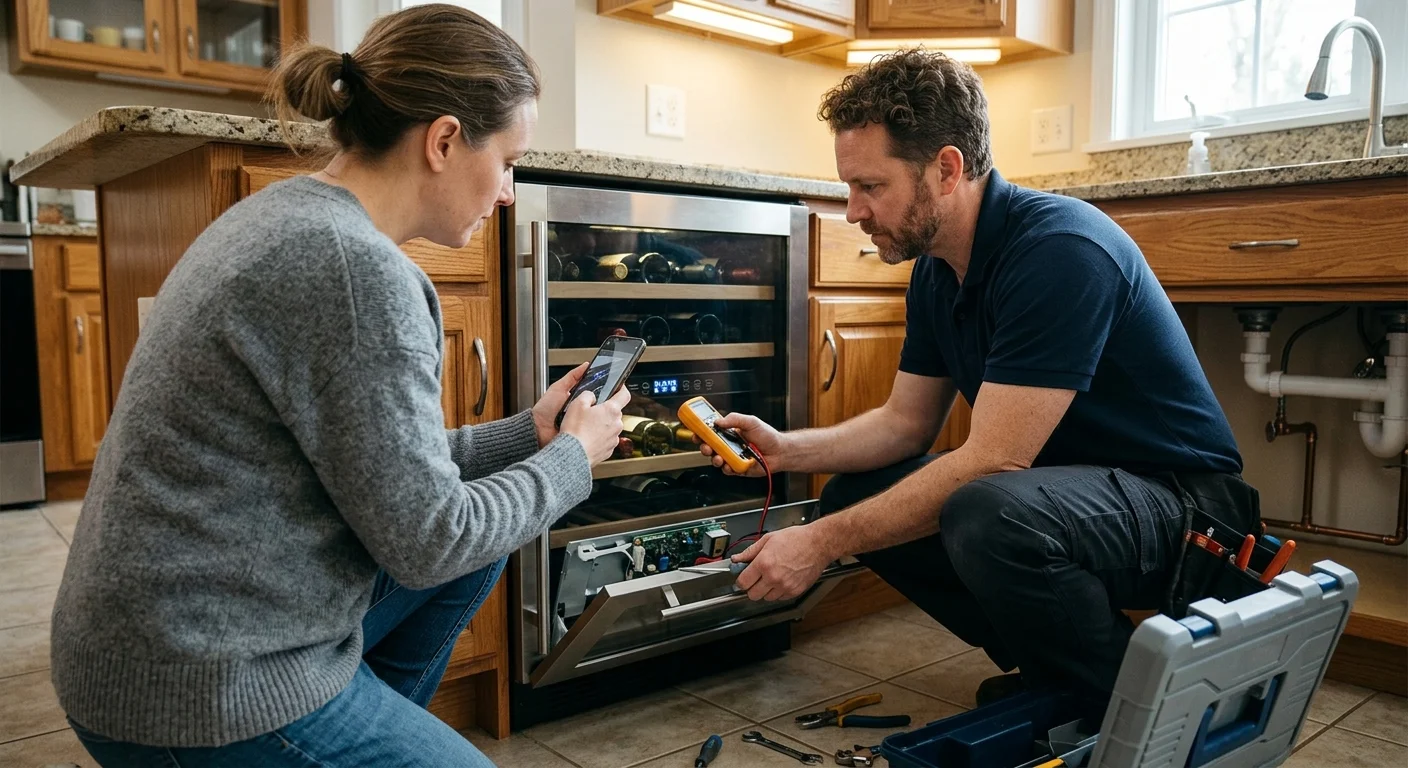
When a wine cooler temperature fluctuates, record the pattern before chasing each display change. Note what changed, when it changed, and what the cooler was doing nearby. That record helps separate an isolated reading from a repeating cooling problem.
Record the temperature pattern and control display
Start a simple log before changing the setting. A wine cooler temperature that keeps changing can follow several patterns. The display might move during certain parts of a cycle, after the door opens, or without an obvious event.
Write down these details:
- The date and time of each observation
- The displayed reading and selected setting
- Whether the door had recently opened
- Whether bottles were added, removed, or rearranged
- Any alarm, flashing symbol, or control message
- Sounds that started or stopped near the change
- Any recent power interruption
- Whether the reading later returned to its prior level
Use the owner’s manual to identify what the screen represents. Depending on the model, the displayed number may have a specific meaning defined by the manufacturer. Don’t assume it represents the same measurement on every wine cooler.
If you use a separate thermometer, record where you placed it. Keep its readings separate from the control display in your notes. A technician can decide how those observations relate to the model’s service information.
Avoid making repeated setting changes while you’re documenting the problem. Each adjustment changes the pattern a technician needs to see. If the manual provides a model-specific reset procedure, note when you used it and what happened afterward.
Take a short video if the display changes, flashes, or returns to another reading. Include any visible control symbols. That evidence can be useful when the symptom disappears before the technician arrives.
What owners can check without opening panels
Keep homeowner checks limited to visible, user-accessible areas described in the manual. You shouldn’t need to remove a panel to build a useful symptom record.
First, confirm the selected mode and setting. Look for a lock function, vacation mode, demonstration setting, or alarm indicator only if your manual lists one. Control names and button sequences differ between models. Generic reset instructions can create more confusion.
Next, inspect how the bottles sit inside the cabinet. Note whether anything touches the door, blocks an interior opening, or prevents a shelf from returning fully. Don’t rearrange everything immediately. Photograph the original loading pattern first, then record whether a small change affects the symptom.
Check the visible door perimeter for debris or an item caught near the seal. Close the door normally and observe whether it sits evenly. Don’t loosen hinges or adjust hardware unless the manufacturer identifies that work as an owner procedure.
Look around the exterior for anything that recently changed. A stored item may have been placed beside the cabinet. Furniture could have moved closer. A nearby appliance might now operate on a different schedule. Compare the actual setup with the installation instructions for your exact model.
If the cooler stops lowering its temperature altogether, use the separate wine cooler not cooling guide. That article addresses a sustained loss of cooling. This page focuses on readings that rise, fall, recover, or change intermittently.
How placement and door closure enter diagnosis
Placement matters because the technician needs to understand the cooler’s surroundings. It doesn’t prove the cause by itself. The model’s installation guide remains the authority for approved clearances, location limits, and cabinet configuration.
San Diego County doesn’t have one shared room pattern. A cooler inside a conditioned Carlsbad kitchen may have different surroundings from one in an enclosed East County room. South Bay and central San Diego homes can also place beverage centers in converted bars, tight cabinets, or shared utility spaces.
Record the room, not just the ZIP code. Note whether the unit is freestanding, under a counter, or surrounded by cabinetry. Photograph the front, sides, and nearby surfaces without moving the appliance. Mention direct sun, a nearby cooking appliance, or another noticeable heat source. The technician can compare those details with the manufacturer’s placement rules.
Door closure belongs in the same record. Note whether the door closes differently when certain shelves are full. Check for bottles, labels, shelf edges, or floor mats that interfere with normal closure. Record any wobble or visible cabinet tilt, but leave leveling and hinge adjustments to the technician unless the owner’s manual directs otherwise.
Watch for condensation or a changing seal appearance without assigning a cause. A door issue, cabinet position, control problem, and cooling fault can produce overlapping symptoms. The visible evidence helps the technician test the right possibilities.
For a closer look at closure symptoms, see the guide to a wine cooler door not sealing. Keep that issue separate from unexplained swings that continue with the door fully closed.
What technicians inspect when temperatures swing
A technician starts with the pattern, model information, and installation details. The goal is to reproduce the symptom or find evidence left by it. An intermittent problem can require more context than a cooler that never runs.
The technician may compare the control display with a service instrument and the manufacturer’s technical information. That comparison can show whether the display, sensor input, and cabinet condition agree. The exact test method depends on the model.
Other checks may include the door alignment, interior airflow, fan operation, control inputs, and cooling-cycle behavior. The technician can also inspect user-inaccessible wiring and components. A fault in one area can resemble a problem somewhere else, so replacing a part from the display pattern alone isn’t a sound diagnosis.
Share any alarms exactly as shown. Don’t translate a symbol into a guessed failure name. A photo of the display and the complete model number gives the technician better information for checking current manufacturer documentation.
If diagnosis reaches the refrigerant circuit, that work requires the appropriate EPA Section 608 certification. The independent pros in our network are certified for refrigerant work when the job requires it. Repair Pro San Diego makes the referral and doesn’t perform the inspection or repair.
California appliance repair businesses must register with the Bureau of Household Goods and Services. Homeowners can check a dealer’s current registration through the state’s Department of Consumer Affairs lookup. Registration confirms current business status, not an individual technician’s skill with a particular wine cooler.
When to request wine cooler repair
Request service when the same swing repeats after the manual-approved checks. Other useful signals include recurring control alerts, cooling that returns only after a restart, or a door that won’t sit correctly after obvious obstructions are removed.
A repair request should include:
- The full model and serial information
- Photos of the control display
- Your dated symptom log
- The cooler’s installation arrangement
- Any recent placement or power changes
- The steps you took from the owner’s manual
Mention whether the temperature rises and recovers or continues moving away from the setting. That distinction helps keep an intermittent complaint separate from a complete cooling failure.
Our wine cooler repair service connects San Diego County homeowners with licensed, insured independent technicians. For more detail about preparing for a visit, read the San Diego wine cooler repair guide.
Check the written manufacturer warranty before authorizing service. Coverage, exclusions, and approved service paths depend on the documents for your unit. Repair Pro San Diego doesn’t issue a repair warranty. Ask the matched technician what warranty applies to their work.
No verified wine cooler-specific cost guide supports a local price range, so we don’t publish an invented San Diego figure. Ask the technician about their diagnostic fee and whether it is credited toward the repair. The matched technician diagnoses first and quotes in writing before work begins.
When to call us
Repeated swings that continue after the manual-approved checks need a licensed appliance repair pro. We can match you with an insured independent technician serving San Diego County. Call (858) 988-7787 to leave a voicemail requesting a match with a local appliance repair pro.