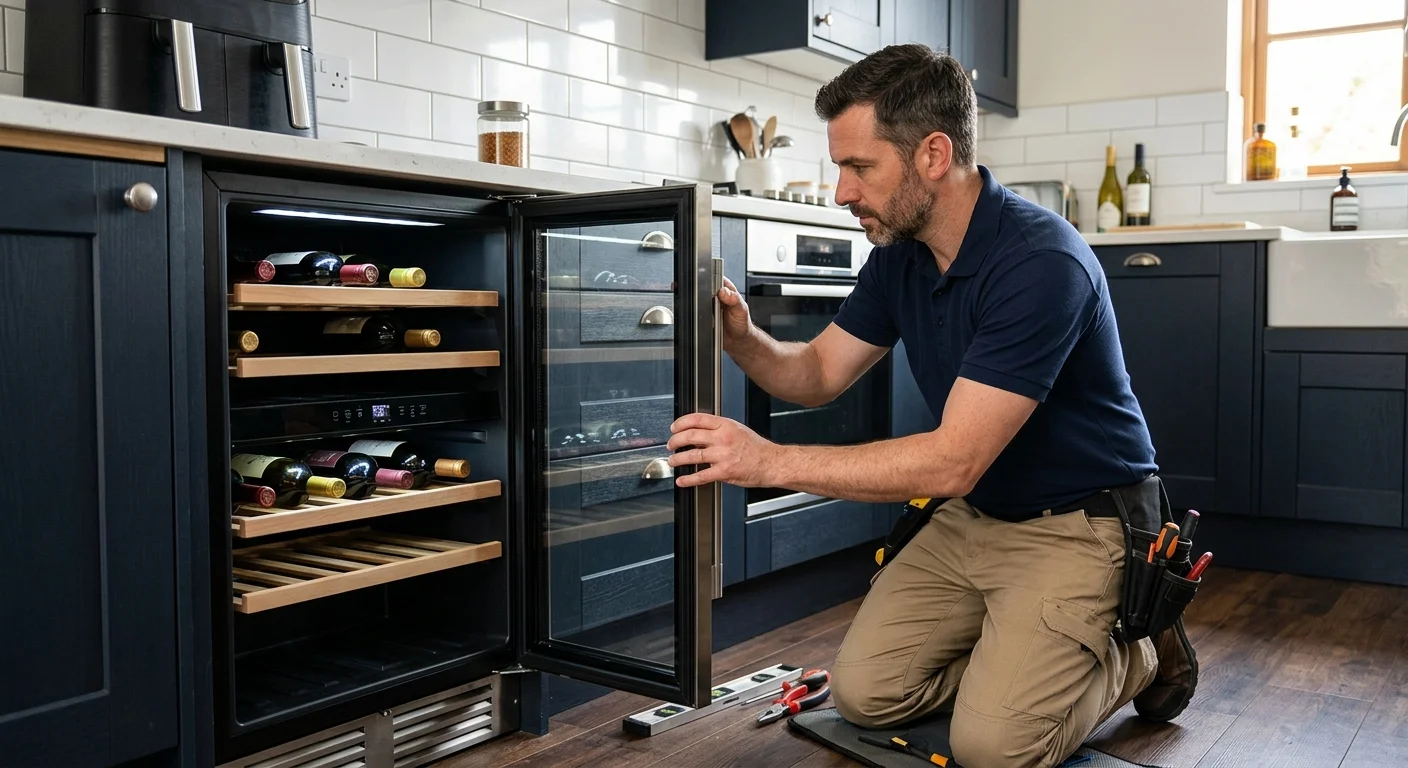
A loose corner, uneven gap, or door that drifts open can start a frustrating repair decision. Wine cooler door seal replacement may solve the problem, but the gasket isn’t always the cause. Door alignment, hinges, installation, and the cabinet opening also need attention.
How to confirm the door isn’t closing evenly
Start by looking at the entire perimeter, not one loose corner. Close the door gently and compare the gaps along both sides. Look across the top and bottom as well. One edge may sit farther from the cabinet than another.
Next, open the door and check for simple obstructions. A bottle, shelf, rack, or loose item can stop full closure. Confirm that each removable piece sits in its intended position. Use the model manual if you’re unsure how a rack should fit.
Inspect the gasket without pulling it from its channel. Look for folded areas, debris, visible splits, or sections that don’t follow the door frame. A gap is useful evidence, but it doesn’t prove that the gasket needs replacement.
You can also close the door on a strip of plain paper. Compare the resistance at several points around the perimeter. Uneven resistance can help identify the affected area. It still won’t identify the underlying cause by itself.
Watch what happens after you release the handle. Note whether the door stays put, moves outward, or changes position near the end of travel. Take photos from straight ahead and both sides. Those details help a technician understand the symptom before inspecting the unit.
If the door appears even but cooling remains poor, follow the separate wine cooler not cooling guide. A cooling complaint may involve more than door closure.
What technicians inspect around the seal and hinges
A technician usually starts with the symptom you documented. The inspection should consider the door as a complete assembly. Replacing the gasket before checking alignment could leave the original problem unchanged.
The gasket itself needs a close visual inspection. The technician may check its corners, mounting channel, contact pattern, and fit against the cabinet. The exact design varies by manufacturer and model. Some doors also use trim or retaining pieces that affect how the seal sits.
Hinge condition matters too. The technician can look for looseness, uneven movement, or a door position that changes during closing. Hinge adjustments aren’t universal. The correct procedure should come from the model documentation.
The inspection may extend beyond the door. A built-in wine cooler can sit tightly between cabinets. A freestanding model may rest on a different floor surface. In either case, the technician can check whether the unit sits evenly and whether nearby cabinetry interferes with travel.
The latch or closing mechanism also deserves attention when the model uses one. So do shelves, racks, trim pieces, and the cabinet opening. Each can affect how the door reaches its final position.
A full-size refrigerator uses similar inspection logic, but its components may differ. Our refrigerator door seal replacement guide explains that related problem. Don’t transfer its part choices or adjustment steps to a wine cooler without checking the correct model information.
When cleaning or adjustment may help
Cleaning may help when residue keeps the gasket from meeting the cabinet evenly. Check the manufacturer’s care instructions before choosing a cleaner or removing any part. Use only the method approved for that model.
Begin with visible debris along the contact surfaces. Work gently and avoid pulling the gasket away from its mounting area. Clean the matching cabinet surface as directed, then let both areas dry. Close the door and repeat the same visual checks.
This is also a good time to reseat removable racks and bottles. A rack that’s slightly out of position can create a closure problem that resembles a bad seal. Don’t force the door against resistance.
Minor alignment correction may be possible on some models. However, hinge and leveling procedures vary. Turning an unfamiliar fastener can move another part of the door. A glass-front unit also needs careful handling. Stop if the manual doesn’t clearly identify the adjustment.
Document what changed after cleaning. Note whether the gap disappeared, moved, or stayed the same. If the door remains uneven, repeated cleaning probably won’t answer the cause.
A technician can then determine whether adjustment, gasket work, or another correction fits the diagnosis. Ask the technician to explain what they found before approving the repair. The explanation should connect the observed gap to the proposed work.
When replacement becomes the better question
Replacement can mean two different things here. You might be considering a new door gasket, or you might be comparing repair with replacing the entire wine cooler. Keep those decisions separate.
A gasket replacement makes sense to discuss after the technician confirms that the gasket is damaged or no longer fitting correctly. The technician should also verify that the door and cabinet can meet evenly. A new gasket can’t correct every hinge, frame, or installation issue.
Replacing the appliance becomes a broader decision. Consider the confirmed diagnosis, the written repair quote, the unit’s overall condition, and how it fits the space. Built-in dimensions may matter in a compact kitchen. So can matching nearby cabinetry or counters.
San Diego homes present many installation settings. A wine cooler may sit under a counter in Chula Vista, inside a downtown San Diego condo, or freestanding in an inland kitchen. Tell the technician about tight cabinetry, access rules, and anything surrounding the appliance. Those details can shape the repair discussion without deciding the diagnosis.
There isn’t a verified San Diego price range for this specific repair in the approved source material. Our wine cooler repair cost guide focuses on the factors behind a quote instead of inventing a local average.
The matched technician diagnoses first and quotes in writing before work begins. If you’re comparing repair with replacement, request a clear description of the proposed work. That gives you something concrete to compare with a replacement appliance that fits the same opening.
How to request wine cooler repair
Start with the brand, full model number, and the door symptom. Say whether the door stays closed, drifts open, or leaves a visible gap. Mention where the gap appears and whether cleaning changed it.
Photos can make the request clearer. Take one image from the front, one from each side, and a close view of the affected edge. Include the hinge area if it looks uneven. Don’t remove the gasket or disassemble the door for the photo.
Also describe the installation. Note whether the unit is built in or freestanding. Mention nearby cabinet panels, counters, flooring changes, or racks that affect closure. If the door was recently moved or removed, include that detail without guessing what failed.
For local help, our wine cooler repair service matches San Diego County homeowners with licensed, insured independent technicians. Repair Pro San Diego is the referral service. The matched technician performs the inspection and any approved work.
Before authorizing service, California consumers can check a service dealer through the Department of Consumer Affairs lookup. Ask the technician to identify the diagnosed cause, proposed correction, and written quote. That keeps the decision tied to your model and its actual condition.
When to call us
Call when the door remains uneven after basic cleaning and obstruction checks, or when hinge or gasket work needs a licensed Appliance Repair pro. Call (858) 988-7787 to leave a voicemail. We’ll use the details in your message to match you with a local appliance repair pro.