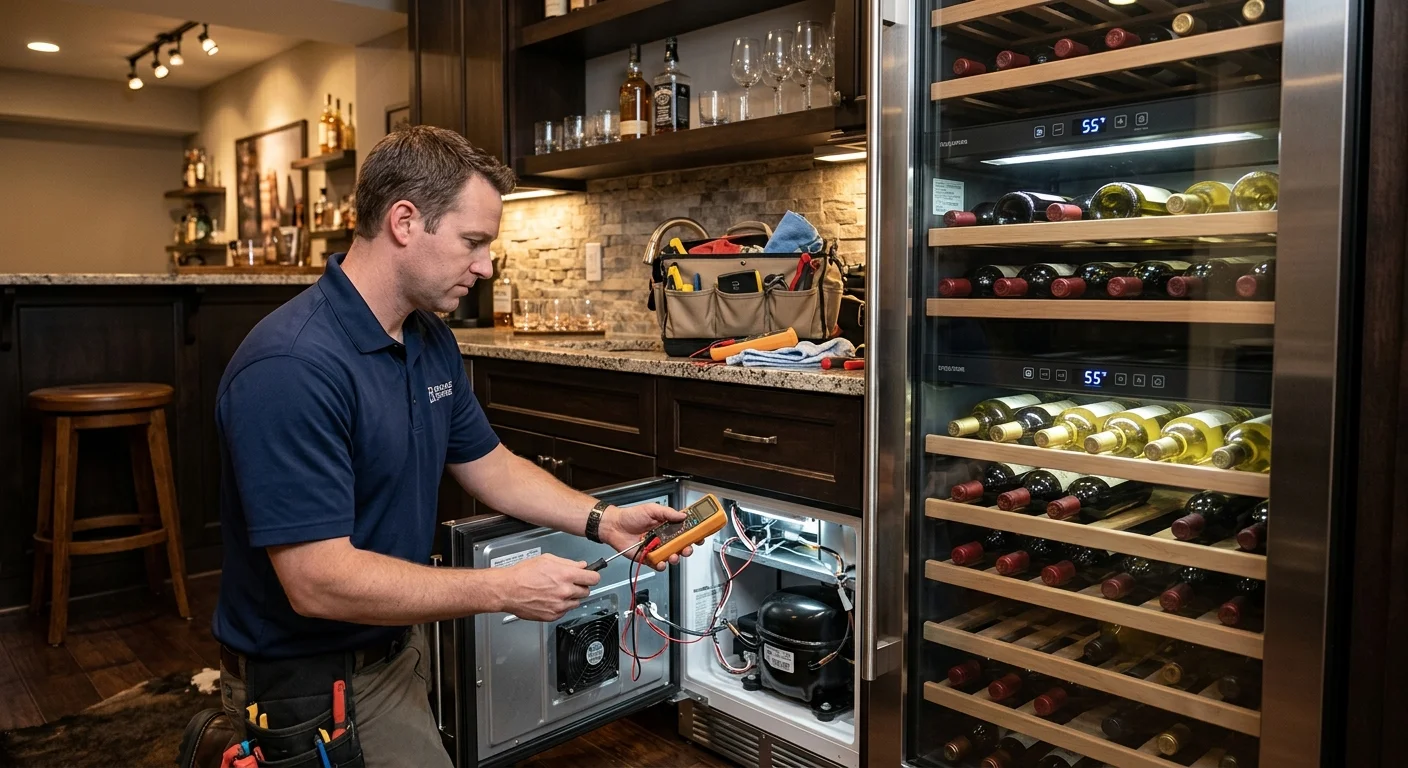
Wine cooler repair cost depends mostly on one thing: whether your unit is thermoelectric or compressor-based. Thermoelectric repairs, like a module, fan, thermostat, or gasket, sit at the affordable end. Compressor and sealed-system work on built-in units costs considerably more, comparable to refrigerator compressor work, and premium built-in brands add even more on parts and access time. Ask the technician about their diagnostic fee and whether it’s credited toward the repair.
Why wine cooler repair costs vary so much
Wine coolers aren’t one appliance. They’re two different cooling technologies wearing the same cabinet, and that split is the biggest reason quotes swing so widely between San Diego homes. A countertop or freestanding unit almost always uses a thermoelectric cooling module, a smaller part built around a Peltier chip. It’s cheaper to diagnose and cheaper to replace. A full-size or built-in unit usually runs a compressor and sealed refrigerant system, closer in complexity to a small refrigerator than to a mini fridge.
Thermoelectric repairs are generally faster and less expensive because the part count is lower and there’s no refrigerant to reclaim or recharge. Compressor repairs involve refrigerant recovery and recharge, plus more diagnostic time to confirm the sealed system is actually the problem before opening it up. Federal rules require certified handling of refrigerant, so sealed-system work is never a DIY job. The technician confirms which type you have before quoting, since guessing from a brand name alone isn’t reliable.
Wine cooler repair cost by repair type
| Repair type | Relative cost |
|---|---|
| Door gasket or seal replacement | Affordable end |
| Fan or thermostat replacement | Affordable end |
| Thermoelectric cooling module | Affordable end |
| Control board replacement | Moderate |
| Compressor or sealed system (built-in) | Priciest, comparable to refrigerator compressor work |
Most typical repairs, meaning anything short of a full compressor job, land well under what a compressor or sealed-system repair costs.
Thermoelectric vs. compressor units: what actually changes the price
If your wine cooler is a smaller freestanding model, chances are it’s thermoelectric. These units cool using electricity run through a semiconductor plate, with no refrigerant and no compressor. When something goes wrong, it’s usually the module itself, a fan that’s stopped moving air across the heat sink, or a thermostat that’s misreading the cabinet temperature. These are mechanically simpler jobs, and thermoelectric module, fan, and thermostat swaps all land at the affordable end of the wine cooler repair range.
Compressor-based wine coolers behave more like refrigerators. A compressor failure isn’t a quick part swap. It involves evacuating refrigerant, replacing the compressor, and recharging the system before testing for leaks. That labor and complexity is why compressor and sealed-system repairs on built-in units sit at the expensive end, comparable to refrigerator compressor work. If you’re not sure which type you own, check whether the unit vents from the front, common on built-ins since they’re enclosed in cabinetry, or the back. Front-venting is a strong hint you’re dealing with a compressor unit.
Why premium built-ins cost more to diagnose and repair
Built-in wine coolers from brands like Sub-Zero, Wine Guardian, or Perlick cost more on parts and access time. Parts are often proprietary and sourced through the manufacturer, and technicians need more time to reach components built into a fitted cabinet opening. If you own a high-end built-in, our guide on Sub-Zero refrigerator repair in San Diego covers similar premium-brand pricing patterns.
San Diego’s climate is harder on wine coolers than people expect
Wine coolers are built to hold a narrow temperature band, usually 45 to 65 degrees, and they’re not designed to fight extreme ambient heat. Garage and casita installations in San Diego’s inland communities regularly see summer temperatures well above what coastal neighborhoods experience, and that extra strain shows up as shortened compressor life and more frequent fan failures. Proper ventilation clearance helps, but it doesn’t fully offset a hot garage.
Repair or replace: when a wine cooler isn’t worth fixing
Wine coolers generally last 10 to 15 years. Many models run smaller, lighter-duty components even in the compressor-based versions, so heavy use or a hot location can shorten that. If your unit is under 6 years old and the repair estimate comes in under half the replacement cost, repair is almost always the better call. Once a compressor replacement is on the table for a unit that’s already 10 or more years old, it’s worth comparing that cost directly against a new comparable model before committing.
The bigger risk with wine coolers is what’s inside them. A slow failure that goes unnoticed for a few days can ruin an entire collection, a different calculation than a kitchen fridge where you’d just notice the milk went warm. If you’ve got anything valuable stored, we’d rather you get it diagnosed fast than wait and hope it corrects itself.
Getting an accurate quote
The only way to get a firm number is a diagnostic visit. The matched technician confirms whether you’re dealing with a thermoelectric or compressor system, identifies the specific failed part, and gives a written quote before any work starts, so there’s no reason to guess at the problem yourself first. Call Repair Pro San Diego at (858) 988-7787 and we’ll get a technician out to look at your wine cooler repair. We also handle standard refrigerator repair across San Diego County if your issue turns out to be a different appliance entirely.
Frequently asked questions
How much does it cost to repair a wine cooler?
Wine cooler repair cost depends mainly on the cooling technology. Thermoelectric and fan repairs sit at the affordable end. Compressor and sealed-system work on built-in units costs considerably more, comparable to refrigerator compressor repair.
Is it cheaper to fix a wine cooler with a thermoelectric cooling system or a compressor?
Thermoelectric repairs are almost always cheaper. A module or fan replacement is a straightforward parts-and-labor job. Compressor repairs require refrigerant recovery and recharge, which adds labor and pushes the cost well above a thermoelectric fix.
Why is the diagnostic fee higher for built-in wine coolers?
Premium built-in brands like Sub-Zero use proprietary parts and cabinetry-integrated installations that take longer to access and diagnose, which is reflected in a higher diagnostic cost than a standard freestanding unit.
Does San Diego’s heat affect wine cooler repair costs?
Yes. Units installed in uninsulated garages or inland homes work harder in the summer heat, especially in areas like Santee, El Cajon, and Escondido. That extra strain tends to shorten compressor and fan life, which can mean earlier repairs.
Should I repair or replace my wine cooler?
If the unit is under 6 years old and the repair is less than half the cost of a comparable new model, repair usually makes sense. On units 10 or more years old needing a compressor replacement, it’s worth comparing that cost against a new unit before deciding.