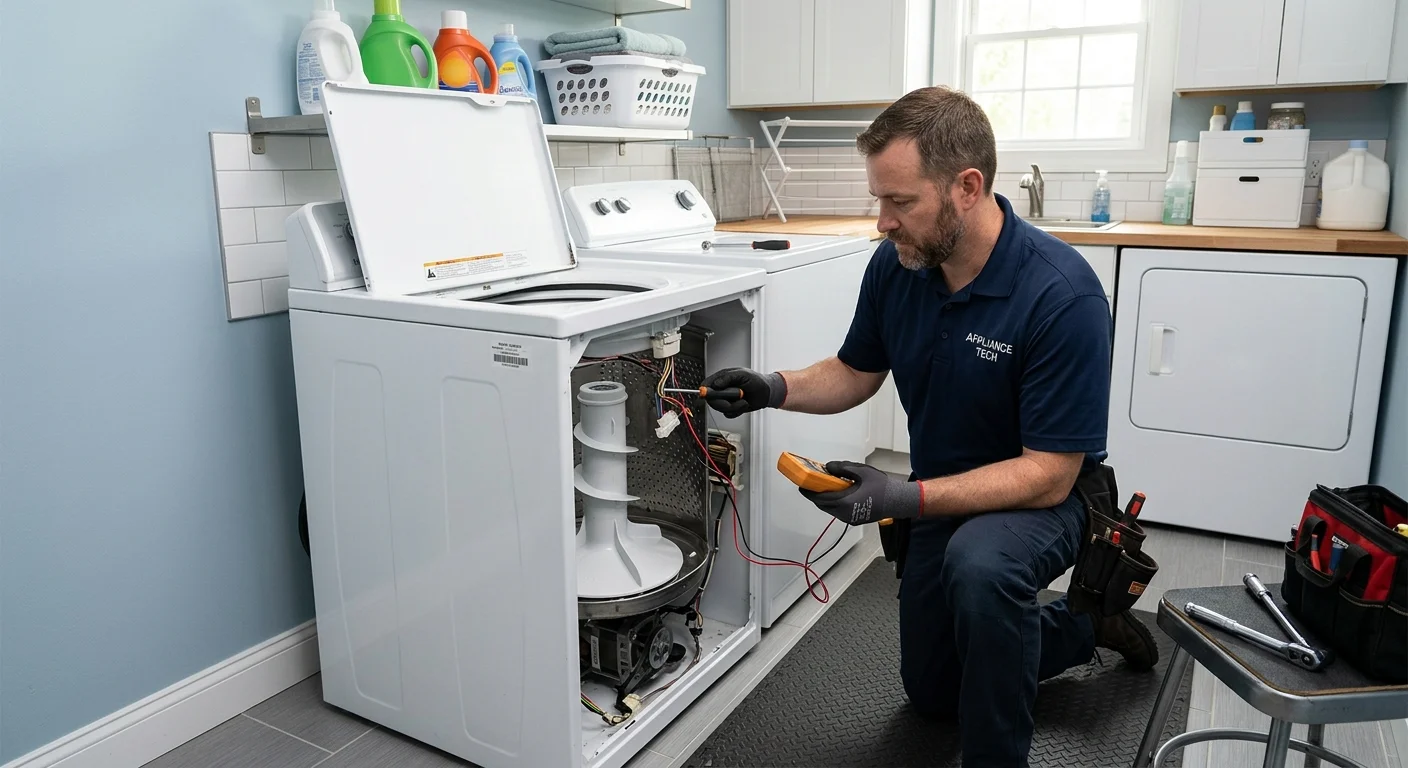
A Whirlpool top-load washer can wash normally, then leave a heavy, soaked load behind. Before requesting repair, identify whether it skipped spin, failed to drain, or stopped before the spin stage.
Confirm the model and failed cycle stage
Start with the full model number, not just the Whirlpool name. Whirlpool’s model-number guide places a top-loader’s tag beneath the lid on the tub rim. Copy the model and serial number exactly. That lets a technician find the matching cycle guide, wiring information, and parts diagram.
Next, describe what the washer actually completed. Did it fill and move the load during washing? Did you hear water leave? Was water still visible when the cycle stopped? Note the last status light, displayed message, and whether the lid locked. A short video of the sound or control panel can preserve a symptom that later disappears.
The phrase “won’t spin” covers several different outcomes. A basket that never turns is different from one that turns slowly. Clothes that are wetter than expected may reflect a low-spin selection or an unbalanced load. A tub holding water points attention toward drainage before the final spin.
Write down the load type and chosen cycle. Sheets, one heavy bath mat, and a mixed clothing load behave differently. Also note whether Drain & Spin works with the load redistributed. Don’t keep restarting a cycle just to reproduce hard banging or repeated stopping.
If the display shows letters, numbers, or flashing lights, record them first. Then use our Whirlpool washer error-code guide for that separate symptom. The code and exact model matter more than a generic internet parts list.
What owners can observe without opening the washer
Keep the first check simple. Close the lid fully and look for clothing caught near the rim. Watch the lid-lock indicator during the point when spin should begin. Whirlpool says top-load operation varies by model, but the lid must close and latch for the washer to operate.
Review the selected cycle and spin option. Whirlpool’s no-spin guidance notes that Low Spin or No Spin leaves more water in the load. If the wash is complete, its guidance suggests rearranging the load and selecting Drain & Spin. Use the cycle names shown on your machine.
Look at how the clothing sits in the basket. Loosen tightly packed items and distribute them evenly. A single absorbent item can collect on one side. Whirlpool explains that an off-balance load may cause noise, shaking, reduced speed, longer cycles, or a stopped spin. The washer may add water and move the load while trying to correct the balance.
With the cycle stopped, check whether the cabinet rocks diagonally. All feet should meet the floor. A drain pan can also affect how the feet contact the surface. Owner checks end with controls and visible exterior conditions. Leave the cabinet closed.
These observations are useful across San Diego County’s varied laundry spaces. A machine in a Chula Vista garage presents different access details than one in a Mission Valley condo closet. Note nearby walls, shelving, stairs, gates, and parking when requesting a match. Those details help the independent pro plan access without guessing about the fault.
How drain and control symptoms narrow the problem
A spin complaint often separates into two paths: water remains, or water leaves. If water is standing in the basket, observe the drain hose behind the machine. Look for a visible kink, crushing, or a blocked laundry sink. Whirlpool directs owners to the model’s installation instructions for hose placement because the allowed setup can differ.
Leave the machine in place and the hose connected when the tub holds water. Report whether you hear a pump sound, see flow at a laundry sink, or notice water backing up. A quiet stop and a humming attempt are different clues. Neither identifies a failed part by itself.
If the tub empties but the basket doesn’t spin, watch the lid-lock and cycle lights. A lid that never latches, repeated clicking, or a light that flashes should be recorded. Controls that ignore input may also be locked rather than failed. Check the model’s manual for the exact Control Lock steps.
Whirlpool’s current control guidance says a power cycle can reset the washer control. Disconnect the washer from power for five minutes, then reconnect it. Do this once, and only as written in the manufacturer’s guidance. Record any code before the reset because it may disappear.
The order of events matters. “Agitated, drained, clicked three times, then stopped” is more useful than “dead washer.” If agitation is also missing, compare the symptoms with our washer agitator troubleshooting guide. That keeps a wash-action problem from being mistaken for a spin-only failure.
What technicians inspect during diagnosis
A technician starts by confirming the complaint on that exact model. The inspection may cover the lid-lock system, drain path, pump, suspension, basket movement, and drive components. The model number determines which components are actually present. It also prevents ordering a part based only on another Whirlpool washer’s symptoms.
The diagnostic sequence follows what the washer did. Standing water can shift attention toward drainage and the pump circuit. A complete drain followed by clicking may put more focus on the lid lock, control signals, or drive engagement. Strong shaking can lead to checks of load balance, leveling, and suspension. These are diagnostic directions, not proof that any part has failed.
A pro may run the model’s service diagnostics and take electrical measurements. They can check whether the control sends a command and whether the addressed component responds. They can also inspect areas owners shouldn’t open during basic observation. Replacing a control, motor, pump, or lid lock without testing can miss the actual cause.
Share any video, error display, and prior repair history. Also say whether the symptom began after moving the washer, changing the drain setup, or washing a bulky load. That timeline can keep the visit focused.
Repair Pro San Diego makes the referral. We don’t diagnose the washer, stock parts, or perform the repair. We match homeowners with licensed and insured independent local technicians. California requires appliance service dealers to register with the Bureau of Household Goods and Services. You can check a business through the state’s DCA license lookup. Ask the matched technician about warranty terms, then get the diagnosis and quote in writing before work begins.
When to request Whirlpool washer repair
Request Whirlpool washer repair when the same no-spin symptom returns after the owner-level checks. That includes a balanced load, the correct cycle, a fully closed lid, a visible drain-hose check, and one manufacturer-directed control reset. Repeated lid-lock clicking, standing water, failed Drain & Spin, or harsh drive noises also justify diagnosis.
Have the model and serial number ready. Include the cycle, load type, last completed stage, control message, and whether water left the tub. Mention access conditions too. San Diego County service calls can involve garages, interior laundry rooms, upstairs units, and tight condo closets. Clear details help us match you with a suitable local pro from Oceanside to San Ysidro. Tell us if building rules limit parking or laundry-room access.
Check your purchase records and warranty documents before authorizing work. Coverage and service procedures depend on the appliance and agreement, so don’t assume a generic warranty period. If a manufacturer warranty or service plan may apply, ask its administrator what process it requires.
For more brand-specific context, read our Whirlpool appliance repair guide. Our washing machine repair referral page explains the matching service. The matched technician diagnoses the washer first and quotes in writing before work begins.
When to call us
A Whirlpool top-load washer needs a licensed Appliance Repair pro when it repeatedly won’t drain or spin after the visible, model-approved checks. Repair Pro San Diego can match you with a licensed and insured independent local technician, but we don’t perform the work. Call (858) 988-7787 to leave a voicemail requesting a match with a local appliance repair pro.