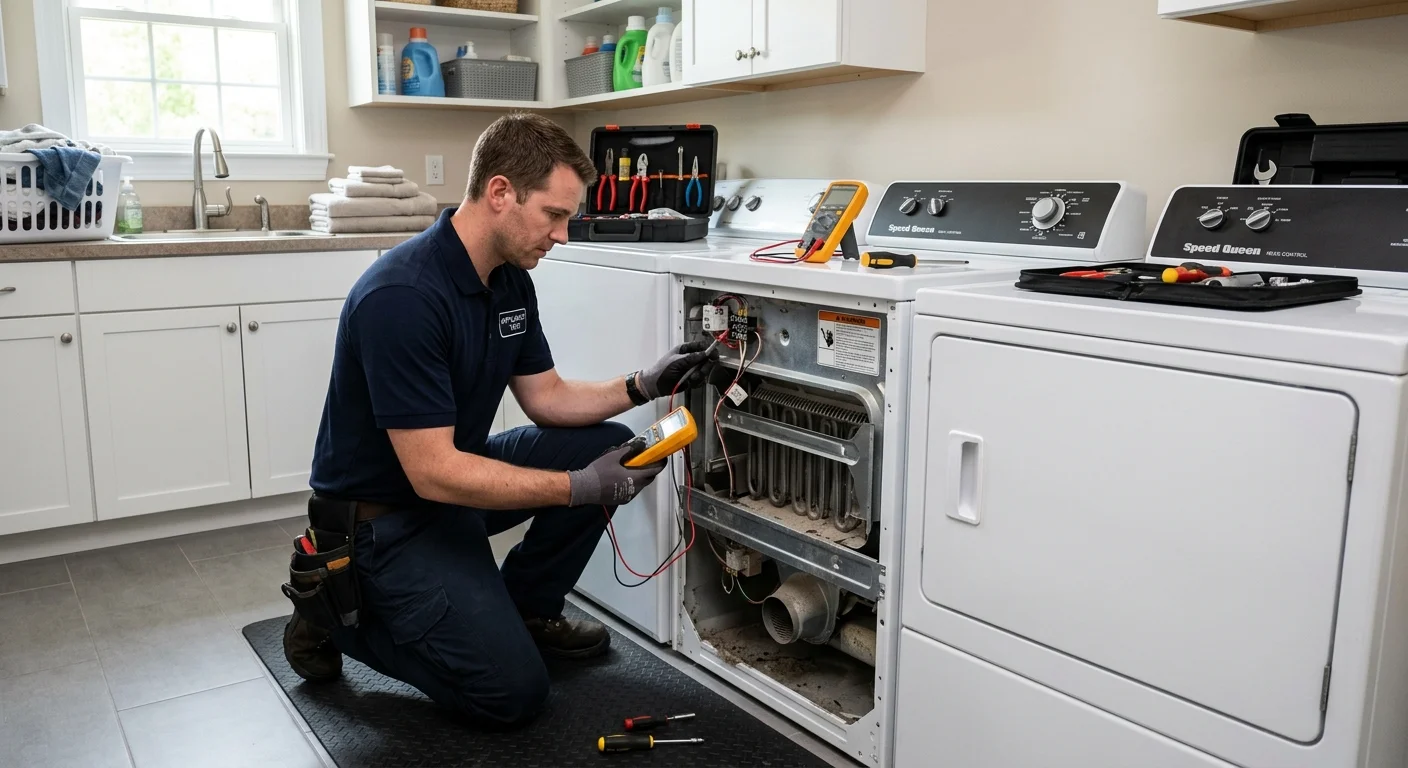
Clothes can tumble normally and still leave a Speed Queen dryer cold. Speed Queen dryer repair starts by separating a true no-heat problem from a cycle, airflow, or control symptom. A few careful observations give the matched technician a clearer starting point.
Confirm the model and no-heat symptom
Start with the dryer’s exact model information. Find the product label using the current Speed Queen owner documentation for your machine. Copy the model and serial information as printed. Don’t rely on a similar-looking dryer shown online.
That distinction matters because controls, heat systems, and service procedures can differ between models. A button sequence or code definition from another dryer may send the diagnosis in the wrong direction.
Next, describe what “won’t heat” means in your laundry room. Useful observations include:
- The drum turns, but the load stays cold.
- The dryer produces brief warmth, then turns cold.
- The controls respond, but the cycle doesn’t produce heat.
- A code, flashing light, or unusual display appears.
- One cycle behaves differently from another.
- The problem began after moving the dryer or changing the vent route.
Write down the selected cycle and options. Note whether the load remained completely cold or became slightly warm. These details help separate a steady no-heat condition from intermittent heating.
Also confirm whether the dryer is electric or gas from its label or documentation. Don’t guess from the plug, controls, or cabinet appearance. The technician needs the correct configuration before choosing model-specific service information.
If you see, hear, or smell signs of a gas leak, leave the area immediately. From a safe location, call 911 or SDG&E at 1-800-411-7343 before requesting dryer service. Follow SDG&E’s gas-appliance safety guidance.
If your Speed Queen washer also needs attention, keep that symptom separate. Our Speed Queen washer repair guide covers washer-specific problems without mixing them into dryer diagnosis.
What owners can observe before requesting service
Owner checks should stay outside the dryer cabinet. Begin with the current Speed Queen use and care guide. Confirm that the chosen cycle is intended to add heat and that no selected option changes the expected result.
Clean the lint screen as directed in that guide. Note its condition before cleaning. Heavy buildup, damage, or an unusual amount of lint can provide useful context. Don’t treat that observation as proof of a failed part.
Watch one normal cycle without repeatedly restarting the dryer. Record what happens in order:
- The controls accept the selection.
- The drum begins or doesn’t begin turning.
- Warmth appears, fades, or never develops.
- A code or light pattern appears.
- The cycle ends or stops unexpectedly.
Keep the exact code visible long enough to copy it. Avoid assigning a meaning from an unverified forum post. The current manual or model-specific service information should control that interpretation.
Laundry-room context also helps. Tell the technician whether the machine sits in a closet, garage, utility room, or stacked setup. Mention any recent installation or vent-routing work. A concealed vent in a central San Diego condo presents different access from a garage installation in North County.
Homeowners near coastal North County can also review our Oceanside appliance repair guide for local appointment preparation. It explains what information to gather without assuming the cause.
Don’t remove cabinet panels or perform internal electrical testing. Those steps belong in the technician’s diagnosis. For a broader symptom comparison, see our dryer not heating guide.
What technicians inspect during diagnosis
A technician starts with the exact model and the reported sequence of events. The goal is to reproduce the symptom, then follow the correct diagnostic path. That keeps a no-heat complaint from becoming a series of guessed parts.
The inspection may cover the dryer’s airflow path, heat-producing system, temperature controls, operating controls, and energy supply. The order depends on what the dryer does during a controlled cycle.
Electric and gas configurations require different diagnostic paths. An electric model has an electrical heating system. A gas model uses an ignition and gas-heating system. Test points, component names, and expected readings must come from documentation for that exact model.
The technician may also compare these conditions:
- Whether the drum turns while heat is requested
- Whether airflow appears restricted
- Whether heat begins and then stops
- Whether controls are commanding a heated cycle
- Whether a displayed code matches the observed symptom
- Whether the vent setup contributes to the complaint
A component should not be selected from the Speed Queen name alone. Even a familiar symptom can have several possible causes. Model details and measured results determine the repair recommendation.
California requires appliance repair businesses performing repairs to register with the Bureau of Household Goods and Services. Homeowners can check a dealer through the state’s Department of Consumer Affairs lookup.
Repair Pro San Diego is a referral service. We match homeowners with licensed, insured, independent local technicians. The matched pro performs the diagnosis and any approved repair.
Ask the technician about their diagnostic fee and whether it is credited toward the repair. The matched technician diagnoses first and quotes in writing before work begins.
How airflow and control symptoms affect the next step
Airflow and control observations don’t identify a failed component by themselves. They tell the technician which diagnostic branch deserves attention first.
A turning drum that stays completely cold points toward a different set of checks than a dryer producing occasional warmth. Heat that appears briefly may shift attention toward airflow, temperature control, or cycle operation. A drum that doesn’t turn adds another symptom and changes the diagnostic path.
Control behavior matters too. A code, flashing indicator, or cycle interruption should be recorded exactly. Don’t paraphrase the display. One changed letter or number can refer to a different condition.
The selected cycle also provides context. If the dryer heats on one appropriate setting but not another, tell the technician both selections. If every heated cycle remains cold, say that plainly. Don’t conclude that the control board has failed from this comparison alone.
Airflow observations should remain descriptive. Note whether the lint screen was heavily loaded. Mention recent vent changes or a dryer pushed farther into a tight space. Tell the pro whether the vent path is visible or concealed.
San Diego County homes have many laundry layouts. A closet in Chula Vista, an East County utility room, and an Oceanside garage can create different access conditions. Location doesn’t diagnose the failure, but it helps the technician prepare for the installation.
Partial drying can also be mistaken for complete heat loss. If clothing becomes warm but remains damp, report both facts. That distinction keeps the Speed Queen dryer repair visit focused on the symptom you actually observed.
When to request Speed Queen dryer repair
Request service when the dryer remains cold across appropriate heated cycles. It’s also time to call when heat repeatedly appears and disappears, controls interrupt the cycle, or a code returns after you confirm the correct settings.
A Speed Queen dryer repair service is especially useful when diagnosis requires cabinet access, electrical measurements, or gas-system testing. The independent technician can use model-specific documents and measured results instead of replacing parts by guesswork.
Before the appointment, gather:
- The complete model and serial information
- The electric or gas configuration shown in the documentation
- The selected cycle and options
- The exact code or light pattern
- Whether the drum turns
- Whether heat is absent or intermittent
- Any recent moving, installation, or vent changes
- Notes about access around the dryer
If you think manufacturer coverage may apply, gather your proof of purchase. Ask the manufacturer or seller to confirm the current terms for your model. Don’t assume coverage based only on the dryer’s age.
For broader help, our dryer repair and vent service page explains how the referral process works. Repair Pro San Diego doesn’t perform repairs, set technician fees, or provide a repair warranty. We connect customers across San Diego County with independent local pros who handle those details directly.
A written symptom record makes that conversation more precise. It also helps the technician distinguish no heat from slow drying, intermittent heat, control trouble, or a separate drum problem.
When to call us
Persistent no heat, repeated control symptoms, or panel-level testing calls for a licensed appliance repair pro. Call (858) 988-7787 to leave a voicemail requesting a match with a local appliance repair pro.