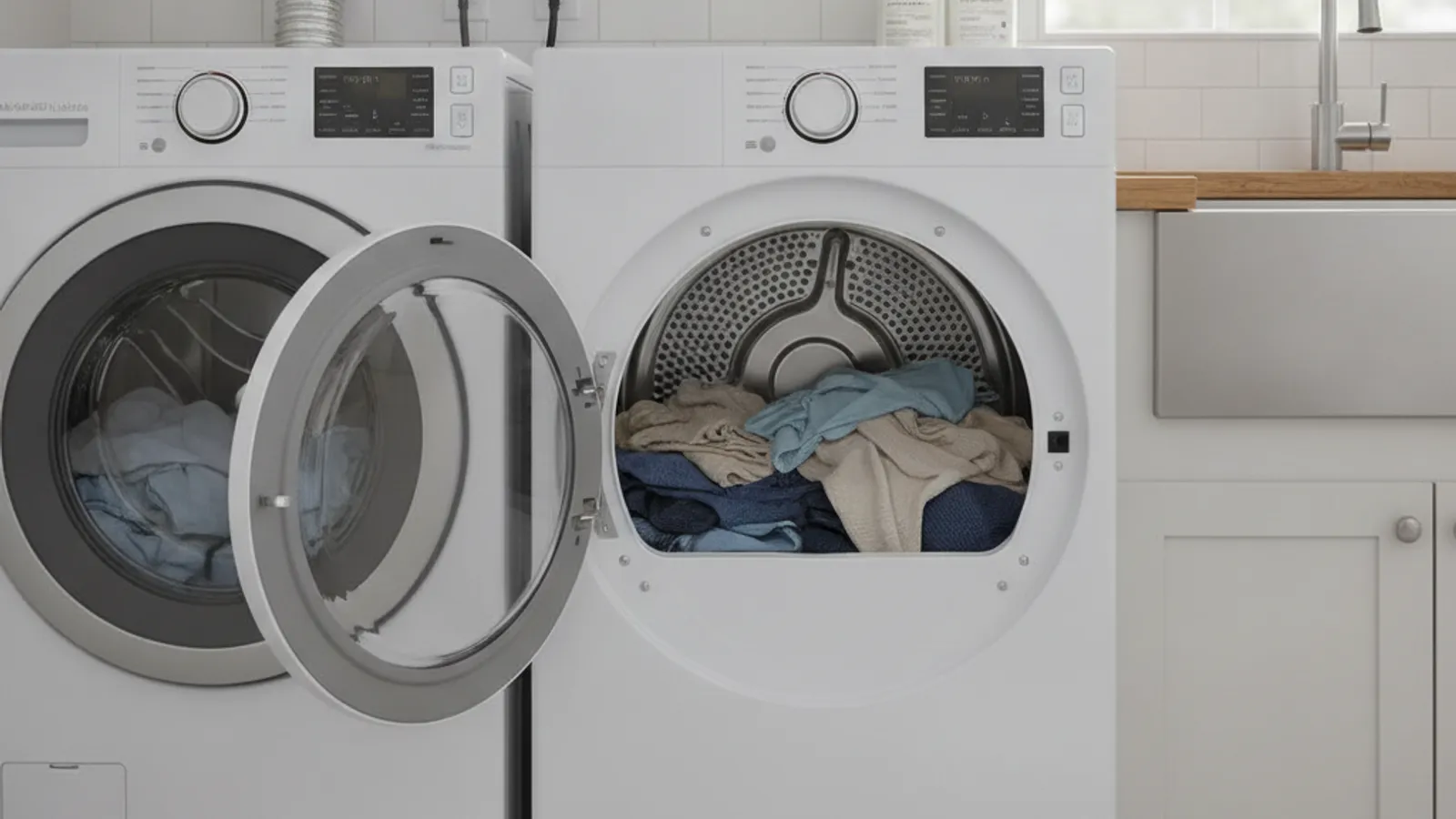
A Samsung dryer that tumbles but won’t heat almost always comes down to a clogged vent, a blown thermal fuse, or a failed heating element. Some of those you can fix yourself in an afternoon. Others mean a live electrical or gas part, and that’s where you call a pro.
First, figure out which Samsung dryer you have
Samsung’s most common dryers are the DV series, sold in both electric and gas versions. The model number starts with DV and lives on a sticker inside the door or on the back panel. Electric models run on a 240-volt outlet and make heat with a coil. Gas models use a natural gas or propane burner with an igniter and valve coils. Samsung also sells a heat-pump dryer line that runs on a standard 120-volt plug and makes heat very differently, with a refrigerant loop instead of a burner or coil.
Knowing which one you have matters, because the parts that fail are not the same. A no-heat problem on a gas DV dryer points somewhere completely different than the same symptom on a heat-pump model.
The most common cause: a clogged vent
Before you open anything up, check the vent. A blocked vent is the number one reason a Samsung dryer stops heating, and it’s the one cause most people can fix themselves. When lint packs the exhaust, hot air can’t escape, the dryer overheats, and a safety device cuts the heat to protect the machine. You get a drum that spins with cold air and clothes that stay damp.
Pull the dryer out, disconnect the vent hose, and check it for lint. Clear the hose, the wall duct, and the exterior flap. This is the single best first move, and it’s the one job no part replacement should skip. For a fuller walkthrough of this symptom across brands, our guide on a dryer that runs but won’t heat covers the same checks step by step.
San Diego makes this worse than most places. A lot of our tract homes in Mira Mesa, Santee, and Chula Vista have long vent runs from an interior laundry closet all the way to an outside wall. Long runs trap more lint, and trapped lint is both a no-heat cause and a real fire hazard. If you haven’t cleared your vent in a year, do it now.
Blown thermal fuse
When a Samsung dryer overheats, a thermal fuse blows to kill the heat. It’s a one-time safety device, so once it trips, it stays open and the dryer won’t heat again until it’s replaced. The fuse sits on the heating element housing on electric models or near the burner on gas models.
Here’s the catch. A blown thermal fuse is almost always a symptom, not the root cause. If the vent was clogged and you only swap the fuse, the new one will blow too. Clear the vent first, then replace the fuse. Testing it takes a multimeter, and replacing it means pulling the back panel and working near the heat source, so this one sits on the line between DIY and pro depending on your comfort with that.
Failed heating element (electric models)
On electric DV dryers, a coil called the heating element makes the heat. Over time the coil can break or burn through, and once it does, the dryer blows nothing but cold air. You test it the same way you test a fuse, by checking for continuity with a meter. No continuity means the element is dead and needs replacing.
This is a common failure on older electric Samsung dryers, and the part itself isn’t expensive. The work involves the back panel and the 240-volt circuit, so respect the power, unplug the dryer, and don’t guess. If you want to walk through the test before you decide, our piece on how to test a dryer heating element shows exactly what the meter should read.
Thermistor and thermal cutoff
Samsung dryers use a thermistor to read drum temperature and tell the control board how much heat to call for. If the thermistor reads wrong, the board can cut the heat or never call for it in the first place. A separate thermal cutoff acts as a backup safety, and like the thermal fuse, it trips on overheating and stays open.
A bad thermistor is harder to spot than a clogged vent, because the dryer often acts almost normal except for the temperature. This is usually a job for a technician with a meter and the model’s resistance specs.
Gas igniter and valve coils (gas models)
On a gas DV dryer, no heat usually means the burner isn’t lighting. The two usual suspects are the igniter and the gas valve coils. The igniter glows hot to light the gas. When it weakens or fails, it can’t reach the temperature needed to ignite, so the burner never fires. The valve coils open the gas valve, and when a coil fails, gas never reaches the burner even with a good igniter.
A classic sign of failing valve coils is a dryer that heats for the first few minutes, then runs cold for the rest of the cycle. Gas work involves a live fuel line, so this is firmly pro territory. Don’t take a gas valve apart yourself.
Error codes and what they mean
Samsung dryers show info codes on the display when something’s off. Heat-related codes generally point at temperature sensors or overheating. If you see a code, write it down before you clear it, since it narrows the search fast. If the screen just shows a code and no clear meaning, describe the behavior to your technician instead of guessing at the part. A dryer that tumbles, displays a temperature code, and runs cold is telling you the heat circuit or sensor is the problem.
When to call us
Clearing a vent is a job for a Saturday. Testing a fuse or element is doable if you’re handy and careful with power. But a gas burner, a misreading thermistor, or a fuse that keeps blowing means something deeper, and that’s worth a qualified technician. The technicians in our network handle Samsung electric, gas, and heat-pump dryers across San Diego County, and you can read more about what that covers on our dryer repair page.
Call us at (858) 988-7787 to get matched with a local technician.
Frequently asked questions
Why is my Samsung dryer not heating?
The most common reason is a clogged vent that causes the dryer to overheat and cut the heat as a safety measure. Other frequent causes are a blown thermal fuse, a failed heating element on electric models, or a bad igniter or valve coil on gas models.
Can I fix a Samsung dryer heating element myself?
You can if you’re comfortable working near a 240-volt circuit and using a multimeter. Always unplug the dryer first, test the element for continuity, and replace it only if it reads open. If you’re unsure about the power, call a professional repair service.
Why does my Samsung dryer heat then go cold?
On a gas model, heating for a few minutes then running cold usually points to failing gas valve coils that stop opening the valve. On any model, it can also signal a vent restriction or a sensor reading the wrong temperature.