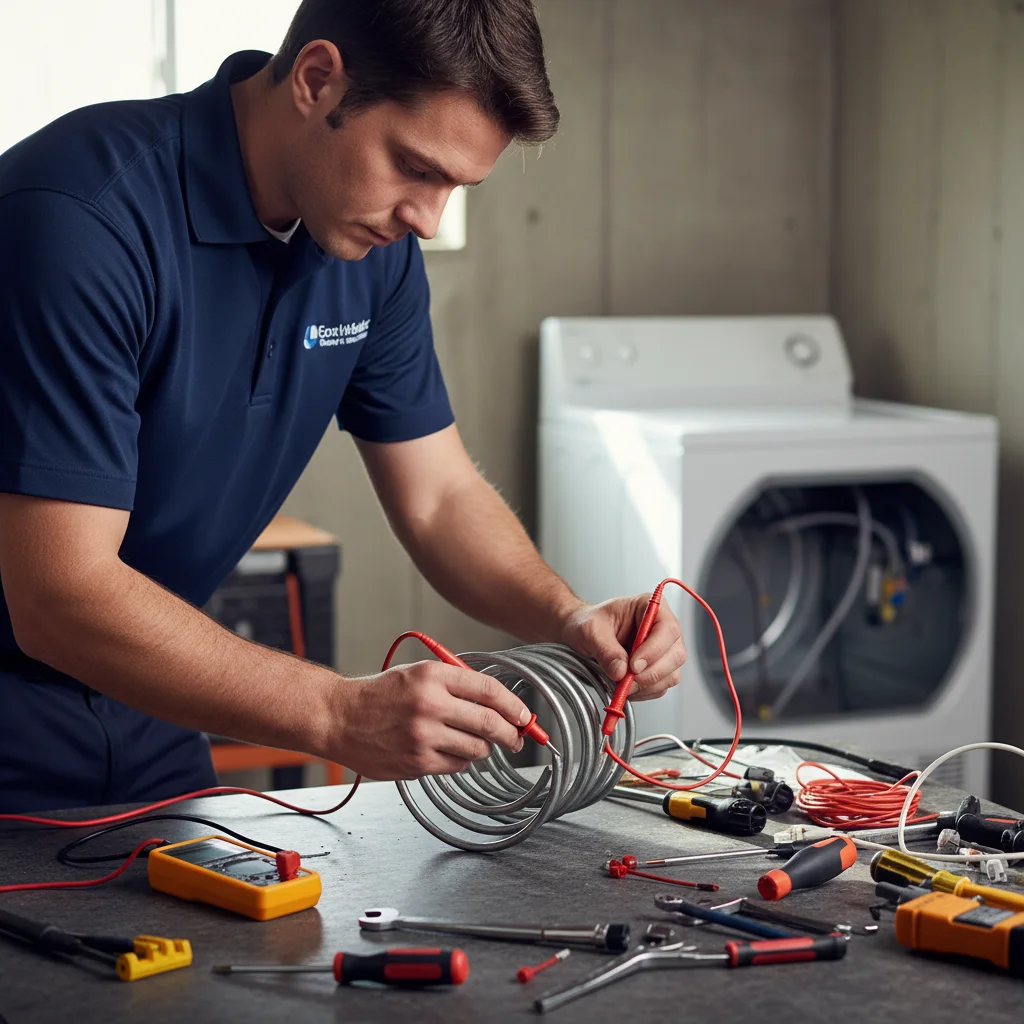
Pulling clothes out still damp and cool is a no-heat symptom, not proof that the heating element failed. The drum can spin while the heat circuit stays off for several reasons, and the right next check depends on whether the dryer is electric or gas and on the exact model manual.
This guide stays on the outside of the cabinet: unplug, lint screen, and the vent hood you can see. Internal meter tests, panel removal, and gas-valve work belong to the manufacturer’s procedure or to a matched technician who quotes in writing.
Symptoms of a failed heating element
A heating element is one possible heat source on an electric dryer. When it is open, the dryer may still tumble while the air stays cool or only mildly warm. Clothes that stay wet after a full cycle, drying times that stretch, or a cool breeze at the exterior vent are worth recording. Those signs do not by themselves name the failed part.
A dryer that will not start at all, or one that makes unusual noises, is a different task. A restricted vent can also shut heat down as a safety response without the element itself being open. Confirm the fuel type from the rating label before anyone tests internals.
A 2-minute safety check before you start
Unplug an electric dryer from the wall outlet and confirm the cord is out. Do not operate the gas shutoff valve yourself. If you see, hear, or smell signs of a gas leak, leave immediately and call 911 or SDG&E at 1-800-411-7343 from a safe location. Follow SDG&E’s gas-appliance safety guidance before arranging dryer service.
Stay outside the cabinet. Do not remove the back panel, disconnect heating-element wires, or interpret a universal ohm range. Those steps are model-specific and electrically hazardous.
What you can observe without opening the dryer
Clean the lint screen as the owner’s manual describes and note how loaded it was. Look at the exterior vent hood. If lint is packed around the louvers, or the flap barely moves, record that for the technician. Do not pull the dryer off the wall, disconnect the vent hose, or run a test cycle to “prove” heat if you smell smoke or burning.
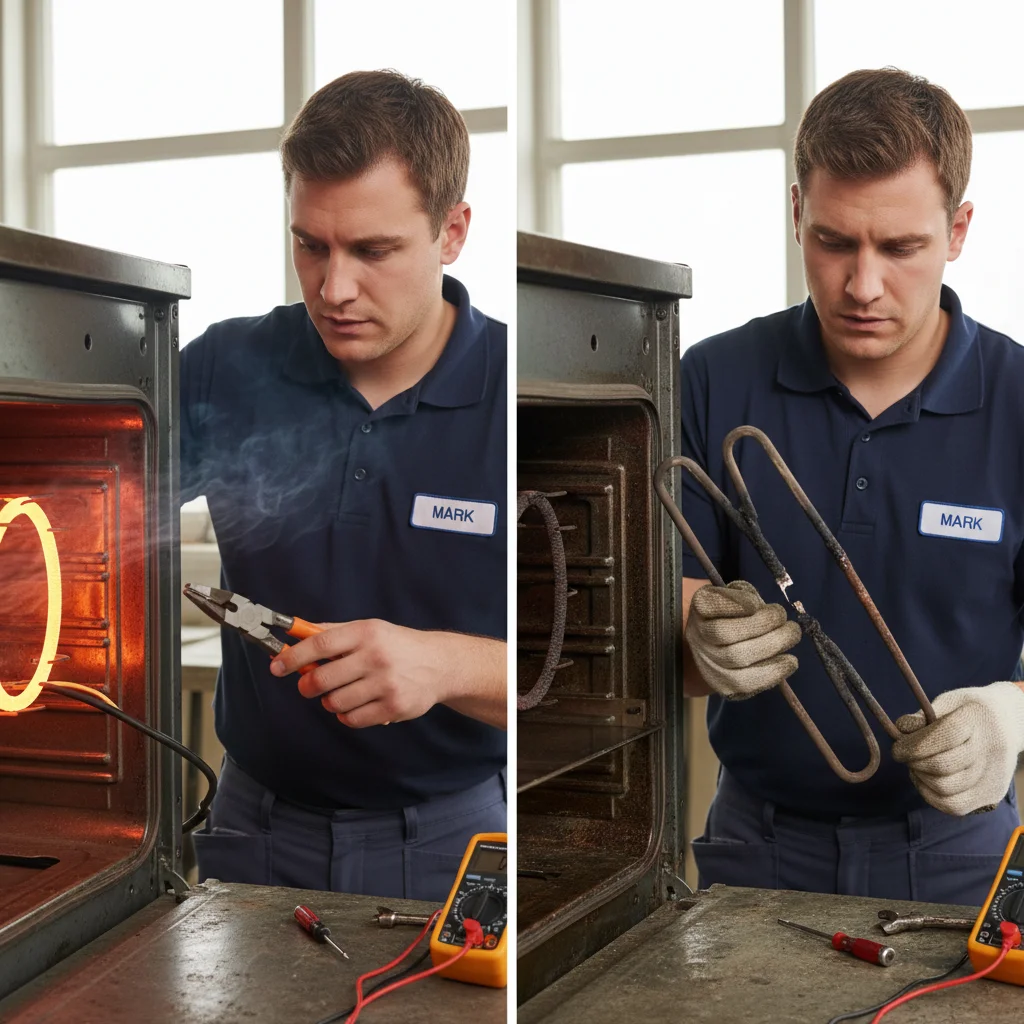
Heating-element continuity, thermal-fuse tests, and igniter checks belong in the exact model service information or in a technician’s diagnosis. There is no single resistance number that applies to every dryer.
What a replacement costs in San Diego
Repair Pro San Diego does not publish a heating-element price list. Part cost, access, and labor vary by brand, model, and whether the dryer is electric or gas. The matched technician diagnoses first and quotes in writing before work begins. Ask about their diagnostic fee and whether it is credited toward the repair. For dryer repair across San Diego County, that written quote is the number that matters.
When it’s not the element (other culprits)
If the vent is restricted, a thermal fuse or high-limit thermostat may have opened to protect the machine. Gas dryers use an igniter, valve, and flame sensor instead of an electric coil. Timers and control boards can also fail to call for heat. None of those parts should be identified from a website chart. For broader no-heat context, see dryer repair in San Diego.
Frequently asked questions
How do I test a dryer heating element with a multimeter?
Do not open the cabinet to meter the element unless the exact model manual tells you to and you are qualified to follow it. Unplug the dryer, check the lint screen, and inspect the exterior vent hood. Leave continuity testing to the manufacturer’s procedure or to a matched technician.
What does a dryer heating element replacement cost in San Diego?
There is no approved dollar range on file for this job. Access, the specific part, and labor all move the quote. The matched technician diagnoses first and quotes the exact number in writing before work begins.
What if the heating element tests fine but the dryer still won’t heat?
A clear continuity reading on the element, if a technician obtained one from the model procedure, still leaves the vent path, thermal fuse, thermostats, and, on gas models, ignition parts as open questions. Do not continue internal testing on your own.
Is it safe to test and replace a dryer heating element yourself?
Unplugging and checking the lint screen and exterior vent is the owner-safe layer. Panel removal, wiring, and gas connections are not. If you see, hear, or smell a gas leak, leave and call 911 or SDG&E from a safe location before requesting appliance service.
When to call us
If clothes still come out cold after you unplug, clean the lint screen, and check the exterior hood, leave a voicemail at (858) 988-7787. Repair Pro San Diego matches you with an independent technician in our network for dryer repair across San Diego County. Always check that the repair business is registered with the California Bureau of Household Goods and Services (BHGS) through the California Department of Consumer Affairs lookup. That lookup confirms registration status, not an individual technician’s skill.