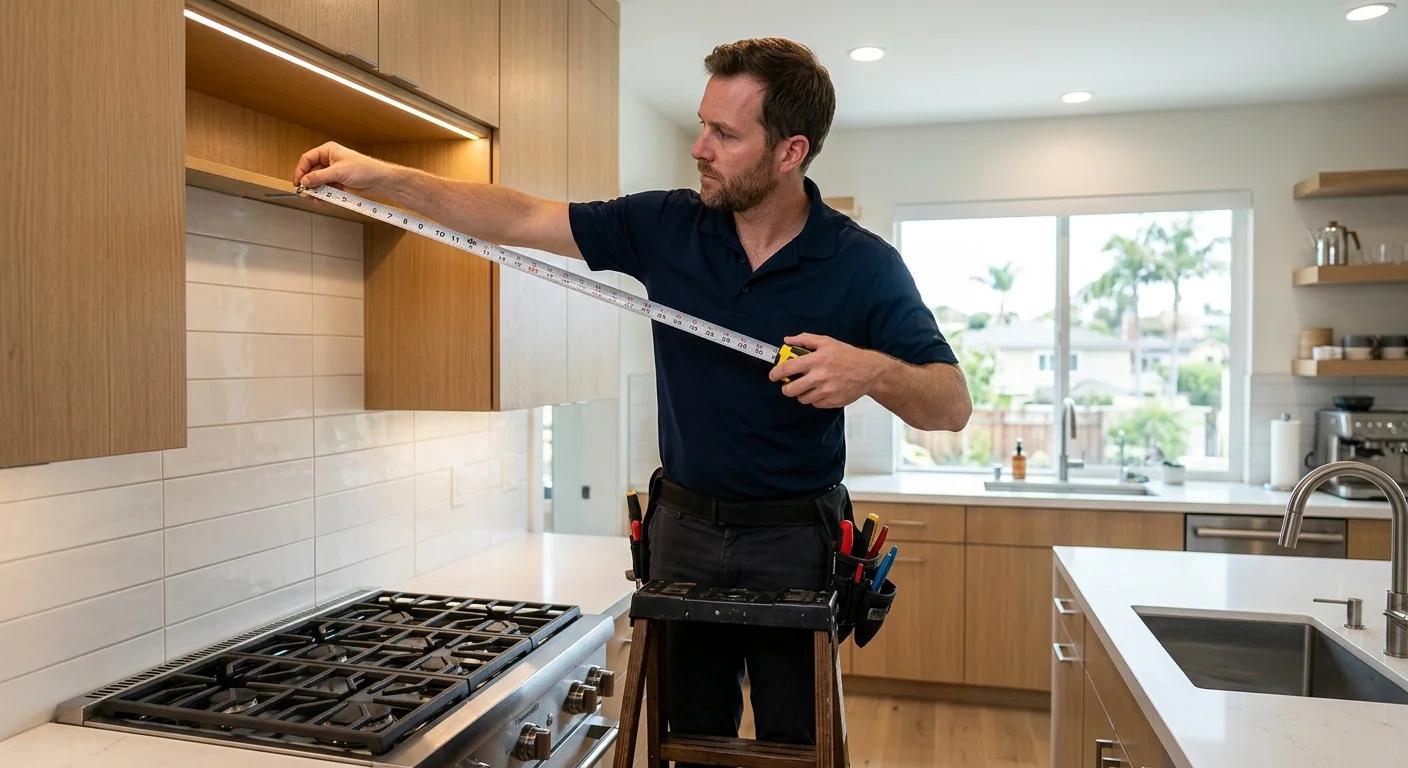
A successful range hood installation starts with the fit, vent path, and connection details. Confirm those points before buying the hood, especially when replacing an older model in a San Diego kitchen.
Choose a ducted or recirculating range hood
Start by identifying what the current kitchen can support. A ducted hood sends cooking air through a vent path to the exterior. A recirculating hood passes air through its filters and returns it indoors.
An existing exterior vent may make a ducted replacement easier. Its position, shape, and dimensions still need checking. A new hood may not line up with the existing opening. The installer should compare both products before changing cabinets or ordering vent parts.
A recirculating model avoids an exterior vent path. That can make it practical when routing options are limited. It still needs the correct filters, mounting arrangement, and connection specified by its manufacturer. Ask how often its filters need attention and whether replacements are readily available.
This choice often depends on the building. A Downtown San Diego condo with shared walls presents different planning questions from a detached home in El Cajon. Kitchens in Chula Vista, City Heights, and coastal North County can also have very different cabinet layouts. Don’t assume one installation plan works across the county.
No verified countywide ventilation or permit rule appears in the approved sources for this guide. Ask the installer which local authority covers the property. Then confirm any permit or ventilation question directly with that city. For an address outside a city, ask San Diego County which office handles it.
Measure the opening and cooking area
Measure the available space before choosing a model. Record the opening’s width, depth, and height. Also measure the cooking surface and the cabinet above it. Take photos from the front, both sides, and inside the upper cabinet.
Don’t rely only on the old hood’s advertised width. Cabinet faces can hide a smaller opening. Tile, trim, shelves, and uneven walls can also reduce usable space. A hood that matches the old unit on paper may place its vent outlet elsewhere.
Write down these details:
- The current hood’s brand and model number
- The opening’s width, depth, and height
- The cooktop or range width
- The distance between the cooking surface and mounting area
- The upper cabinet’s interior dimensions
- The location of the existing vent opening
- The location and type of the current electrical connection
Compare those measurements with the new hood’s installation manual. Use the manufacturer’s stated dimensions rather than a retailer photo. The manual should also show where the vent outlet, fasteners, and connection points sit.
Built-in hood inserts need extra attention. Their visible width doesn’t describe the entire housing. Under-cabinet and wall-mounted models also use different mounting arrangements. If the cabinets are being altered, have the installer review the plan before cutting begins.
Our appliance installation and hookup service matches San Diego County homeowners with independent local professionals. Share the measurements, model number, and photos when requesting a match.
Confirm the vent and electrical setup
The installer needs to see what’s behind and above the existing hood. A finished cabinet can conceal the vent direction, transitions, wiring, and prior modifications. Don’t order solely from what’s visible below.
For a ducted range hood installation, document where the existing vent enters the cabinet or wall. Note whether it travels upward or toward the back. Photograph its opening beside a tape measure. The installer can compare that setup with the new model’s manual and decide what parts or cabinet changes may be involved.
Next, identify whether the current hood appears plugged into an outlet or connected another way. Don’t disconnect concealed wiring to investigate it. A clear photograph of the accessible connection and the model label gives the professional a safer starting point.
We couldn’t confirm a current San Diego-wide electrical, ventilation, or permit rule from the approved sources available for this article. Requirements may need address-specific confirmation. Ask the matched professional to identify the responsible local authority, then verify the current answer before work begins.
Also mention any planned changes to the range or cooktop. A deeper appliance, taller cooking surface, or new cabinet design can change the measurements. If the cooking appliance itself has problems, review oven, range, and cooktop repair before planning the surrounding installation.
Older repairs and remodels sometimes leave unclear connections. Treat that as a reason for inspection, not guesswork. The professional can compare the visible setup, the product instructions, and any direction from the local authority.
What to ask the matched installer
Give the matched installer enough information to review the job accurately. Send the hood model, kitchen photos, cabinet measurements, and details about the existing vent. Mention whether the property is a house, condo, rental, or commercial space.
Ask direct questions before authorizing the work:
- Does this model fit the measured opening?
- Can it use the existing vent path?
- Will cabinet, wall, or tile changes be needed?
- Who handles any separate trade work?
- Which local authority should confirm permit questions?
- What isn’t included in the written quote?
- Who provides any additional materials?
- What manufacturer instructions affect this specific model?
- What written warranty, if any, does the independent professional offer?
The brand doesn’t set installation prices, fees, or warranty terms. Those details come from the independent professional. Installation cost can change with access, cabinet alterations, vent changes, mounting style, and electrical work. The matched technician diagnoses first and quotes in writing before work begins.
California appliance repair businesses must register with the Bureau of Household Goods and Services. You can check a business through the state’s Department of Consumer Affairs lookup. That registration is separate from technical certification and doesn’t replace your review of the written scope.
Repair Pro San Diego is a referral service. We match homeowners with licensed and insured independent local technicians. The matched professional performs the work and explains their own terms. Homeowners comparing service in South Bay can also review our Chula Vista appliance repair guide.
Repair the existing hood or install a new one
A failed hood doesn’t always mean the entire appliance needs replacement. The problem may involve the controls, light, fan, filter, or another component. Start with the symptoms and model number before purchasing a new unit.
A repair assessment makes sense when the hood still fits the kitchen and meets your needs. Our guide to range hood repair in San Diego explains common issues and what information to gather. If the fan, controls, or lights have stopped working, follow the checks in what to do when a range hood isn’t working. Stop before opening concealed electrical components.
Replacement may be the better planning path when you want a different hood style, the existing housing is damaged, or the new kitchen layout changes the available space. It can also make sense when the needed part can’t be confirmed. Those are decision factors, not universal replacement rules.
Compare both scopes in writing. A repair quote should identify the diagnosed problem and proposed work. An installation quote should describe mounting, vent, connection, cabinet, and removal responsibilities. Don’t assume disposal, wall repair, tile work, or cabinet changes are included.
No verified repair-versus-replacement percentage or cost threshold appears in the approved claims file. We can’t confirm a universal formula for that choice. Compare the professional’s written diagnosis with the price and features of the model you’re considering. Include any separate cabinet or trade work in that comparison.
When to call us
Call when the existing hood has failed, the connection is unclear, or a replacement changes the fit. A licensed appliance repair pro can inspect the setup and explain the available path. Call us at (858) 988-7787 to leave a voicemail requesting a match with a licensed local technician.