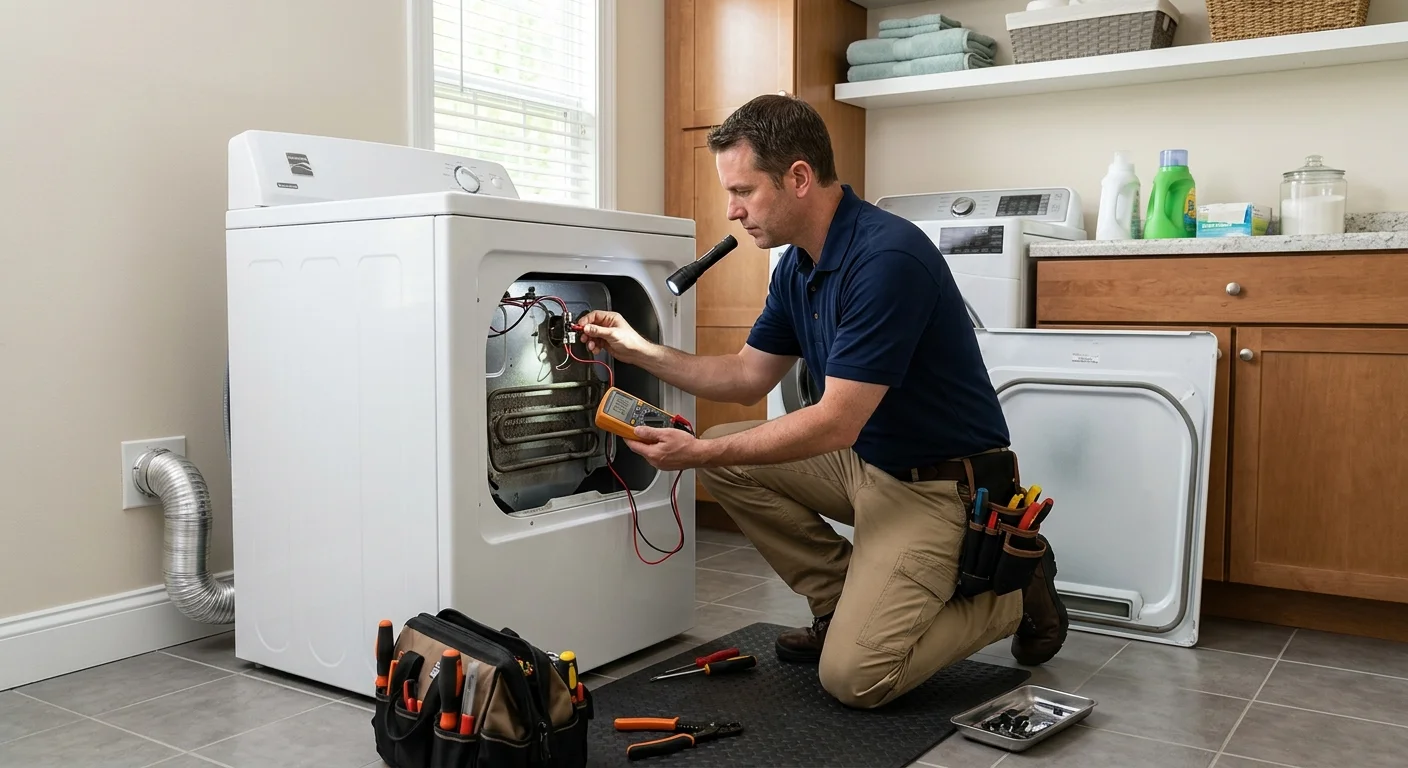
A Kenmore dryer that turns but stays cold needs a model-specific diagnosis. Good Kenmore dryer repair starts with the model number, fuel type, and exact no-heat pattern. Those details help separate a heating problem from airflow or control behavior.
Confirm the model and no-heat symptom
First, separate no heat from slow drying. Write down whether clothes stay cold, become briefly warm, or need repeated cycles. Also note whether the drum turns and the controls finish the selected cycle. A dryer that tumbles without warmth presents a different diagnostic path from one that heats weakly.
Next, identify whether the dryer is electric, gas, or ventless. Don’t infer this from the control panel. Use the appliance label, manual, or known connection type. If you’re uncertain, send the matched technician a clear label photo. Don’t move the dryer just to inspect a hidden connection.
Copy the entire model number exactly. Kenmore’s official manual finder asks users to enter the model number without special characters. Keep the original label photo too. It lets the technician compare your machine with the right document when punctuation or spacing differs.
That model match matters. Kenmore dryers don’t all share one control layout, heat source, or airflow design. A code, sensor cycle, or vent arrangement must be interpreted against the correct manual. Advice written for another machine can send the diagnosis in the wrong direction.
For other appliance types under the same name, use our Kenmore appliance repair overview. This page stays focused on one complaint: a Kenmore dryer not heating.
What owners can observe before requesting service
Useful observations come from normal use, not cabinet testing. Start with the cycle that produced the problem. Record its name, temperature selection, dryness setting, and displayed time. Check whether the chosen cycle name indicates air or no heat. That simple detail can explain a cold load without identifying a failed part.
Note what the dryer actually does. Does the panel light? Does the drum turn? Does the countdown change? Does warmth appear early, then disappear? Photograph any code or unusual display before changing settings. Record sounds only as descriptions. A click, hum, or repeated pause is more useful than a guessed component name.
Check the lint screen’s visible condition. If the exterior vent outlet is readily accessible, note whether its flap moves during operation. Don’t disconnect ducts or open the cabinet for this checklist. In a multi-unit building, tell the technician when the termination point isn’t accessible.
Placement also matters in San Diego County. A ventless dryer in a downtown condo follows a different airflow path from a ducted dryer in an Oceanside garage. An interior laundry closet may also limit access around the machine. Describe the room, nearby wall, and known vent route without guessing what sits behind finished surfaces.
Finally, record whether the issue affects every load or one cycle. Include load size and fabric type. These notes don’t diagnose the dryer. They give the independent technician a cleaner starting point.
What technicians inspect during diagnosis
The matched technician should begin with the exact model and your symptom record. The first task is confirming what works before isolating what doesn’t. That includes the controls, drum operation, heat request, incoming supply, and airflow path. The order depends on the model and its documented design.
On an electric dryer, diagnosis can include the electrical supply and heating circuit. The technician may test the heating element, temperature controls, protective devices, wiring, and control output where the model uses them. A visible part inspection isn’t enough. Electrical measurements help separate an open component from a control or supply problem.
On a gas dryer, the diagnostic path changes. The technician can inspect the ignition sequence, burner operation, related controls, wiring, and the appliance’s gas supply. Owners shouldn’t name the failed gas component from a cold drum alone. Several different conditions can produce a similar complaint.
A vented machine also needs an airflow check. The technician can compare appliance airflow with the connected duct path. For a ventless or condensing model, the relevant checks may include its condenser, water collection or drain arrangement, filters, sensors, and control history. The exact list comes from that model’s documents.
Sensor behavior can add another clue. A technician may compare a sensor-controlled cycle with a timed heat request when the manual supports both. That comparison can help separate heat production from cycle interpretation.
Good diagnosis ends with evidence, not a familiar part name. The independent pro explains the finding, identifies the proposed repair, and answers questions before you approve work.
How airflow and control symptoms affect the next step
Airflow and control clues shape the next test. They don’t prove a diagnosis by themselves. Start by describing the pattern as precisely as possible.
A turning drum with no noticeable warmth steers attention toward the heat request, supply, and heating system. Normal panel behavior doesn’t rule those areas in or out. It only shows that part of the machine is responding.
Some warmth with slow drying points in another direction. The technician may compare heat production with airflow through the dryer and connected vent. A weak exterior flow observation can support that check, but it doesn’t locate a restriction. The blockage, if one exists, could sit near the appliance or farther along the route.
Heat that starts and disappears creates an intermittent pattern. The next checks may involve temperature controls, wiring, airflow, sensors, or control output. Tell the technician how far the cycle progressed before the change. A rough sequence is more useful than a predicted failure.
Different results on timed and sensor cycles also matter. Cycle selection, moisture sensing, load contact, heat production, and airflow can interact. The model manual determines which comparison is meaningful. Don’t treat one successful cycle as proof that every heating component is sound.
San Diego homes can present very different duct access. If your condo has a concealed route or shared building access, say so during the referral request. If the outlet is directly behind an exterior wall, mention that too. Our broader dryer not heating guide explains the symptom across brands, while this page keeps the Kenmore model match central.
When to request Kenmore dryer repair
Request service when the no-heat pattern repeats on a heat-producing cycle. Other good reasons include intermittent heat, recurring display codes, or vent access you can’t confirm. A dryer that runs doesn’t reveal which heating, airflow, supply, or control test will settle the issue.
Before requesting a match, gather the label photo and symptom notes. Include the fuel type, selected cycles, display behavior, and dryer placement. Mention whether the vent outlet is accessible. This information helps the pro arrive at the diagnosis without relying on a generic Kenmore guess.
Our dryer repair and vent service page explains the referral option across San Diego County. The San Diego dryer repair guide adds local service context. Owners in North County can also review the Oceanside appliance repair page for that service area.
When choosing a business, California’s Bureau of Household Goods and Services registration is separate from technical competency. You can check a business through the state’s registration lookup. Repair Pro San Diego matches homeowners with licensed, insured, independent local appliance technicians.
Ask the matched technician about their diagnostic fee and whether it’s credited toward repair. The matched technician diagnoses first and quotes in writing before work begins. Review the diagnosis, proposed part, labor scope, and the technician’s own terms before approving anything.
When to call us
Persistent no heat, recurring control symptoms, or cabinet-level testing calls for a licensed appliance repair pro. We can match you with an independent local technician who diagnoses and performs any approved repair. Call (858) 988-7787 to leave a voicemail requesting a match with a local appliance repair pro.