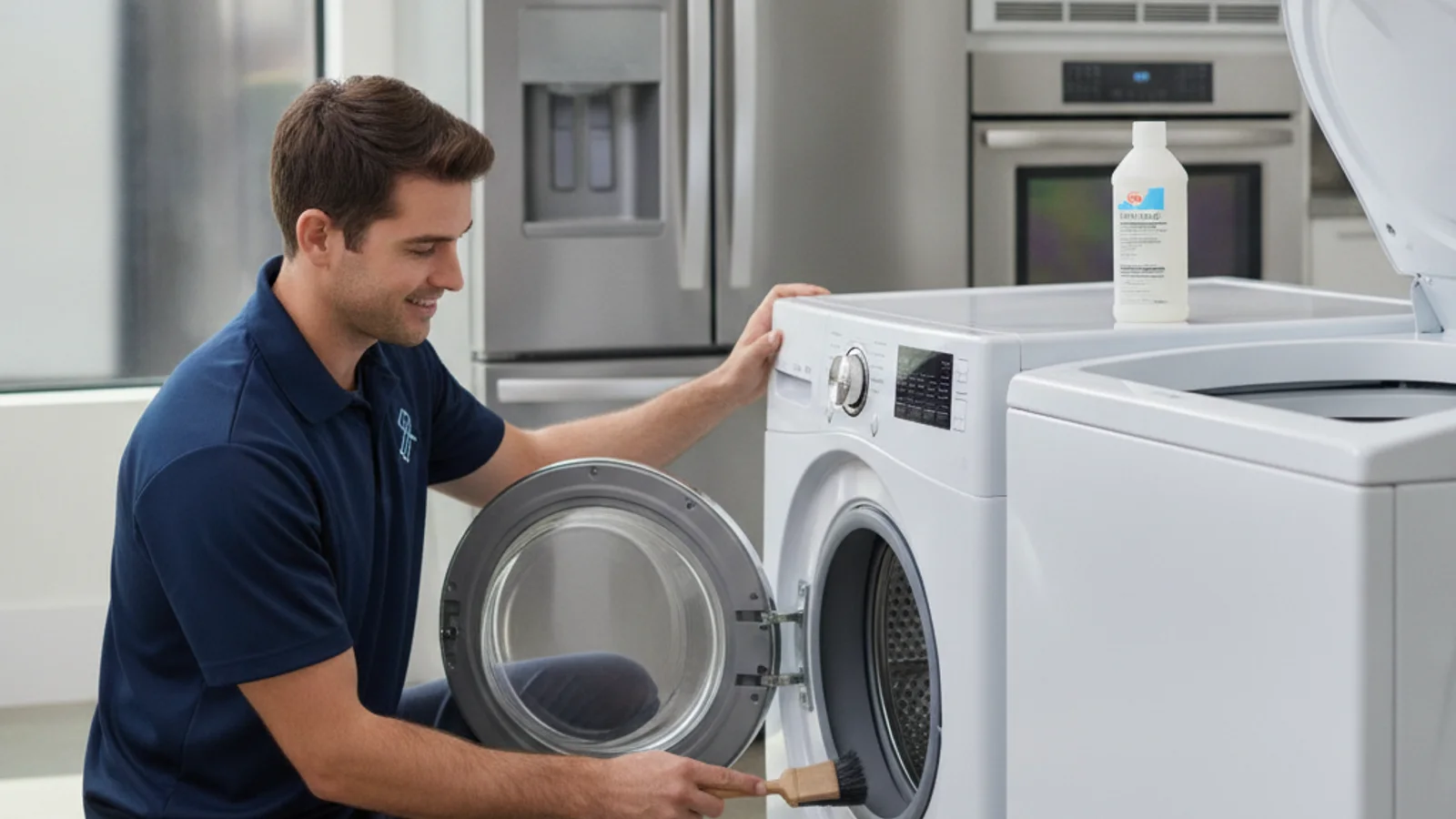
To clean a washing machine, use the cleaner, cycle name, and filter steps printed in the owner’s manual for that exact model. Leave the door or lid open to dry after washes. Never mix bleach and vinegar. A drain that will not empty is a pump symptom, not a cleaning step.
That’s the short version. The full process takes under an hour and differs slightly depending on whether you have a front-loader or top-loader. Here’s exactly what to do.
Why washing machines get dirty
San Diego County water hardness varies by city and season. Mineral film can appear in drums and dispensers. That is not a 300-400 ppm site statistic. Use the cleaner the maker allows. Some manuals forbid bleach or vinegar on seals.
The fix isn’t complicated, but you have to do it regularly.
How to clean a front-load washing machine
Front-loaders have a design quirk that top-loaders don’t: a rubber door gasket that traps moisture in its folds every single cycle. That gasket is the first place to clean, and the most commonly skipped.
Step 1: Clean the door gasket
Pull back the rubber boot around the door opening and look inside the folds. You’ll almost always find lint, hair, and a black or brown residue. Use only the gasket cleaner named in that model’s manual. Do not assume diluted bleach is allowed. Vinegar on rubber is also model-specific. If the manual forbids either, skip it. Never mix bleach and vinegar.
Step 2: Clean the detergent dispenser
Most dispenser drawers pull out completely (press the release tab inside the compartment and it slides free). Soak it in hot soapy water for 10 minutes, then scrub the corners and the small tubes with a toothbrush. Rinse and dry before sliding it back in. Wipe the cavity where the drawer sits, there’s often black mold growing in there.
Step 3: Run the drum-clean cycle
Use the tablet, vinegar, or other cleaner only if that model’s manual names it. “Tub clean” and “sanitize” names vary. Follow the cycle the maker lists. Affresh is one branded option, not a universal requirement.
Once the cycle finishes, wipe the inside of the drum with a dry cloth to remove any loosened residue.
Step 4: Clean the drain pump filter
Clean the drain pump filter only if the manual shows that access panel and the emptying steps. A machine that will not drain is not solved by a cleaning cycle. Request washing machine repair for pump diagnosis.
Step 5: Leave the door and drawer open
After every wash cycle, leave the door cracked two to three inches and pull the dispenser drawer open an inch. The drum and gasket need to dry between loads. This single habit prevents most front-loader odor from coming back.
How to clean a top-load washing machine
Top-loaders are generally more forgiving than front-loaders because they drain completely and usually sit with the lid open. But the agitator fins, the drum rim, and the detergent dispenser still accumulate residue.
Step 1: Run the cleaning cycle
If your machine has a “clean washer” cycle, use it. Add only the cleaner and amount named in that model’s manual. Some manuals forbid vinegar. No clothes, no other detergents.
If your model doesn’t have that cycle, use only the cleaner and method named in the manual. Do not default to vinegar. Some manuals forbid it.
Step 2: Clean the agitator and drum walls
After the cycle drains, mix a tablespoon of dish soap with a quart of warm water. Dip a cloth and wipe down the inside of the drum, paying extra attention to the agitator fins and the area just under the drum rim where residue gathers. Rinse with a clean damp cloth.
For impeller-style top-loaders (no tall center post), just wipe the drum floor and the walls in the same way.
Step 3: Clean the dispenser and lid seal
Remove the fabric softener dispenser if your model has one (most lift straight out). Rinse it under hot water. Wipe the rim under the lid and the top edge of the drum with a damp cloth. These spots collect fabric softener and detergent drips that harden over time.
Step 4: Leave the lid open
Same principle as the front-loader. Leave the lid up when the machine isn’t running. It’s the simplest way to prevent mildew from ever getting started.
The San Diego hard-water factor
San Diego County water hardness varies. There is no approved 300-400 ppm figure for this page. Ask the water utility or test if you need a number. Use a descaler only if the washer manual allows it.
White vinegar is not a default washer cleaner on this page. Use a descaler or vinegar only if that model’s manual names it. Some manuals forbid vinegar on seals. For heavy mineral film, follow the maker’s product and interval, not a yearly vinegar ritual.
Inland and coastal hardness vary by utility and season. That is not a Carlsbad-versus-coast ranking. Follow the manual for extra cleaning cycles.
If you open your drum and find standing water after a cycle, hear a grinding noise during drain, or see water backing up into the drum, those are signs of a drain pump or filter problem that cleaning alone won’t fix. Technicians in our network handle washing machine repair across San Diego County. If you’re seeing those symptoms, call (858) 988-7787 before running another load.
If your front-loader has persistent mildew even after following this routine, the issue may be deeper in the door boot or bellows. The front-loader mildew guide covers that scenario in more detail, including when gasket replacement makes sense.
For residents in North County, appliance repair in Carlsbad is covered too.
If you’re hearing noise during the spin cycle, the washing machine making loud noise guide covers the common mechanical causes.
Frequently asked questions
How often should you clean a washing machine?
Follow the interval in the owner’s manual. There is no universal monthly cadence. Use only the cleaner the maker allows. Never mix bleach and vinegar.
Can you use vinegar to clean a washing machine?
Only if that model’s manual allows vinegar in the drum. Some makers forbid vinegar or bleach on seals. Never mix bleach and vinegar. That combination produces chlorine gas.
Why does my washing machine still smell after cleaning?
A drain that will not empty is a pump or drain-path symptom, not a missed cleaning cycle. Leave the door open to dry. Follow the filter steps only if the manual shows them.
What is the best way to clean a top-load washing machine?
Use the cycle and cleaner named in that top-load manual. Leave the lid open between loads.
Is it safe to use bleach to clean a washing machine?
Only if the model manual allows bleach on the gasket or drum. Never mix bleach with vinegar. That combination produces chlorine gas. Use one cleaner or the other, never both.