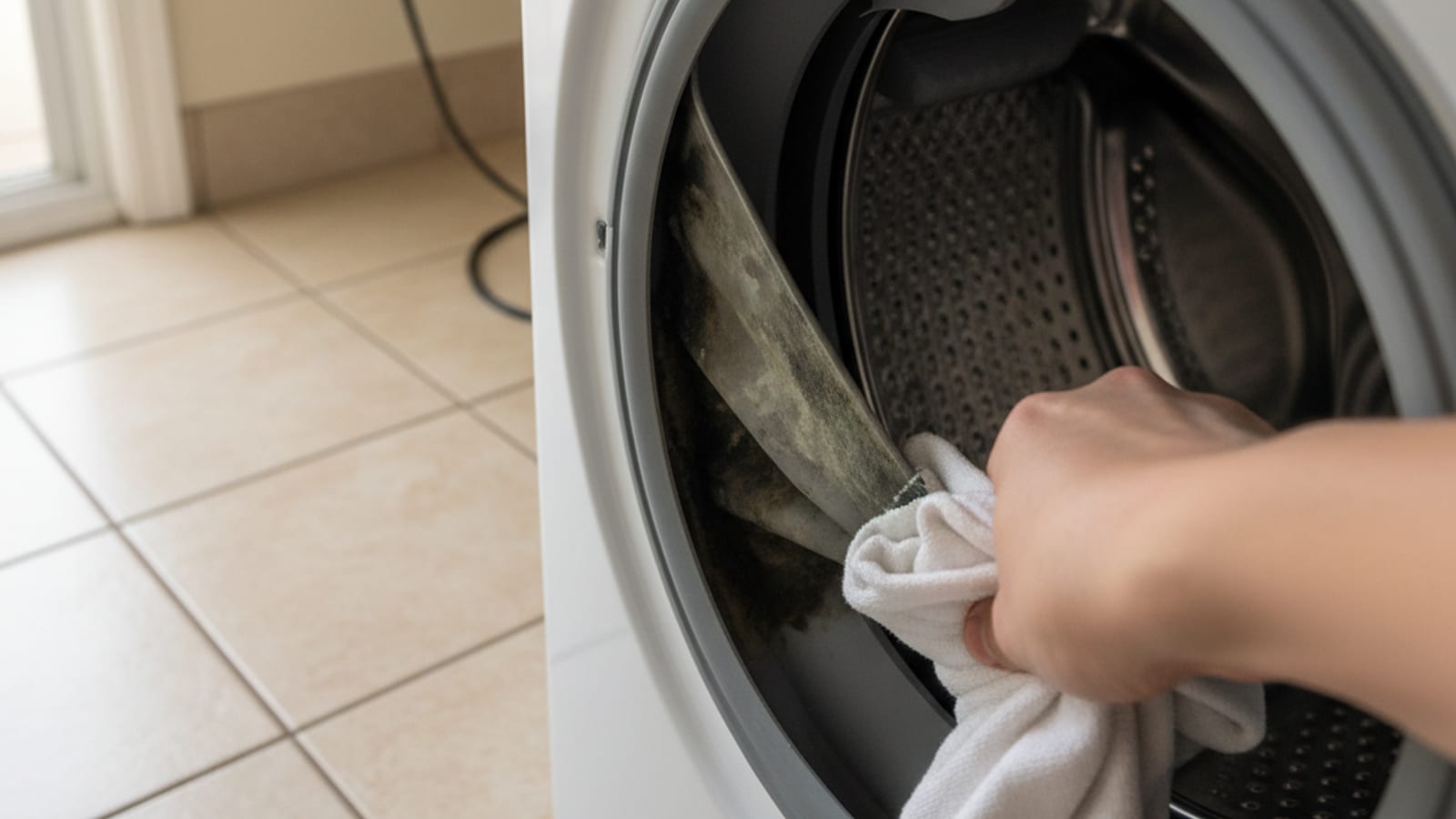
That musty, mildew smell coming from your front-loader every time you open the door is a common complaint. It is not ranked as the #1 call. Cleaning plus drying habits often help. Confirm cleaners against the exact model manual and the product label.
Here’s the full rundown.
Why front-loaders smell and top-loaders don’t
Top-load washers drain completely after every cycle and spend most of their life with the lid open. Front-loaders do neither. The door boot (the rubber gasket around the opening) traps water in folds. The door usually sits closed between loads. Moisture + warmth + a dark, sealed space = perfect conditions for mildew.
Add to that:
- High-efficiency (HE) front-loaders use less water than many older designs, which can leave more detergent residue if you overdose
- Cold-water cycles (often the default) may leave more residue than a hot sanitize cycle the manual allows
- Liquid detergent residue accumulates in the gasket folds and the detergent drawer
Every one of these design choices makes the washer more efficient, and also makes it smell.
The cleaning routine that actually works
Skip the one-time “I’ll clean it really well” approach. Mildew in a front-loader comes back fast without a maintenance routine. Here’s what works:
Monthly, the tub clean cycle
Most modern washers have a “tub clean” or “sanitize” cycle. Run it empty with one of:
- Only a cleaner the owner’s manual and the product label allow for this model
- Do not copy vinegar, baking soda, or tablet amounts from this page
If your washer doesn’t have a tub clean cycle, run the hottest cycle you have with a large load capacity setting and the cleaner added.
Monthly, gasket cleaning
This is the step most people skip and where most of the smell lives.
- Pull the rubber boot back at the bottom of the door opening (where water collects). Use a flashlight, you’ll see accumulated gunk.
- Wipe only with a cleaner the model manual and the bleach label allow. Wear gloves. Do not mix products.
- Go around the full circumference, top, both sides, bottom.
- Check for small objects trapped in the folds: coins, hair clips, socks, pet hair. Remove them.
- Dry the gasket completely with a towel when done.
Weekly, dispenser drawer
Pull out the detergent dispenser drawer (most pop out with a press-release tab inside the compartment).
- Clean the drawer only with products the manual allows.
- Use a small brush (old toothbrush) to scrub the corners and the tubes.
- Clean the cavity where the drawer slides, you’ll often find black mold in there.
- Dry completely before sliding back in.
Habits that prevent mildew coming back
Doing the cleaning above but still getting smells? You’re skipping the prevention.
Leave the door open between loads
This is the single most effective habit change. Every time. Crack the door 2-4 inches when the washer isn’t running. The drum and gasket need to dry out between loads. Pets and small kids considered, a child lock or gate keeps the space safe if needed.
Leave the detergent drawer cracked open
Same principle. Pull the drawer out an inch and leave it. Dries out the compartment.
Use less detergent
Use the detergent amount the washer manual names for HE loads. Do not use a 2-3 cup water figure from this page. Residue can feed mildew.
Don’t leave wet clothes in the drum
Always pull wet laundry out within 15-30 minutes of the cycle ending. Leaving wet clothes in a closed drum overnight can feed odor. There is no two-hour mildew-start clock on this page.
Use hot water monthly
Run at least one hot-water load per month (dirty whites work). A hot-water load can help with residue that cold cycles leave behind. Follow the maker’s temperature guidance. If you do mostly cold washes, this matters even more.
When the smell won’t leave
If you’ve done all the above for a month and the smell persists:
The gasket may need replacement
A gasket that still smells after cleaning may need replacement. There is no five-year impregnation threshold on this page. Gasket replacement is a labor-intensive job, since the boot has to be pulled and reseated correctly, and it’s often the last step to getting a true fresh-start front-loader. Ask the technician for a written estimate before work starts.
The drain pump filter may be full
Front-loaders have a drain pump filter on the bottom (usually behind a small access panel). Lint, socks, and gunk accumulate. If it’s been years since you’ve cleaned it (or you’ve never cleaned it) this is where a lot of smell can live.
If the model’s manual shows a drain-filter access, follow those water-release steps. Do not open a filter housing from this page if the manual does not show it.
There may be standing water in the bellows
The “sump” at the bottom of the drum can develop a biofilm that cleaners don’t touch. If the washer consistently has a small puddle of water in the drum after cycles, call for service, a tech can clean the bellows and inspect for drain issues.
One thing NOT to do
Don’t pour straight bleach into the drum unless the model manual and the product label allow that use. Follow both.
Is it worth calling for service?
If the smell persists after the habits and the manual’s cleaning steps, request a technician. Gasket work is quoted in writing. One-visit completion is the provider’s availability, not a promise. See washing machine repair. Coastal homeowners can also request appliance repair in Encinitas.
Ask about the diagnostic fee, and whether it’s credited toward the repair. (858) 988-7787.
Frequently asked questions
Why do front-loaders smell musty when top-loaders don’t?
The door boot traps water in its folds after every cycle, and most people leave the door closed between loads. Moisture, warmth, and a sealed space create ideal mildew conditions. Top-loaders drain completely and usually sit with the lid open, so they dry out between washes.
What single habit change has the biggest impact on front-loader smell?
Leaving the door cracked 2 to 4 inches between every load. The drum and gasket need to dry between cycles, and a sealed door traps residual moisture that feeds mildew. Leaving the detergent drawer cracked open an inch helps for the same reason.
How do I clean the front-loader door gasket properly?
Pull the rubber boot back at the bottom of the door opening, where water collects, and use a flashlight. Wipe the full circumference only with a cleaner the manual and product label allow, wearing gloves. Check for coins, hair clips, or pet hair trapped in the folds, and dry the gasket completely when done. Do this monthly.
When does a musty front-loader need professional service instead of cleaning?
If the smell returns within a week of a thorough cleaning after several months of consistent maintenance, the rubber boot may still smell after cleaning and need replacement. There is no five-year impregnation threshold on this page. Gasket replacement is a labor-intensive job, so ask for a written estimate before work starts. A full drain pump filter that hasn’t been cleaned in years can also hold significant odor that cleaning the gasket alone won’t fix.