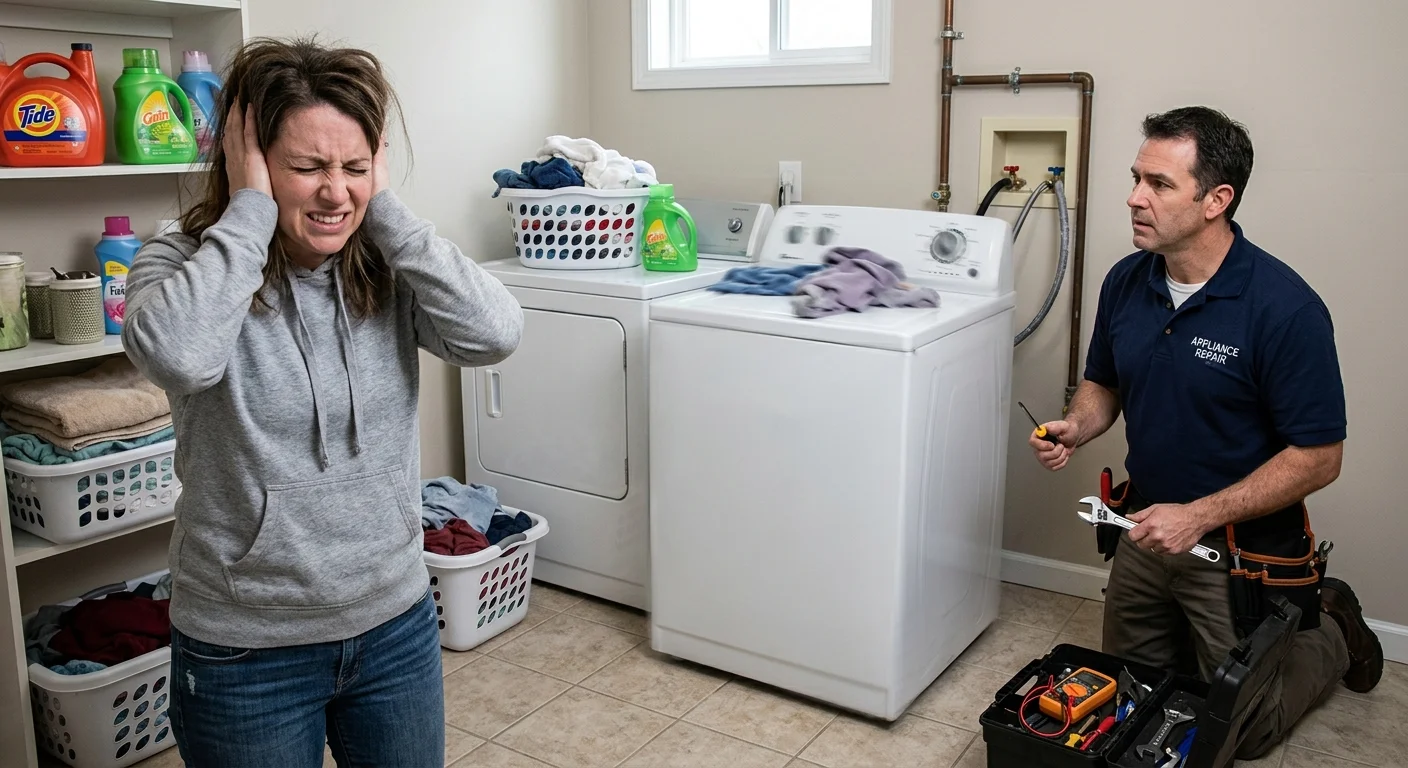
A washing machine making loud noise usually points to one of four parts: worn drum bearings (grinding), a failed shock absorber (banging on spin), a clogged drain pump (rattling), or coins caught in the tub. The sound tells you which one.
What kind of noise is your washer making?
Washing machines can make many different sounds when they malfunction. Pinpointing the exact type of noise and when it happens is key to diagnosing the problem. Is it a rhythmic thumping? A high-pitched squeal? A grating grind? Does it happen during the wash cycle, the rinse, or only when the drum spins at high speed?
Listen closely. Does the sound come from the top, bottom, or inside the drum itself? A sound originating from the bottom might suggest an issue with the motor or pump, while a noise from inside the drum often points to suspension or bearing problems. We’ll break down the most common noises San Diego homeowners hear and what they usually mean.
Different sounds indicate different problems. A soft thumping might be a minor imbalance, but a harsh grinding could be a serious mechanical failure. Identifying the specific sound helps you determine if it’s a simple DIY fix or if you need professional help.
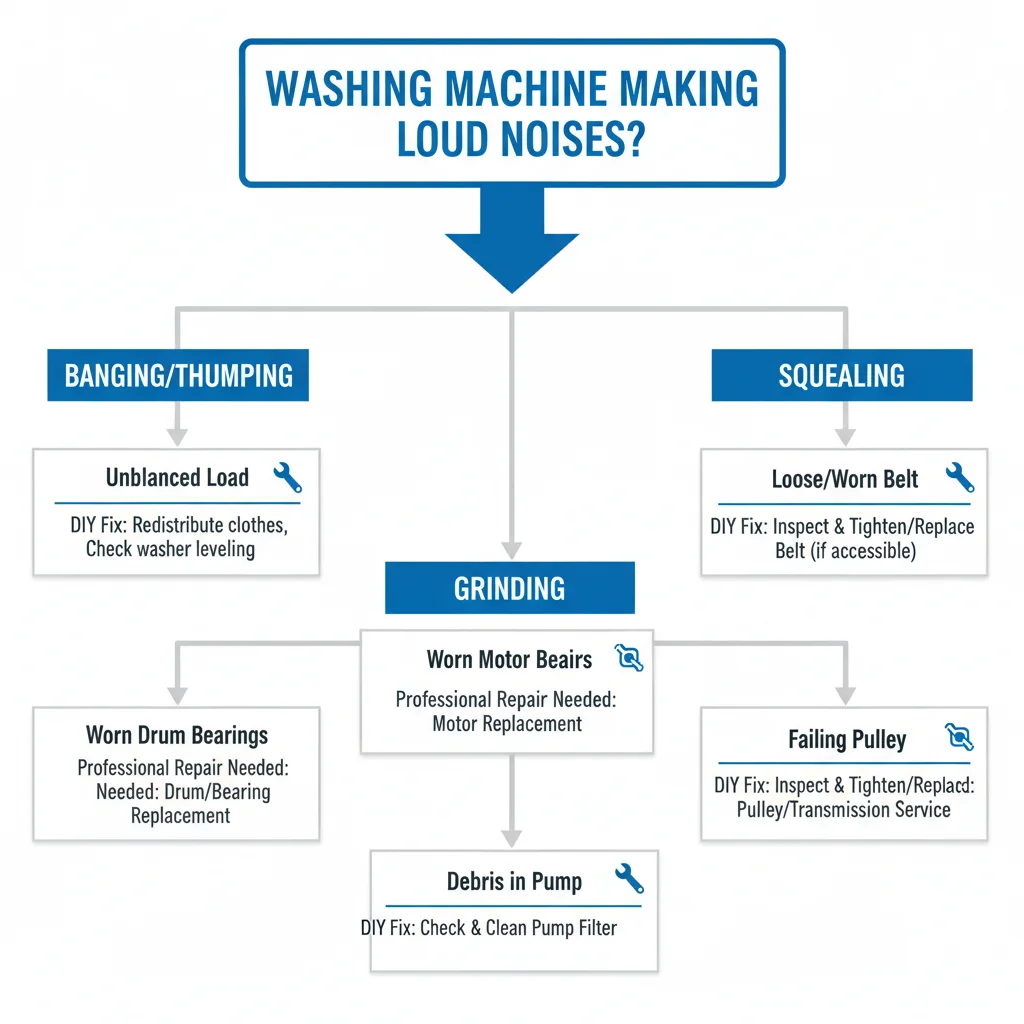
Banging or thumping noises during the spin cycle
If your washing machine sounds like it’s trying to escape your laundry room, usually during the spin cycle, you’re likely dealing with a banging or thumping noise. This is one of the most common complaints we hear from San Diego residents.
The primary culprit for this loud banging is often an unbalanced load. Heavy items, like towels or bedding, can clump together on one side of the drum. As the washer spins, this uneven weight throws the drum off balance, causing it to hit the sides of the machine. It’s the machine’s way of protesting the uneven weight distribution.
Another significant cause is worn-out drum bearings. These bearings allow the inner drum to spin smoothly. Over time, especially with frequent heavy loads, they can wear down. When they fail, the drum wobbles and rubs against other parts, creating a loud thumping or grinding sound. Replacing drum bearings is a complex job, often requiring specialized tools and considerable disassembly of the washer.
Loose counterweights can also cause banging. Washing machines use heavy concrete or plastic counterweights to keep the tub stable during aggressive spin cycles. If these weights become loose from their mounts, they can bang against the machine’s frame. You might hear this as a deep, repetitive thud.
Finally, suspension issues can lead to excessive noise. Washers use a system of springs and shock absorbers to cushion the tub and minimize vibration. If these components wear out or break, the tub can move too freely, leading to loud banging and shaking, particularly during high-speed spinning.
Grinding or squealing sounds
When your washing machine starts making a grinding or squealing noise, it often indicates a different set of internal problems. These sounds usually suggest friction or wear within moving parts, and they shouldn’t be ignored.
A persistent grinding sound frequently points to a problem with the motor or transmission. If the motor bearings are worn, they can create a metal-on-metal grinding sound as the motor tries to operate. Similarly, issues within the transmission, which controls the agitator and spin cycles, can result in grinding if gears are stripped or misaligned. This type of noise usually occurs during agitation or spin.
Squealing sounds often suggest a problem with a belt or a pulley. Many washers use a drive belt to transfer power from the motor to the drum or agitator. If this belt is worn, loose, or misaligned, it can squeal as it slips. Worn motor pulleys or idler pulleys can also make a high-pitched squealing noise due to friction. You might hear this particularly during the spin cycle when the motor is working harder.
Another less common but possible cause for grinding is a failing drain pump or something caught inside it. The pump moves water out of the machine. If debris like coins or small items get into the pump, it can grind as it tries to operate. A failing pump motor can also produce a grinding sound. If the noise is accompanied by water that won’t drain, this is a strong indicator of a pump issue. For more on this common problem, you can check out our article on when your washer won’t drain.
Simple checks you can do yourself
Before calling in a professional, there are several straightforward checks you can perform to try and quiet your noisy washing machine. Many common issues have simple solutions that don’t require specialized tools or extensive knowledge.
First, always check for an unbalanced load. This is the easiest fix for banging noises. Stop the cycle, open the lid, and redistribute the clothes evenly around the drum. If you’re washing one or two very large, heavy items like blankets or jeans, add a few smaller items to help balance the load. Overloading the machine can also cause imbalance, so avoid packing it too full.
Next, ensure your washing machine is level. A washer that isn’t sitting evenly on the floor can vibrate excessively and cause banging or walking. Most washers have adjustable feet at the bottom. Use a level to check if the machine is balanced front-to-back and side-to-side. If it’s not, you can usually turn the feet by hand or with a wrench to raise or lower them until the machine is stable.
Also, check for foreign objects in the drum or the drain pump filter. Coins, keys, or small toys left in pockets can escape during the wash cycle and cause rattling or grinding noises. Look inside the drum and under the agitator if you have a top-loader. For front-loaders, check the rubber gasket around the door for lodged items. Many washers have a small access panel near the bottom where you can reach and clean the drain pump filter. Always consult your owner’s manual for specific instructions on accessing these areas.
Finally, inspect the washer hoses and connections. Make sure the water supply hoses behind the machine aren’t hitting the wall or other appliances, which can create a thumping sound. Ensure all external parts, like the feet or back panel screws, are tight. Sometimes, simply repositioning the machine slightly away from walls or cabinets can prevent amplified vibrations.
When a loud noise means you need a professional repair
While some washing machine noises have simple DIY fixes, many serious issues require the expertise of a professional appliance repair technician. If you’ve tried the simple checks and your washing machine is still making a loud noise, or if the noise is accompanied by other problems like leaks, burning smells, or a complete failure to operate, it’s time to call in the pros.
Problems like worn drum bearings, a failing motor, or a damaged transmission are beyond the scope of most DIYers. These repairs often involve disassembling a significant portion of the washing machine, require specialized tools, and demand a precise understanding of internal mechanics. Attempting these complex repairs without the proper training can lead to further damage, void your warranty, or even create safety hazards.
If the noise is paired with a burning smell, stop using the machine immediately. This often indicates an electrical issue or a motor overheating, which can be a fire hazard. Similarly, if you notice water leaks along with the noise, you need a professional to diagnose and fix the source of the leak, as it could be a failing pump, hose, or tub seal.
The technicians in our network specialize in washing machine repair services across San Diego County. They have the tools and expertise to accurately diagnose the root cause of any loud noise, whether it’s a key component like the motor, a suspension system failure, or a complex electronic issue. You get a quote in writing before any work starts, and peace of mind that your appliance is in capable hands. You can also learn more about our local services on our San Diego washing machine repair page. Don’t risk further damage or compromise your safety by tackling complex repairs yourself.
Frequently asked questions
Why is my washing machine so loud on the spin cycle?
Worn drum bearings or a failed shock absorber are the usual causes. A banging noise on spin points to the shock absorbers; a grinding noise points to the bearings. Both get worse over time and neither fixes itself, so catching them early keeps the repair cost lower.
What causes a rattling noise in a washing machine?
Coins, keys, or small items left in pockets are the most common source. They escape the tub and end up in the drain pump, where they rattle against the pump housing. Check inside the drum first, then look in the drain pump filter, which is behind a small access panel on the lower front of most front-loaders.
Why does my top-load washer bang during the spin cycle?
An unbalanced load is almost always the cause. Heavy items like jeans or towels clump to one side and throw the drum off as it spins up. Stop the cycle, redistribute the clothes evenly, and restart. If the banging continues with a balanced load, the suspension springs or shock absorbers are worn and need replacement.
When does a noisy washer need a professional repair?
Grinding, screeching, or persistent thumping that continues after you’ve balanced the load and removed any foreign objects points to a mechanical fault. Worn drum bearings, a failing motor, and damaged suspension components all require disassembly that most homeowners aren’t set up for. If the noise comes with a burning smell or a leak, stop the machine and call a technician.
When to call us
Don’t let a noisy washing machine disrupt your home or escalate into a major breakdown. If you’ve exhausted DIY options or suspect a serious internal issue, the technicians in our network are ready to help. Call us at (858) 988-7787 and we’ll match you with a local tech.