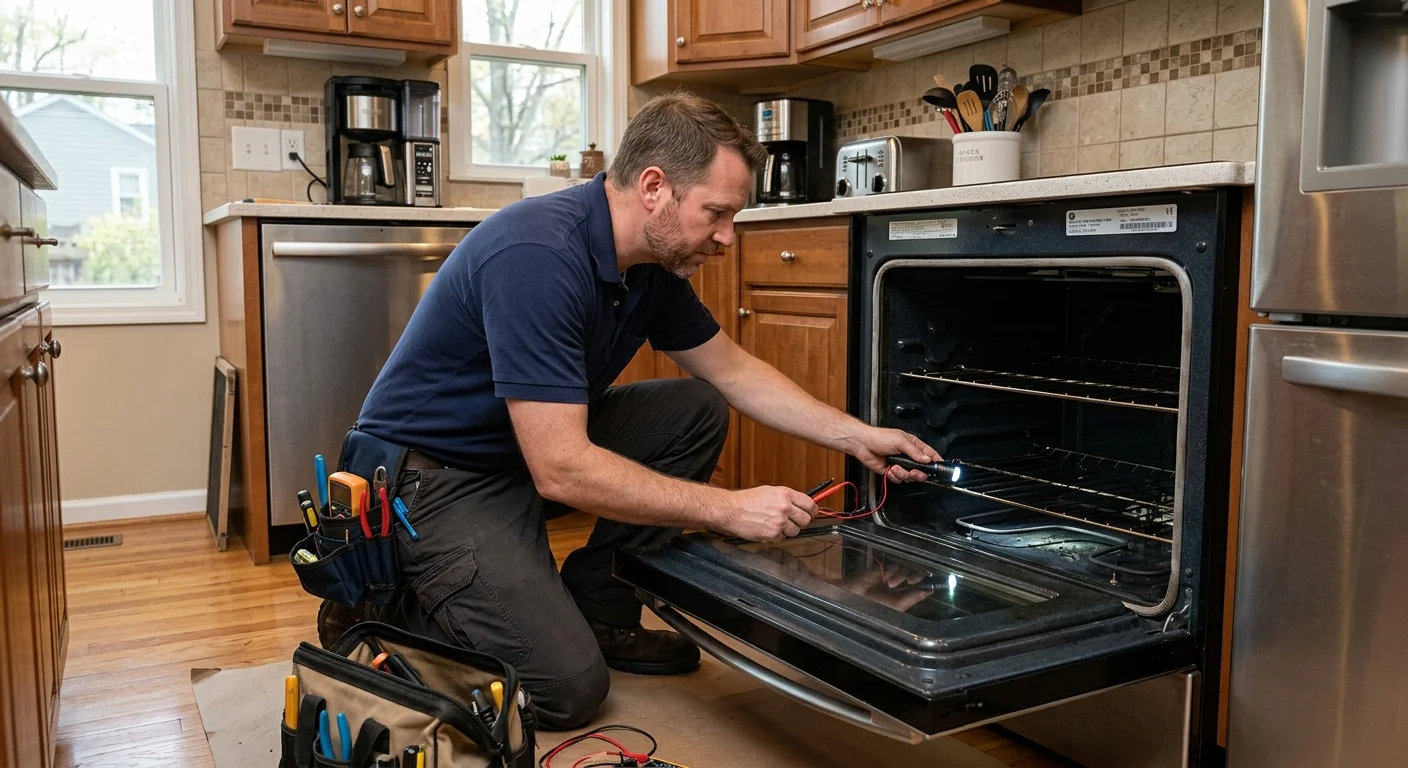
When a GE oven stays cold, the first step is narrowing the symptom. Electric and gas ovens reach that result through different systems. GE oven repair starts with the model, settings, and exact heating pattern.
Confirm the model and heating symptom
Start by copying the complete model and serial information. Use the rating label and the owner’s manual for your appliance. Label locations vary, so don’t rely on a location shown for another GE oven.
The model tells the technician what they’re diagnosing. A freestanding range, slide-in range, and built-in wall oven aren’t interchangeable. A dual-fuel range also needs a different diagnostic path than an all-gas model.
Describe what happens after selecting a cooking mode. Useful observations include:
- The display is blank or working.
- The oven light turns on.
- Bake, Broil, or neither mode produces heat.
- The surface burners work while the oven stays cold.
- A gas oven’s igniter glows or remains dark.
- The oven begins heating but stops before reaching the setting.
- A code or message appears on the display.
- The problem began after cleaning, installation, or a power interruption.
Record the exact code without guessing what it means. Our separate GE oven error-code guide explains displayed faults. This page focuses on ovens that don’t heat, including units showing no code.
Also describe the appliance’s access. A built-in oven surrounded by cabinets differs from a range with open side access. That detail matters in downtown condos, South Bay homes, and East County kitchens. Clear model information helps the matched technician prepare for the correct appliance and configuration.
What owners can observe before requesting service
Keep your checks focused on settings and visible behavior. Internal electrical testing, gas adjustments, and panel removal belong in the service diagnosis.
First, confirm that Bake or Broil is selected correctly. Electronic controls may also require pressing Start. If knobs were removed during cleaning, confirm they returned to their original positions.
Check the owner’s manual for features that can prevent normal operation. Depending on the model, those may include Child Lockout, Sabbath Mode, or a mechanical self-clean latch. GE notes that some electronic models also require the clock to be set before oven functions work.
Don’t assume the electrical supply is complete because the display works. GE’s support material says an oven light or clock can remain on while the oven doesn’t operate normally. Note whether the cooktop elements or surface burners work, but don’t use them as the only power test.
Try Bake and Broil separately, then record the result. A technician can use that comparison to narrow the affected heating path. Stop the test after you’ve observed the response. Repeatedly changing settings won’t identify an internal fault.
Look through the closed door when possible. Note whether an exposed electric element shows an obvious break. On a gas model, note whether the oven igniter produces the red glow described in GE’s gas oven guidance. Don’t remove the oven floor or other panels to get a better view.
For a wider symptom checklist, see our oven not-heating troubleshooting guide. Bring your notes, model information, and manual when requesting service.
What technicians inspect on electric models
GE electric oven repair begins with the incoming power and the reported symptom. The technician checks the appliance’s supply, connections, and controls using procedures appropriate for that model. A working clock alone doesn’t confirm that the heating circuit is receiving what it needs.
The technician then compares Bake and Broil operation. GE’s electric oven no-heat guidance identifies a cracked or broken bake element as a service issue. The matched pro can inspect the element and test it electrically instead of relying only on appearance.
Some ovens have an exposed lower element. Others place the bake element beneath the oven floor. The model documentation shows the correct configuration. A hidden element shouldn’t be declared faulty simply because it can’t be seen glowing.
The broil element also helps separate a single-mode failure from a broader no-heat problem. If Broil works but Bake doesn’t, that pattern matters. If neither mode works, the technician can move outward through the shared electrical path.
Model-specific testing may continue through the wiring and oven control circuit. The technician follows the appliance documentation rather than swapping parts based on one symptom. That distinction matters because a broken element, incomplete power supply, and control problem can all present as a cold oven.
Repair Pro San Diego doesn’t test or replace these components. We connect homeowners with independent local pros who handle diagnosis and approved repairs. Our oven, range, and cooktop repair service covers referrals across San Diego County.
What technicians inspect on gas models
A GE gas oven still depends on electrical components. GE explains that its glow-bar igniter and gas valve require power during oven operation. That’s why a working surface burner doesn’t prove the oven’s ignition path is working.
The technician first confirms the exact model and installation type. The diagnostic path then follows what the oven does when Bake is selected. A red glow provides different information than an igniter that remains dark. The absence of a glow can point the technician toward the igniter, oven controls, or related electrical components, according to GE.
On a recent installation, the technician may also inspect the range’s main regulator position. GE says a regulator can be moved to the off position during installation while surface burners still work. Its control lever may not be obvious, so GE notes that service may be needed to reset it.
Older GE ranges may use a standing pilot instead of the glow-bar arrangement. Those models require their own printed instructions. Don’t apply generic pilot-light steps from another range. Give the technician the complete model number so they can identify the correct ignition system.
The pro can then test the model’s ignition and control path. A weak response, no glow, or intermittent heating needs measured diagnosis. Those observations don’t identify a replacement part by themselves.
Tell the technician whether the cooktop burners work and whether the oven was recently moved or installed. Also mention any change after a power interruption. These details help separate an installation issue from a component fault without guessing.
For other GE appliance symptoms, visit our GE appliance repair guide for San Diego.
When to request GE oven repair
Request service when the model-specific settings are correct but the oven remains cold. Service also makes sense when one cooking mode works and another doesn’t, heating stops repeatedly, or a visible element appears damaged.
Save the model and serial information before making the request. Include any displayed message and describe what Bake and Broil each do. If the issue is intermittent, explain the sequence without trying to name the failed part.
The matched technician diagnoses first and quotes in writing before work begins. Ask what the quote includes and which repair is being recommended. Repair Pro San Diego has no repair price list, diagnostic fee, or warranty policy. Those terms come from the independent technician.
California consumers can check an appliance service dealer’s registration through the Department of Consumer Affairs lookup. You can also ask the matched pro about their credentials and terms before approving work.
We make referrals throughout central San Diego, the South Bay, North County, and East County. Homeowners farther inland can also review our El Cajon appliance repair guide for local service information. The independent technician performs the inspection and any repair you authorize.
When to call us
When a GE oven remains cold after the model-specific control checks, internal diagnosis belongs with an appliance repair pro. We make the referral, while the independent technician diagnoses and performs any approved work. Call (858) 988-7787 to leave a voicemail requesting a match with a local appliance repair pro.