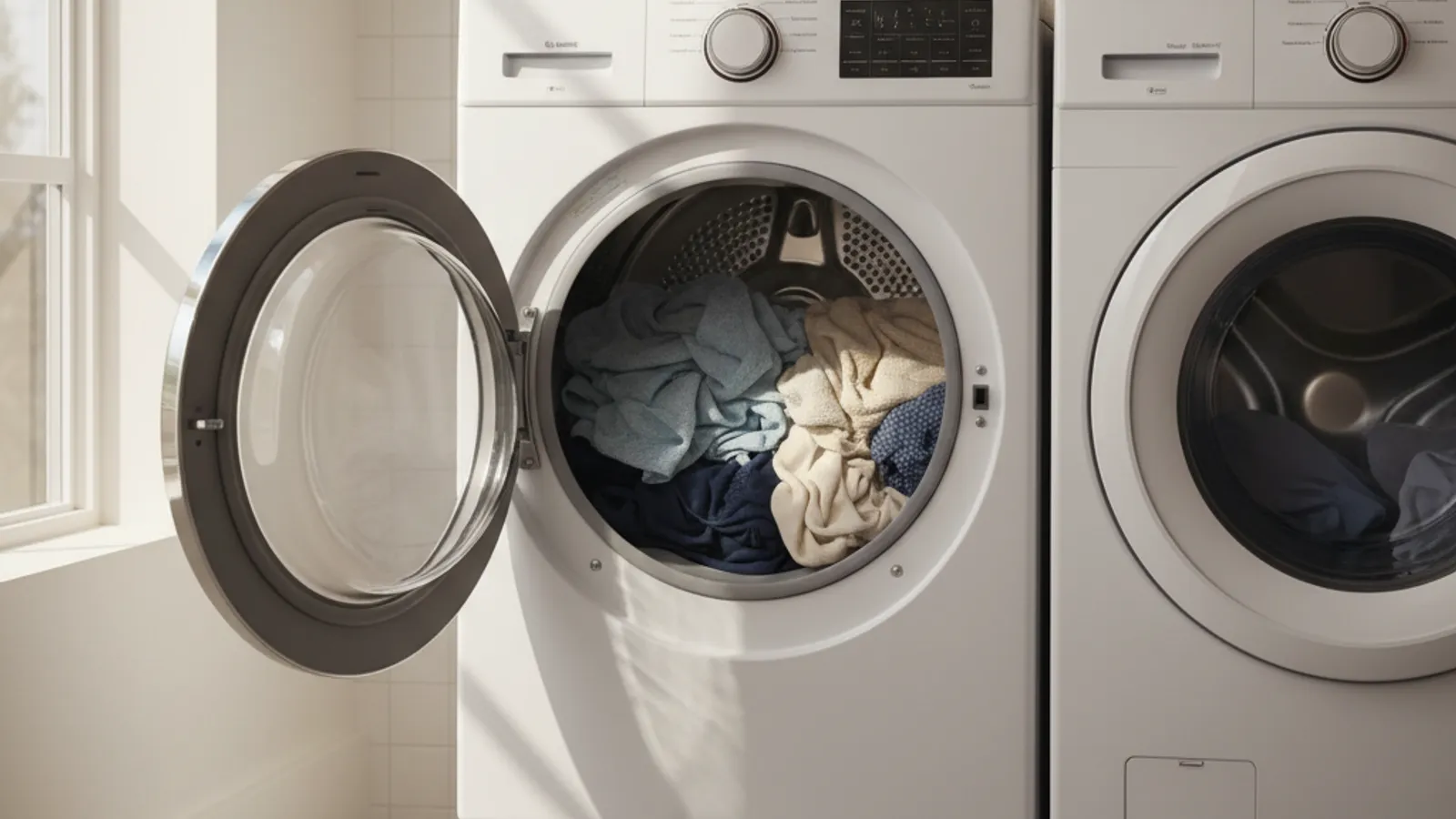
A GE dryer that tumbles without heat can involve a restricted vent, a thermal fuse, a heating element, or a gas ignition part. The drum can spin while clothes stay damp.
A GE dryer that tumbles without heat is a useful description for the technician. Frequency is not ranked here. The motor runs, the drum turns, the cycle counts down, and nothing gets warm. The good news is the cause is usually one of a handful of parts. Some you can check yourself, and some need a qualified technician.
How GE dryers behave when heat fails
GE and its sister brand Hotpoint share most of the same parts and wiring. On both, a heat failure looks the same. The dryer powers on, the drum tumbles, and the timer advances, but the air stays cool. GE dryers don’t usually throw a clear error for no heat, so you’ll diagnose by symptom, not by code. The GTD electric lines and GFD front-load models all follow this pattern. A spinning drum tells you the motor and belt are fine, so the problem sits in the heating circuit.
Gas versus electric makes a difference
Before you check anything, know which dryer you have. Electric GE dryers run on a 240-volt circuit and heat air with a metal coil called the heating element. Gas models burn natural gas or propane, lit by an igniter and fed through valve coils. The parts differ, so the fixes differ. If you’re not sure, look at the plug. A large three or four-prong plug means electric. A standard wall plug plus a gas line means gas.
Start with the vent, because it’s the usual cause
A restricted vent is a frequent no-heat path, not a ranked GE statistic. Stay on the lint screen and the exterior flap you can reach. Do not pull a gas dryer or disconnect the duct yourself. A technician inspects the full run. This matters more in San Diego than people think. Many tract homes here run long vent paths from an interior laundry closet to an outside wall, and those long runs trap lint fast. A blocked vent isn’t just a heat problem. Lint in a long duct can also cause the dryer to overheat and trip safety parts. Our guide on a dryer not heating walks through the full vent-clearing steps.
The thermal fuse is a symptom, not just a part
GE dryers have a thermal fuse that blows when the machine overheats. Once it blows, it cuts power to the heat and never resets. A blown thermal fuse is often a symptom of overheat, and a clogged vent is one possible cause. Replacing the fuse without clearing a restricted vent can send the new fuse out again. Continuity testing on a 240-volt heat circuit belongs to a technician. Do not meter the fuse or element from this page.
The heating element on electric models
If the vent is clear and the fuse is good, the heating element is the next suspect on electric GE dryers. The element is a coiled wire that glows hot as current passes through it. Over time the coil sags, touches the housing, and shorts, or it simply burns through and breaks. A broken coil reads no continuity on a meter. Replacing it means pulling the back panel and working on a 240-volt circuit. That is technician work. Unplug the dryer and leave the cabinet closed.
Thermostats that cut the heat
GE dryers use two thermostats in the heat circuit. The high-limit thermostat is a safety that trips if the dryer runs too hot, often again because of a blocked vent. The cycling thermostat regulates normal drum temperature, turning the heat on and off to hold a set range. If the cycling thermostat fails open, the heat never comes on. If the high-limit trips, the heat shuts down mid-cycle. Both test the same way with a multimeter, and both are inexpensive parts. A qualified technician can tell which one failed in a few minutes.
Gas models: the igniter and valve coils
On gas GE dryers, no heat usually means the igniter or the valve coils. The igniter is a small element that glows to light the gas. If it glows but no flame appears, the valve coils have failed and aren’t opening the gas valve. If the igniter doesn’t glow at all, it’s burned out. Gas dryer repair involves a live gas line and is pro-leaning work. We don’t recommend opening the gas valve assembly yourself. A trained tech tests the coils and igniter safely and replaces the failed part.
If you see, hear, or smell signs of a gas leak, leave the area immediately. From a safe location, call 911 or SDG&E at 1-800-411-7343. Do not stop to close valves, flip switches, or open windows before you leave.
What you can do versus what needs a pro
Owner-safe work is the lint screen and the exterior flap. Thermal fuses, heating elements, 240-volt circuits, and gas valves belong to a qualified technician. Our dryer repair service covers GE and Hotpoint models across San Diego County.
Frequently asked questions
Why is my GE dryer not heating?
A clogged vent can trigger a safety shutoff, often blowing the thermal fuse. Frequency is not ranked here. On electric models a failed heating element or thermostat is next, and on gas models it’s usually the igniter or valve coils.
Can I replace a GE dryer heating element myself?
No. Heating-element work is 240-volt cabinet work. Unplug and leave the back panel closed. Request a matched technician.
How do I know if it’s the vent or the dryer?
Run the dryer for a few minutes, then check the exterior vent flap for airflow. Weak or no airflow points to a clogged vent. Strong airflow with cold air points to a heating part inside the dryer.
When to call us
If the exterior flap still has weak airflow, or heat is still missing after an owner-safe lint-screen check, the fuse, element, or a thermostat is next. Call us at (858) 988-7787 to get matched with a technician.