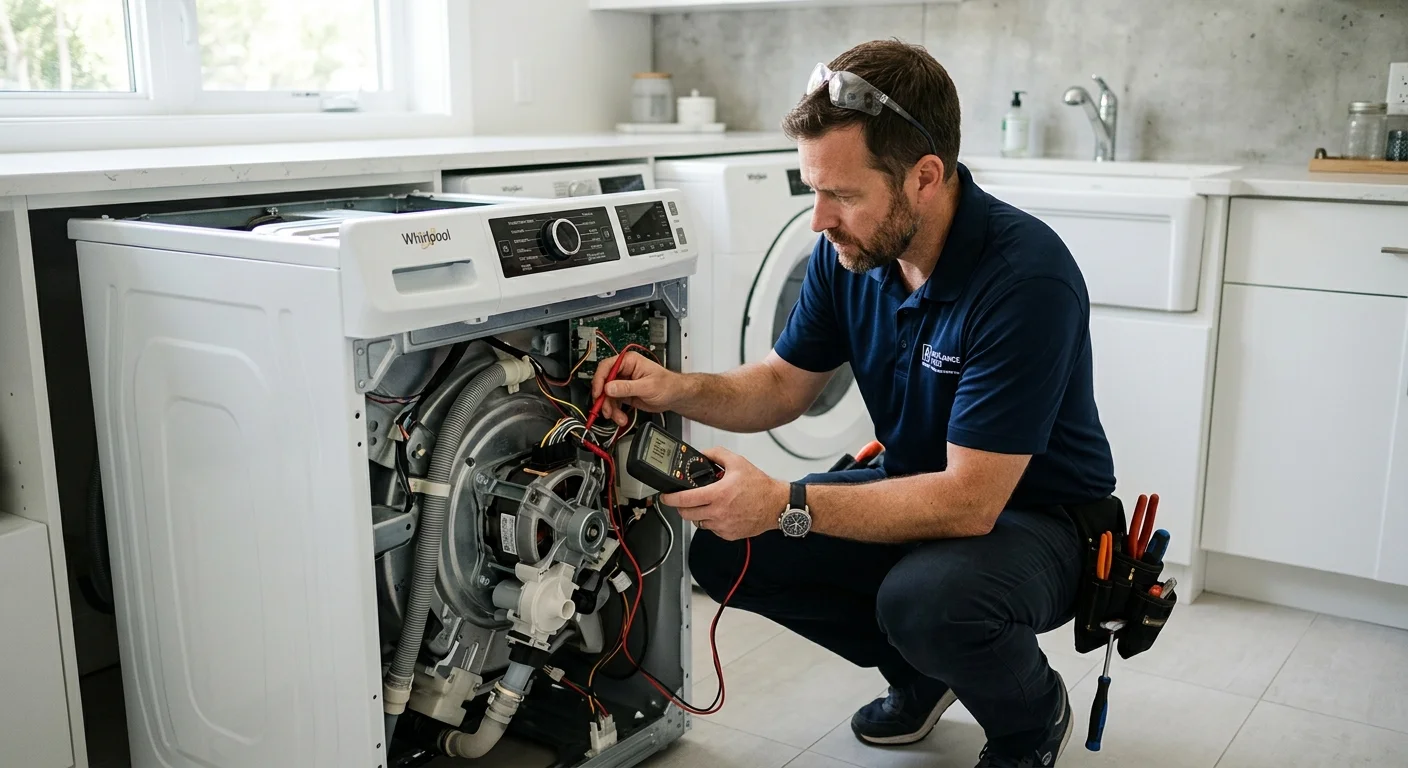
You load your clothes, hit start, and hear the hum. But when you check back, the drum hasn’t moved. A dryer that will not spin leaves wet laundry in the drum. Possible parts include the drive belt, drum rollers, idler pulley, motor, or door switch. Those are inspection points, not a completed diagnosis from this page.
Unplug the dryer before any owner check. Confirm the door latches. Note whether the motor hums with a still drum, or whether there is no sound at all. Do not open the cabinet to inspect a belt or rollers from this guide. Repair Pro San Diego matches you with independent technicians. We do not stock belts or promise a one-visit repair.
What makes a dryer drum stop turning
Understanding how your dryer works helps pinpoint the issue. Whether you have a gas or electric dryer, the spinning mechanism is basically the same. The motor provides power. It turns a large rubber drive belt. This belt wraps around the dryer drum, making it rotate. As the drum spins, it tumbles your clothes.
Several other parts play a key role. Drum rollers, often two or four, support the drum’s weight, allowing it to turn smoothly. An idler pulley keeps tension on the drive belt, ensuring it doesn’t slip. There’s also a door switch, a safety feature that prevents the dryer from running if the door isn’t closed securely.
When any of these components fail, your dryer drum stops turning. The machine might hum, click, or even feel like it’s trying to start, but the laundry stays put. We’ll name possible parts. Belt, roller, and motor work stay inside the cabinet. Do not open the dryer from this page.
Broken or stretched drive belt
A broken or stretched drive belt is one possible reason a dryer stops spinning. The motor can still hum while the drum stays still.
Checking for a broken belt means opening the dryer cabinet. That is technician work from this page. Unplug the dryer. Record whether you hear a hum, a click, or silence. Request dryer repair with those notes and the model number.
Worn drum rollers and idler pulley
Even with a working drive belt, your dryer drum needs smooth support to spin. That’s where the drum rollers and idler pulley come in. The drum rollers are small wheels, usually made of rubber or plastic, that support the drum from underneath. They allow it to glide and rotate easily. Over time, these rollers can wear out. Their bearings can seize, or the rubber can become flat-spotted or brittle.
When drum rollers fail, you might hear a squealing or grinding noise coming from the dryer. This often starts subtly and gets louder as the problem worsens. Eventually, the friction becomes too great, and the motor simply can’t overcome the resistance. The drum then stops turning altogether, even if the belt is intact.
The idler pulley also uses a roller. Its job is to maintain tension on the drive belt. If the idler pulley wears out, its bearing might seize, or the pulley itself could break. This causes the belt to lose tension, making it slip or fall off. The result is the same: a dryer drum that won’t spin. Accessing drum rollers and the idler pulley means opening the cabinet. That stays with a matched technician from this page.
Failed motor or door switch
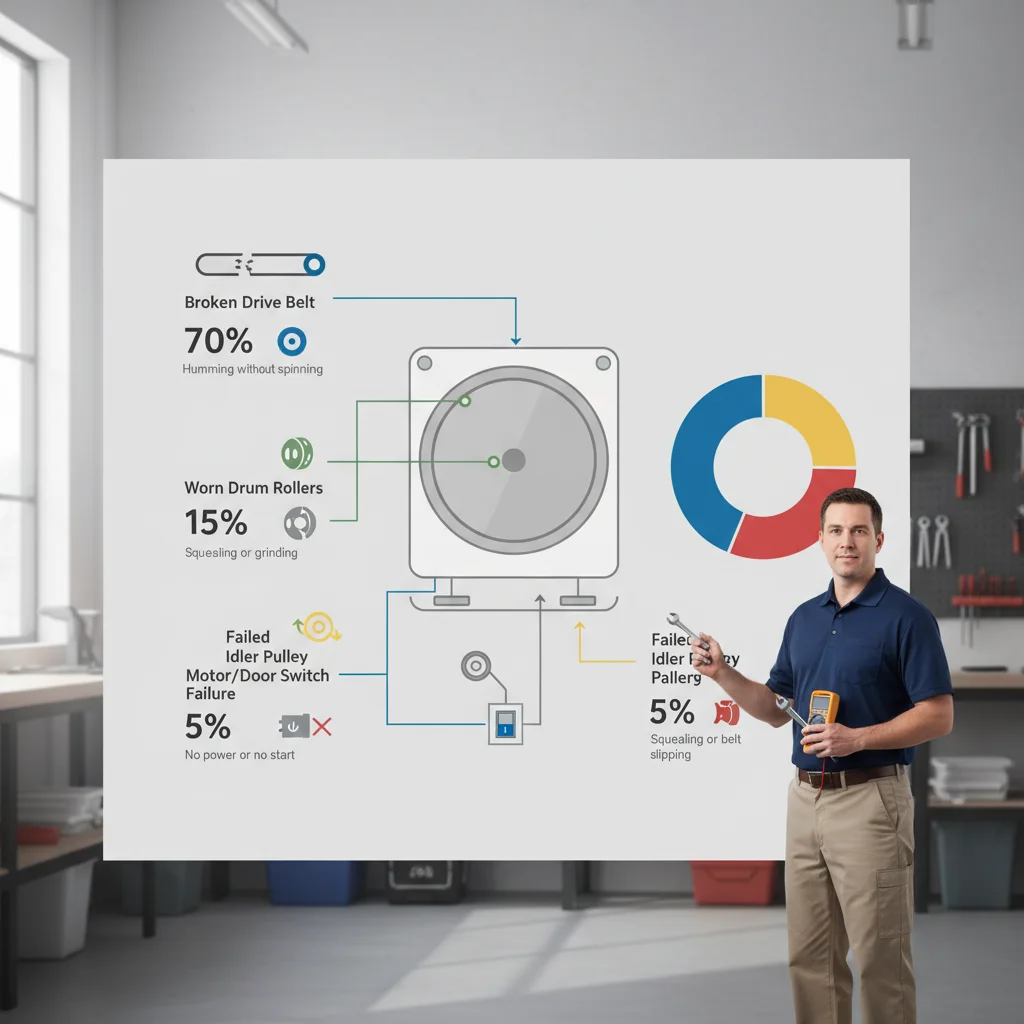
A faulty motor or door switch can also stop your dryer drum from spinning. Those paths are not ranked against belt or roller wear on this page. They can be trickier to diagnose and often need a technician.
The door switch is a simple safety mechanism. It tells the dryer whether the door is properly closed. If the switch is faulty, the dryer’s control board won’t get the signal that it’s safe to start a cycle. Your dryer might power on and light up, but it won’t actually begin to tumble clothes. You can often test the door switch by firmly closing the door and listening for a click. If there’s no click, or if pressing the switch manually doesn’t activate the dryer, the switch might be bad. Note that observation. Door-switch replacement still belongs with a technician from this page, the same as belt and roller work. Unplug the dryer. Do not open the cabinet.
A failed motor is a more serious problem. The motor is the heart of your dryer, responsible for spinning the drum and often for running the blower fan. Symptoms of a bad motor include a loud humming noise without any drum movement, a burning smell, or the dryer being completely dead. Motors can fail due to overheating, electrical shorts, or simply old age. This is generally not a DIY repair. Replacing a dryer motor involves complex electrical wiring and significant disassembly. It’s also a relatively expensive part. If your motor is out, it might be a good time to consult with an expert about the overall cost of the repair versus replacement. A matched technician can diagnose a motor problem and quote in writing before any work begins. You can learn more about general options for dryer repair in San Diego before making a decision.
Getting a San Diego dryer repair tech
If the drum will not turn after you confirm power and a latched door, request a match. Repair Pro San Diego covers San Diego County, from Chula Vista to Oceanside. The technician diagnoses the spinning issue and quotes in writing before any work begins. If the dryer also stays cold, see dryer heating element test for owner-safe no-heat checks. Leave a voicemail to request a match.
Frequently asked questions
Why won’t my dryer spin even though the motor is running?
A snapped drive belt is one possible cause when the motor hums and the drum sits still. Confirming that part requires cabinet access. Request a technician rather than opening the dryer from this page.
What do worn drum rollers sound like before they fail?
Worn drum rollers typically start with a squealing or grinding noise that grows louder as the bearings seize or the rubber flattens. Eventually the friction becomes too great for the motor to overcome and the drum stops turning entirely, even with a good belt.
Can I replace a dryer door switch myself?
Door switch replacement can be straightforward on some models, and it can still be technician work. The test from this page is observation only: close the door firmly and listen for a click. No click, or pressing the switch does not start the dryer, is a useful note. Always unplug the dryer first. Do not meter the switch unless the model manual tells you to.
When does a non-spinning dryer call for a professional instead of a DIY fix?
Belt, roller, motor, and full cabinet disassembly belong to a technician from this page. Motor replacement involves wiring and is quoted after diagnosis, so you can compare repair versus replacement with written numbers.
When to call us
If your dryer drum isn’t spinning, and you’re not comfortable opening the appliance yourself, or if you’ve diagnosed a more complex issue like a motor problem, it’s time to call the professionals. The technicians in our network diagnose the spinning fault and quote in writing. Call (858) 988-7787 to leave a voicemail requesting a match.