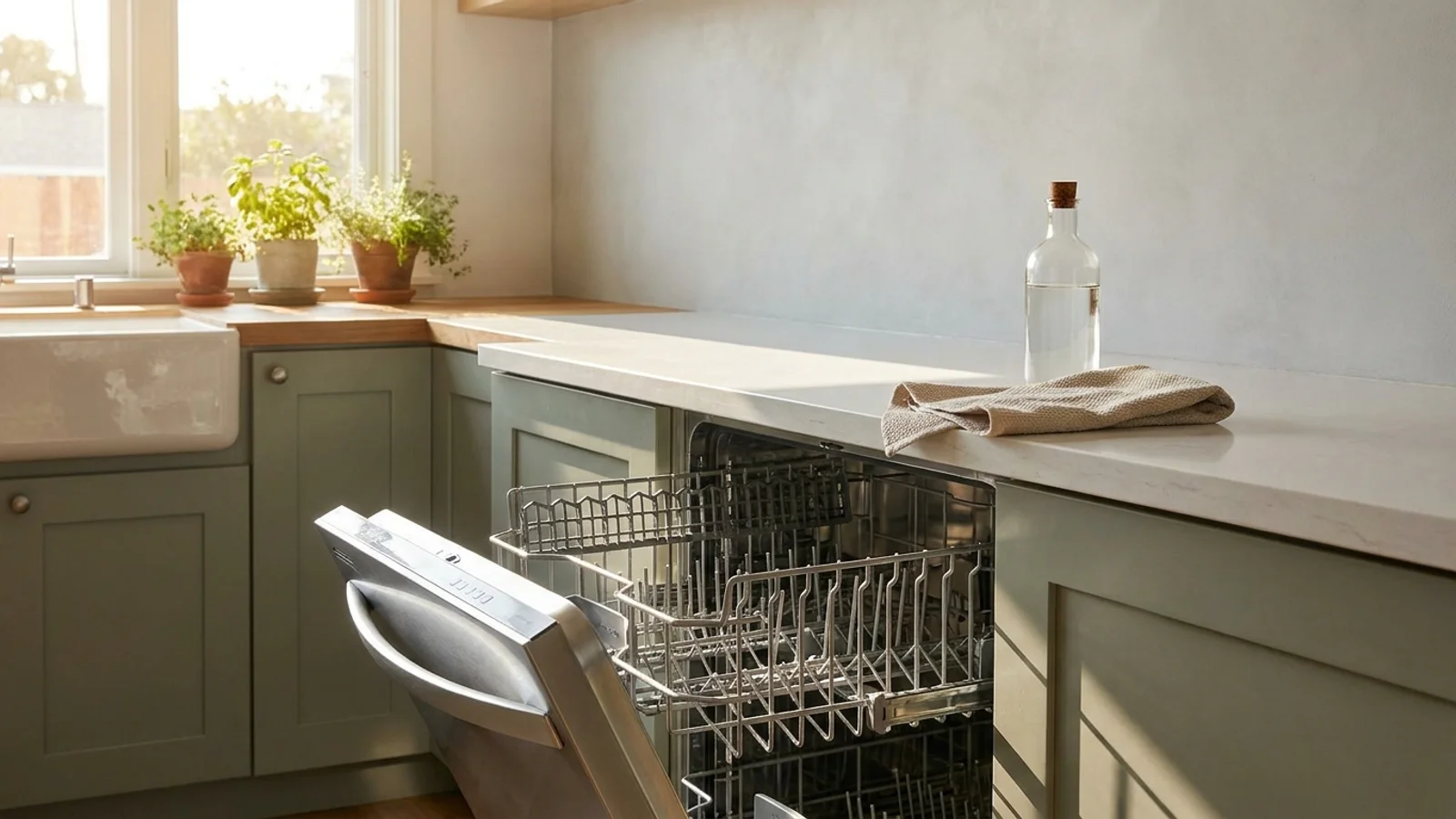
If you’re wondering how to repair dishwasher rack rust, start by inspecting how much coating is gone. A few rusty tines can be a touch-up if the rack maker’s product and the dishwasher manual allow it. Widespread rust or tines that crumble point toward a replacement rack. Rust on the rack does not, by itself, say the motor, pump, or heating element has failed.
What actually causes dishwasher rack rust
Many dishwasher racks are steel wire with a vinyl or nylon coating. That coating keeps water off the metal. Loading, detergent, and wash cycles can wear it. Once it cracks, water can reach the steel.
Water hardness can leave mineral scale on glasses and heating parts. It does not prove hard water caused this rack’s rust. Photograph any scale and let the technician or the coating maker’s guidance settle contributing conditions. Our dishwasher repair in San Diego page covers broader dishwasher service.
How to repair dishwasher rack rust yourself
For small, isolated spots, some homeowners use a vinyl or plastic repair coating sold for dishwasher racks. That is not a universal recipe.
- Pull the rack if the dishwasher manual shows how.
- Prepare the metal only as the coating product label allows (some products specify sanding or a brush; others do not).
- Clean and dry the area as the label requires.
- Apply the coating in the thickness and number of coats on the label.
- Observe the full cure time on that product. Do not use a 24-hour rule unless the label says so.
- Do not run a cycle until the label says the rack can go back in.
This is not meant to rebuild a rack that is mostly bare metal or whose wire has weakened.
When replacing the rack makes more sense
If rust covers large sections, tines are thinning, or pieces snap, touch-up paint may not last. Broken tine fragments can reach a pump or spray arm and contribute to a dishwasher that stops draining.
Order a rack using the dishwasher’s model number, usually on a sticker inside the door or tub. OEM racks match that machine’s dimensions when you order the correct part. Aftermarket racks can fit. Measure tine spacing and roller mounts and confirm the seller’s fit notes. This page does not guarantee aftermarket fit.
Exposed tines can scrape a hand. Rust can stain dishware. Those are practical reasons to replace a badly rusted rack. This page does not make a health-safety claim about iron oxide.
Situations where it’s more than the rack
| What you’re seeing | What to do |
|---|---|
| A few isolated rust spots, rack otherwise solid | Follow product label and dishwasher manual for touch-up |
| Widespread rust or tines that flex and crumble | Plan a replacement rack |
| Rust plus dishes coming out cool | Have heat checked as a separate symptom |
| Rust plus water pooling around the door | Have the door seal or drain checked |
National cost guides such as HomeGuide put typical dishwasher repairs in the $100 to $300 range as of the figures in our claims file. The matched pro diagnoses and quotes in writing.
Keeping rust from spreading
Rinse aid and detergent are not proven to control coating wear on this page. Look at the rack when you already have it out for a routine dishwasher cleaning. Catching a chip early is useful if the product you use is meant for that repair.
If the dishwasher has other faults, use repair or replace a dishwasher with the written diagnosis, not the rack alone.
Frequently asked questions
Is rust on a dishwasher rack dangerous?
This page does not make a medical claim. Practical issues include sharp wire and staining. Follow product and dishwasher safety labels.
Can you fix a rusty dishwasher rack yourself?
Sometimes, for isolated spots, if the coating product and dishwasher manual allow it. Use the label’s prep and cure steps. Widespread rust or crumbling tines call for a replacement rack.
How do I know if I need to repair or replace a rusty rack?
A few spots on solid tines can be worth a labeled touch-up. Large areas, flexing tines, or repeated failures on the same spots point to replacement.
Does rust on the rack mean the dishwasher motor is failing?
No. The rack is separate from the motor, pump, and control board.
Why does my dishwasher rack rust faster than my last one?
Possible factors include coating wear, how the rack is loaded, and water chemistry. None of those is proven from the address alone.
Where can I buy a replacement dishwasher rack?
Manufacturer sites and parts retailers sell OEM and aftermarket racks. Use the model number so you order the correct pattern.
If rust shows up with weak heat or water on the floor, the pros in our network can diagnose and quote in writing. Call (858) 988-7787 to request dishwasher repair in San Diego.