You load the dishwasher, run a cycle, and return to find a pool of dirty water still sitting at the bottom. It’s a frustrating sight and a common problem for San Diego homeowners. A dishwasher that is not draining properly leaves dishes unclean and can even create unpleasant odors.

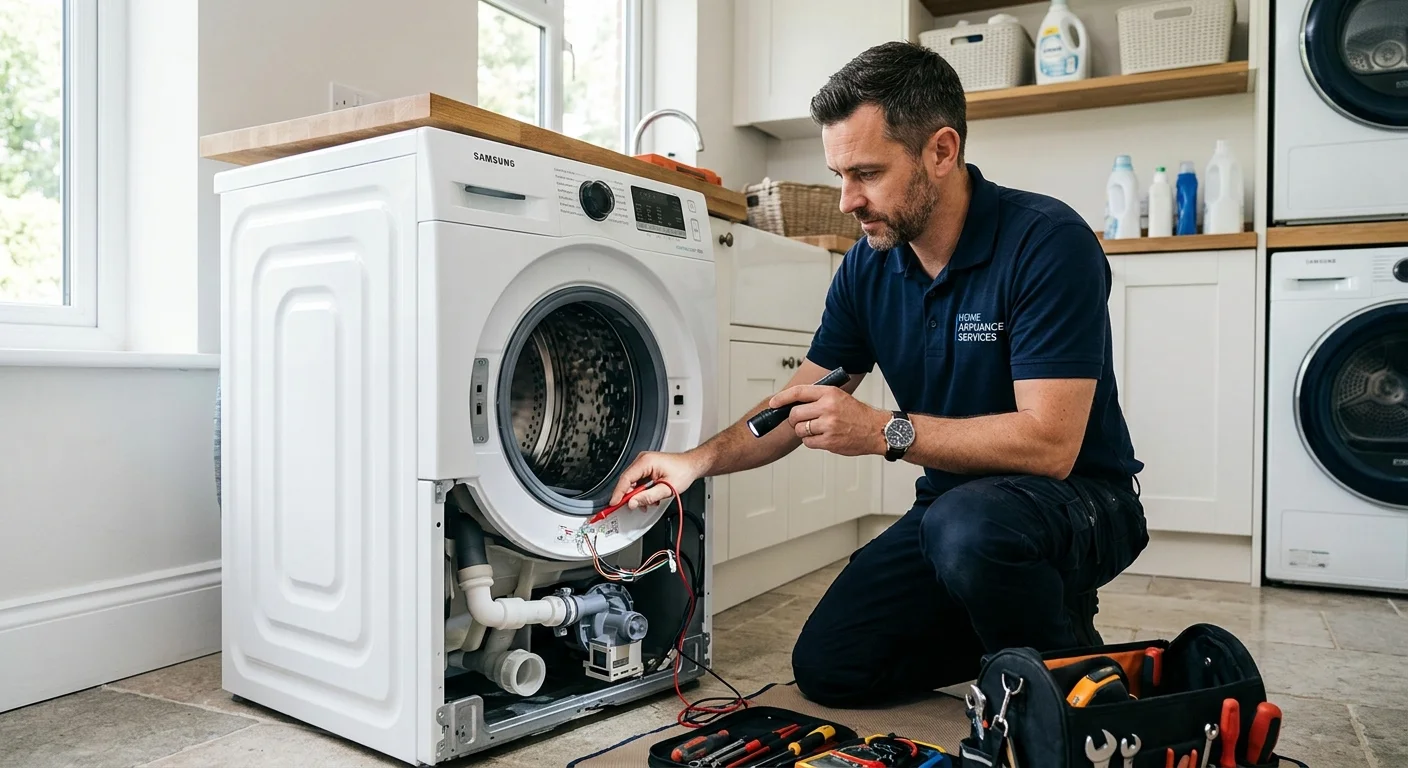
A photorealistic close-up of a home-appliance technician diagnosing the issue, c

When your dishwasher fails to drain, it means something is interrupting the flow of water out of the appliance. Repair Pro San Diego technicians see this issue frequently, and often, it’s a fixable problem. Sometimes, you can even resolve it yourself with a few simple checks. We will walk you through the most common reasons your dishwasher isn’t draining and tell you what our local experts look for.

Why a dishwasher won’t drain

Your dishwasher’s draining system is surprisingly simple yet relies on several components working together. After the wash and rinse cycles, a drain pump activates to push the dirty water out of the wash tub, through a drain hose, and into your home’s plumbing system. This usually connects to your garbage disposal or a dedicated air gap on your sink.

If any part of this system encounters a blockage or a mechanical failure, water will stay trapped in the bottom of the dishwasher. The most common culprits include clogged filters, kinked drain hoses, issues with your garbage disposal, or a faulty drain pump. Less common, but still possible, are problems with the check valve or the main control board. Understanding these potential points of failure helps you determine if a DIY fix is possible or if it’s time to call a San Diego appliance repair expert. We’ll explore these causes in more detail and explain how our techs diagnose and resolve each one.

Check the filter and the drain hose

Before you panic, two of the easiest problems to check and often fix yourself involve the dishwasher’s filter and its drain hose. These are very common points of obstruction.

The dishwasher filter

Most modern dishwashers have a filter assembly at the bottom of the wash tub, designed to catch food particles and prevent them from recirculating or clogging the drain. If this filter gets excessively dirty, it can restrict water flow and prevent proper draining.

To check it, you first need to remove the bottom dish rack. Locate the cylindrical filter assembly, often found beneath the spray arm. It typically twists or unlatches for removal. Pull it out carefully. You might find it packed with food debris, grease, or even small pieces of broken glass. Thoroughly clean the filter under running water with a stiff brush or an old toothbrush. Make sure all screens and mesh parts are clear. Once clean, reinstall it correctly, ensuring it clicks into place. This simple step often solves the drainage problem.

The drain hose

The drain hose carries the dirty water from the dishwasher to your plumbing. It typically runs from the back of the dishwasher, under your sink, and connects to either your garbage disposal or a dedicated drain pipe.

Carefully pull the dishwasher out a few inches if possible, or visually inspect the hose under the sink. Look for any visible kinks or bends in the hose that might be restricting flow. Sometimes, objects stored under the sink can push against the hose, causing a kink. Straightening it out can immediately fix the issue. If there are no visible kinks, the hose itself might be clogged internally. Over time, grease, food particles, and mineral deposits can build up inside the hose. While clearing an internal clog can be more challenging and might require disconnecting the hose, it’s usually best handled by a professional unless you’re comfortable with plumbing work. A clogged drain hose can also lead to other problems, like a dishwasher leaking from the bottom.

The drain pump and check valve

If the filter is clean and the drain hose is clear, the problem often lies with the mechanical components responsible for actually moving the water. This is where professional help typically becomes necessary, as accessing these parts requires disassembling portions of the dishwasher and dealing with electrical connections and water lines.

The drain pump

The drain pump is essentially the heart of your dishwasher’s drainage system. It’s an electric motor with an impeller that spins rapidly, forcing water out of the wash tub. If the drain pump fails, water has no way to exit the machine. Common reasons for pump failure include a worn-out motor, a blockage within the pump’s impeller (like a piece of glass, a broken dish fragment, or a fruit pit), or an electrical issue preventing the pump from receiving power. Our dishwasher repair technicians can diagnose if the pump motor is faulty, if the impeller is jammed, or if there’s a problem with the wiring or control board sending power to the pump. Replacing a drain pump involves disconnecting the power and water, tipping the dishwasher, and carefully removing and installing the new part. This is a job best left to experienced hands to ensure safety and proper function.

A detailed infographic illustrating common causes of a dishwasher not draining, categorized by DIY fixes (filter, hose, air gap, disposal plug) and issues requiring professional repair (drain pump, check valve, control board).

The check valve

Connected to the drain pump or within the drain hose system, the check valve is a simple but crucial component. Its job is to act as a one-way gate, allowing water to drain out of the dishwasher but preventing it from flowing back in once the pump shuts off. If the check valve gets stuck closed, it will prevent water from draining. If it gets stuck open, it can allow dirty water to seep back into the tub, leaving standing water even after a cycle appears to complete. Debris like food particles or mineral buildup can cause a check valve to malfunction. While sometimes it can be cleaned, often it needs replacement to ensure it functions correctly and prevents water backflow. Accessing the check valve can be tricky, often requiring the removal of the drain hose or pump, making it another task that typically benefits from professional expertise.

Garbage disposal knockout plug and air gap

Two other external elements can cause your dishwasher to hold water, especially if you have recently installed a new garbage disposal or noticed issues with your kitchen sink drainage. These are common oversights that can be simple fixes.

The garbage disposal knockout plug

If your dishwasher’s drain hose connects to a garbage disposal, there’s a crucial detail that often gets missed during installation: the knockout plug. New garbage disposals come with a small plug inside the dishwasher inlet port that needs to be “knocked out” before connecting the drain hose. This plug prevents food debris from entering the dishwasher from the disposal. If the plug is not removed, it completely blocks the dishwasher from draining into the disposal, leading to standing water in your dishwasher every time you run it.

You can often check for this by disconnecting the drain hose from the garbage disposal and looking inside the disposal’s inlet port. If you see the plug, you will need to gently tap it out from the inside of the disposal with a screwdriver and hammer (making sure the disposal is unplugged first). This is a common issue for homeowners who install their own disposals or have a new disposal installed by someone unfamiliar with dishwasher connections.

The air gap

Many homes, especially older ones or those built to specific plumbing codes, have a dishwasher air gap. This is a small cylindrical fixture located on your kitchen counter, typically near the faucet. Its purpose is to prevent contaminated sink water from siphoning back into your dishwasher, a critical safety feature.

However, air gaps can become clogged with food particles, grease, or mineral deposits over time. If the air gap clogs, it can create a backup that prevents your dishwasher from draining properly. You might notice water backing up into your sink or even spitting out of the air gap cover. To check it, remove the chrome or plastic cover from the air gap. You can often clear minor clogs by removing visible debris with a paper towel or small brush. For more stubborn clogs, you might need to disconnect the hoses from the bottom of the air gap (under the sink) and flush them out. If you notice your dishwasher isn’t cleaning dishes as well as it used to, or if you’re experiencing other drainage issues, checking the air gap is a good troubleshooting step.

When to call us

You have checked the filter, inspected the drain hose for kinks, and made sure your garbage disposal knockout plug and air gap are clear. If water still sits in your dishwasher, the problem likely lies with internal components like the drain pump, check valve, or even the control board. These issues require specialized tools, knowledge, and experience to diagnose and repair safely. Attempting to fix them without proper training can lead to further damage, water leaks, or electrical hazards.

Our expert San Diego appliance repair technicians are ready to help. We provide prompt, reliable dishwasher repair services across San Diego County. We can quickly diagnose the exact cause of your draining issue and perform the necessary repairs, often on the same day. Don’t let a faulty dishwasher disrupt your routine. Call us at (858) 925-5546 for a same-day estimate.