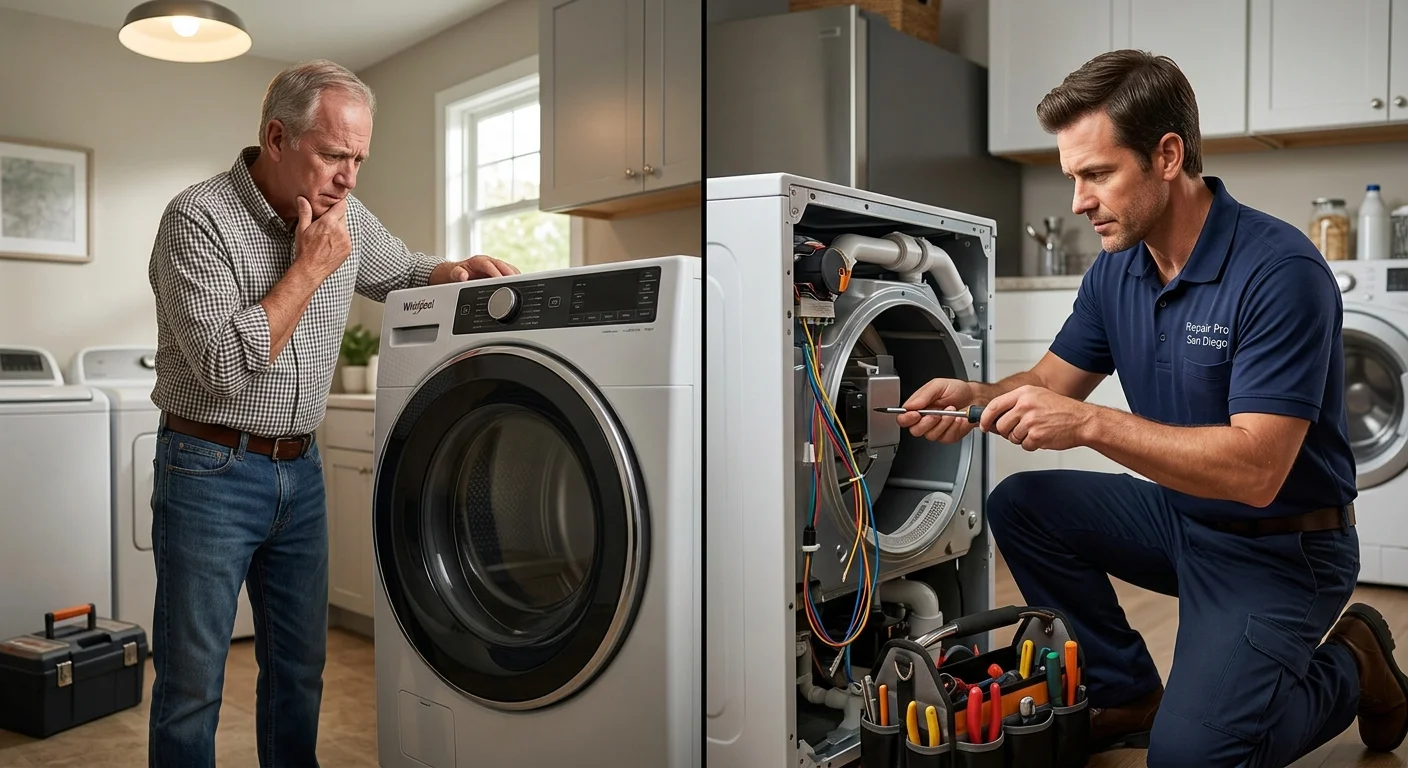
Your Whirlpool dryer is a household workhorse, but like any appliance, it can run into trouble. When your clothes aren’t drying, or your machine is making strange noises, it’s frustrating. Knowing the common issues and their potential causes can help you decide if it’s a simple fix or time to call a professional for Whirlpool dryer repair.
Whirlpool dryer running without heat
A dryer that runs but doesn’t produce heat is one of the most frequent and annoying problems. You pull out damp, cold clothes, wondering what went wrong. Several components could be preventing your Whirlpool dryer from getting hot.
Potential Causes:
- Thermal Fuse: This small, inexpensive part is a safety device. It blows if the dryer overheats, often due to a clogged vent. Once it blows, it cuts power to the heating circuit, preventing a fire. It’s a common culprit for no heat, but you must also address the underlying cause of overheating (like a clogged vent).
- Heating Element: The heating element generates the heat in electric dryers. If it is open, the dryer may tumble without getting warm. Continuity testing and panel removal belong to the model procedure or a technician.
- Thermostat: Dryers have several thermostats that regulate temperature and prevent overheating. A faulty operating or high-limit thermostat can prevent the heating element from receiving power.
- Igniter (Gas Dryers Only): For gas dryers, the igniter glows red hot to ignite the gas. If it’s weak or broken, the gas won’t light, and you’ll get no heat. You might also hear the gas valve click but no flame.
If you’re comfortable with the model’s owner-manual checks that stay outside the cabinet, start there. Replacing internal parts requires tools and the service information. If you’re unsure, or dealing with a gas dryer, request a qualified technician.
Loud noises during the spin cycle
Noises from a dryer can range from a mild thumping to a screeching wail, each potentially signaling a different underlying problem. Ignoring these sounds can lead to more extensive and costly repairs down the line, or even damage to the clothes. Understanding what different noises mean can help you pinpoint the issue.
Common Noises and Their Causes:
- Squealing or Squeaking: Often indicates a worn idler pulley or drum rollers. The idler pulley maintains tension on the drive belt, and its bearing can wear out. Drum rollers support the drum as it spins, and they can become stiff or damaged over time, leading to friction and noise.
- Thumping or Banging: Usually points to worn drum rollers or glides that are no longer smoothly supporting the drum. If items like shoes are bouncing around inside, that’s a different sound, but a consistent thump when empty suggests a mechanical issue with the drum’s support.
- Grinding or Scraping: This can be a more serious sound, potentially indicating a problem with the motor bearings or something caught in the blower wheel. If the blower wheel is obstructed, it can cause a grinding noise as it struggles to spin.
- Rattling: Might be something loose inside the dryer, or objects like coins caught in the lint trap housing or blower fan. Always check pockets before drying to prevent this.
While some noises might be benign (like an imbalanced load), persistent or worsening sounds warrant attention. Disassembling a dryer to inspect drum rollers or the idler pulley can be complex and requires specialized tools. When the noises become too loud to ignore, it’s time to consider calling a professional to diagnose and fix the source of the racket.
Dryer is running but not drying clothes
This frustrating issue often makes you run load after load, only to find your clothes still damp. A dryer running without adequately drying isn’t just inconvenient; it wastes energy and can be a sign of a safety hazard, especially regarding airflow. Addressing this promptly protects your clothes and your home.
Key Reasons Your Dryer Isn’t Drying:
- Clogged Dryer Vent: This is perhaps the most common and dangerous cause. Lint accumulates in the exhaust vent, restricting airflow. When hot, moist air can’t escape, clothes stay damp, and the dryer works harder, potentially overheating. A severely clogged vent is a fire hazard. Regular dryer vent cleaning matters for safety and efficiency.
- Broken Heating Element (Electric Dryers): As mentioned earlier, if the heating element isn’t producing heat, your clothes will tumble in cold air and remain wet.
- Restricted Airflow: Beyond a clogged main vent, check the lint trap filter. A dirty filter significantly reduces airflow. Some dryers also have internal ducts that can become blocked.
- Faulty Moisture Sensor: Many modern Whirlpool dryers use moisture sensors to detect when clothes are dry and shut off. If these sensors are dirty or malfunctioning, the dryer might stop too soon or continue running indefinitely, not realizing the clothes are still damp.
Always start by checking and cleaning your lint trap after every load and inspecting your dryer vent for obstructions. If these simple steps don’t resolve the issue, the problem might be more complex, warranting professional inspection. If those owner checks do not restore heat, request a match for dryer repair in San Diego.
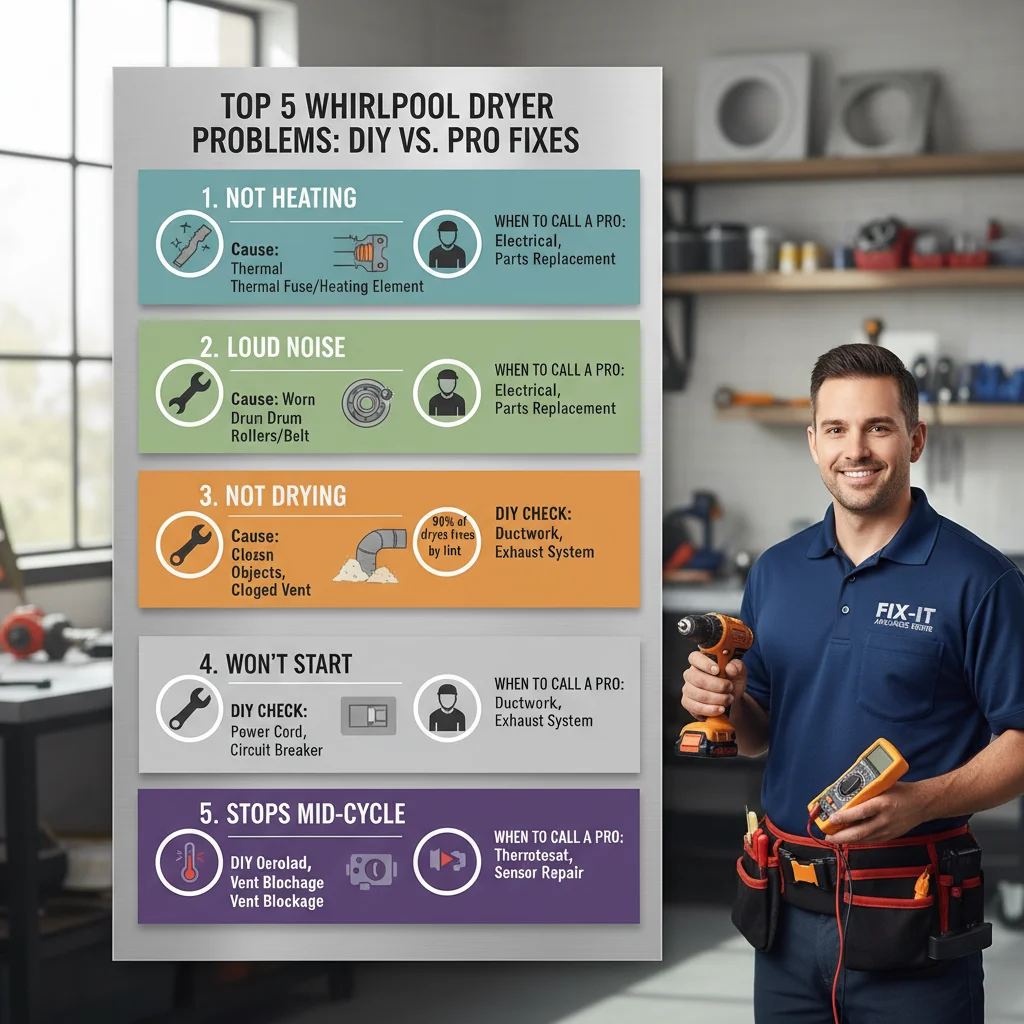
Troubleshooting a Whirlpool dryer that won’t start
When your Whirlpool dryer won’t start, it brings laundry to a complete halt. This problem can be particularly vexing because the cause isn’t always obvious. Before you panic, there are several things you can check that don’t require technical expertise.
What to Check When Your Dryer Won’t Start:
- Power Supply: First, ensure the dryer is plugged in securely. Check your home’s circuit breaker panel. A tripped breaker is a common reason for no power to an appliance. For electric dryers, these are usually two linked breakers. Reset them by flipping them completely off, then back on.
- Door Switch: The dryer won’t start if the door isn’t completely closed, or if the door switch is faulty. This safety mechanism prevents the dryer from running when the door is open. Inspect the door latch for any damage and make sure it clicks shut. You can often test the door switch by pressing it in manually; if you hear a click, it might be working.
- Start Switch: The start button or switch itself can wear out or become faulty. If you press it and nothing happens (no hum, no lights, no response), the switch might be the problem.
- Thermal Fuse (Again): A blown thermal fuse (as discussed in the “no heat” section) can also completely prevent the dryer from starting, especially on some models. It acts as a safety cutoff for the entire machine.
- Drive Motor: If you hear a hum but the drum doesn’t spin, the drive motor might be seized or its capacitor might be failing. This is a more complex issue requiring professional diagnosis.
After checking the basics like power and the door, if your dryer still refuses to start, it’s likely an internal component failure. Ask whether the matched technician services your exact Whirlpool model. Repair Pro San Diego does not certify all-model coverage.
DIY fixes vs. professional Whirlpool repair
Deciding whether to tackle a dryer problem yourself or call a professional is a common dilemma for San Diego homeowners. Some issues are straightforward and safe for DIY, while others demand the expertise of a qualified appliance technician.
When to Consider DIY:
- Lint Trap Cleaning: Always clean your lint trap after every load. It’s simple, free, and vital for efficiency and safety.
- Checking Breakers: Resetting a tripped circuit breaker is an easy first step if your dryer loses power.
- Clearing the Exterior Vent: If you can safely access the exterior vent hood, remove any visible lint buildup or obstructions.
- Checking Power Cord: Ensure the cord is firmly plugged into the wall outlet and the dryer.
These quick checks can often resolve minor issues without needing tools or advanced knowledge. However, as soon as you need to open up the appliance, deal with electrical wiring, or handle gas lines, the situation changes significantly.
When to Call a Professional:
- Electrical Component Issues: Problems like a faulty heating element, thermal fuse, or motor require working with electricity. Incorrect diagnosis or repair can lead to further damage, electric shock, or fire hazards.
- Gas Line Problems: If you see, hear, or smell signs of a gas leak, leave the area immediately. Call 911 or SDG&E at 1-800-411-7343 from a safe location, following SDG&E’s gas-appliance safety guidance. Wait until the hazard has been addressed before arranging appliance diagnosis.
- Complex Mechanical Repairs: Replacing drum rollers, idler pulleys, or the drive belt involves disassembling the dryer, which can be tricky. Without proper tools and experience, you risk damaging other parts or not reassembling it correctly.
- Persistent or Intermittent Issues: If you’ve tried the simple fixes and the problem persists, or if the dryer is exhibiting strange, unpredictable behavior, it’s best to get an expert opinion.
- Safety Concerns: Any time you feel unsafe, or if the dryer is smoking, sparking, or emitting a burning smell, turn it off immediately and call a professional.
For Whirlpool appliance repair in San Diego, ask whether the matched technician services your model and quotes in writing. Run a different brand? See our guide to common LG dryer problems for LG-specific faults.
Frequently asked questions
Why is my Whirlpool dryer not heating?
Possible no-heat causes include a thermal fuse, heating element, thermostat, or, on gas models, an igniter path. Those are inspection points, not a ranked diagnosis. Clean the lint screen and check the exterior vent. Leave continuity tests to the model procedure or a technician.
Why does my Whirlpool dryer run but clothes stay damp?
A clogged dryer vent is the most common cause and also a fire hazard. When hot, moist air can’t escape, clothes tumble in humid air and stay wet. A dirty lint trap also restricts airflow significantly. If airflow is fine, the moisture sensor may be dirty or faulty, causing the dryer to stop the cycle before clothes are actually dry.
What causes a squealing or thumping noise in a Whirlpool dryer?
Squealing usually points to a worn idler pulley, the component that maintains tension on the drive belt. Thumping typically means the drum rollers are worn and can no longer support the drum smoothly. Both parts sit behind the same disassembly, so the technician can inspect them in one teardown.
Is my Whirlpool dryer worth repairing or should I replace it?
Compare the written repair quote with the price of a similar new unit and the dryer’s remaining useful life. Gas line problems, a failing motor, and complex electrical repairs usually tip the math toward replacement on an older machine. Simple owner checks stay at the lint screen and exterior vent; anything that requires opening the appliance, working with wiring, or dealing with gas connections goes to the matched technician, who diagnoses first and quotes in writing.
When to call us
Don’t let a faulty dryer disrupt your life. Owner checks stay at the lint screen, plug, and exterior vent. Electrical, gas, and cabinet work belong to a matched technician. Repair Pro San Diego does not diagnose or repair the dryer. Call (858) 988-7787 and leave a voicemail to request a match.