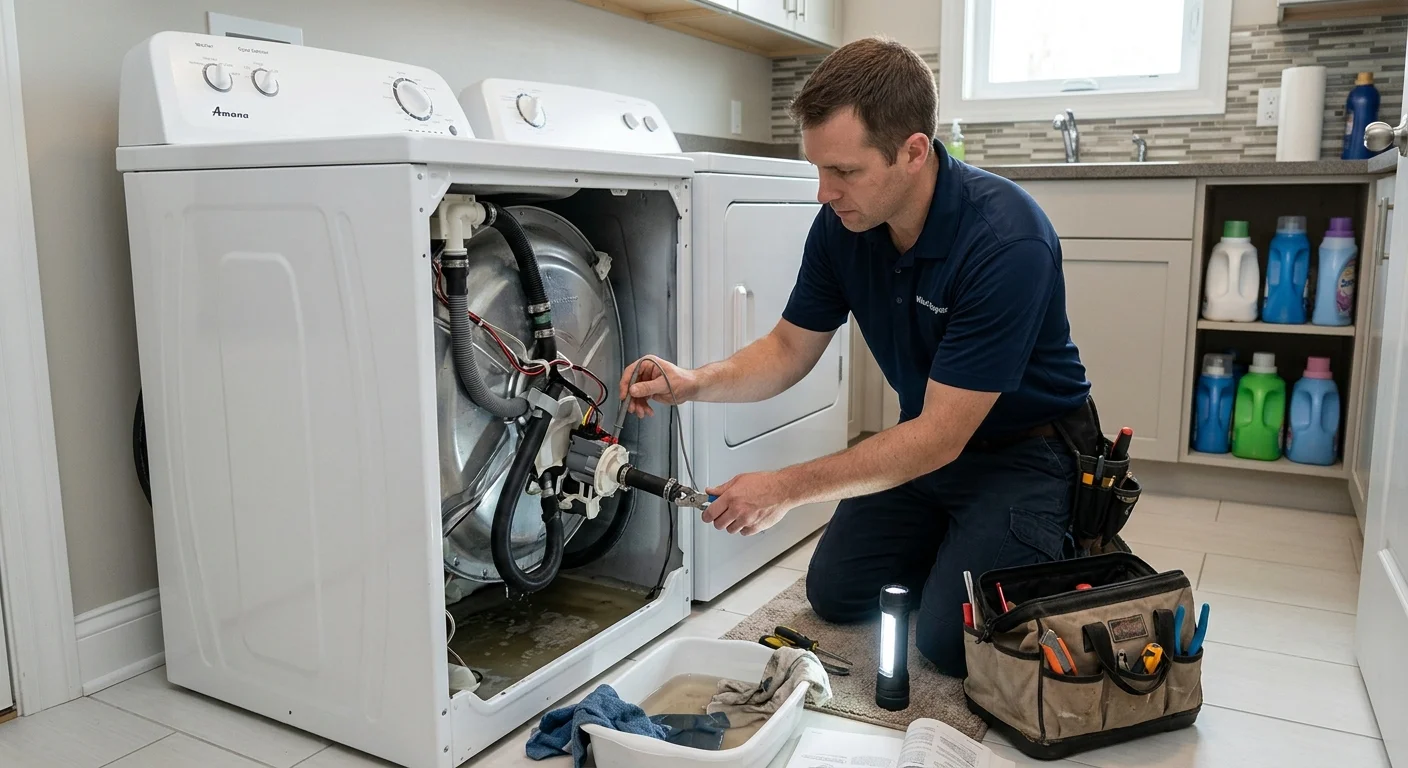
Standing water after an Amana cycle usually points toward the drain path or cycle controls. The exact symptom helps a technician narrow the cause before replacing anything. Record what the washer does, including any humming, spinning, flashing lights, or error codes.
Confirm the model and exact drain symptom
“No drain” can describe several different problems. The tub may remain full after washing. It might empty slowly, stop with wet clothes, or drain only after another cycle starts. Water might also leave the washer and then return.
Note where the cycle stops and which lights remain on. Copy any displayed code exactly. A letter, number, or flashing pattern may have a model-specific meaning. Don’t rely on a code list written for another Amana washer.
Copy the model and serial numbers from the machine’s label. Label placement varies, so check the washer’s literature if it isn’t obvious. The model number lets the technician find the correct service information and parts diagram.
Amana’s current washer troubleshooting guidance separates several possible symptoms. It lists the door or lid, load balance, cycle selection, detergent suds, drain hose, and model-specific pump filter among the items to review.
Also note what happened just before the problem began. Mention a moved washer, an unusually heavy load, a plumbing backup, or a small item missing from a pocket. These details give an Amana washer repair technician a more useful starting point.
Our broader washer won’t drain guide explains how these clues apply across different brands.
What owners can check without opening the washer
Start with the controls and the visible installation. Confirm the selected cycle has finished rather than paused. Check whether the lid or door is fully closed. Then note whether the washer responds when you select its model-specific drain or spin option.
Look at the load without reaching behind panels. A tightly packed load or one heavy item can affect spinning. Clothes that feel soaked don’t always prove water remains inside the tub. That difference matters because poor spinning and poor draining can look similar.
Review the detergent label and your Amana manual. Amana identifies excessive suds as one possible reason for slow draining or spinning. Tell the technician if you changed detergent, used a different concentration, or added more than usual.
Inspect the visible drain hose for a sharp bend or crushing. Also check whether the utility sink or nearby drain shows an obvious backup. Don’t pull a heavy washer from a tight alcove solely to reach hidden connections. A stacked unit in a Mission Valley condo presents different access than a top-loader in an El Cajon garage.
Some Amana front-load models have an owner-accessible pump filter. Others require a different approach. Don’t assume a generic online video matches your machine. Check the exact owner’s manual before removing a cover, cap, drawer, or filter.
If water is escaping onto the floor, stop running more test cycles. Note where the water first appears and request an inspection.
What technicians inspect along the drain path
A technician normally follows the water’s route through the washer. That route can include the tub outlet, an internal hose, a trap or filter on certain models, the drain pump, and the discharge hose. The exact layout comes from the model information.
At the pump area, the technician looks for restrictions and physical damage. Small clothing items, lint, residue, or debris can interrupt water movement. A humming sound doesn’t prove the pump is working correctly. The sound must be compared with actual water flow and the pump’s condition.
A silent pump calls for a different set of checks. The technician may inspect electrical connections, the pump circuit, and whether the control is sending the expected command. This helps separate a blocked water path from a pump or control problem.
The discharge side matters too. A kinked hose, poor placement, or restricted household drain can produce symptoms that resemble an internal washer failure. The technician can compare the installation with the instructions for that exact model. This avoids replacing a part when the problem sits outside the cabinet.
Access affects the visit. A washer inside a narrow City Heights laundry closet may require a different setup than one beside an open utility sink. Tell the pro about stairs, stacked equipment, cabinets, or limited clearance when requesting washing machine repair.
A useful diagnosis should identify the failed part or restriction. It should also explain the test supporting that conclusion.
How spin and control symptoms affect diagnosis
Draining and spinning happen during the same portion of many wash cycles. That creates overlapping symptoms. A washer holding water may not advance into its expected spin. A washer that drains completely but leaves wet clothes may instead have a spin, balance, or cycle-selection issue.
Listen for the order of events. Note whether the lid locks, the pump hums, water enters the drain, and the basket begins moving. You don’t need to identify the failed component. A simple sequence gives the technician better evidence than “it stopped.”
Control behavior also matters. Record flashing indicators before clearing them. Note whether the washer drains after canceling the cycle, stops at the same point each time, or becomes unresponsive. Repeated resets can erase the clue you wanted the technician to see.
A technician can then compare those symptoms with the model’s service information. Possible areas for testing include the lid or door lock feedback, water-level sensing, pump circuit, wiring, and main control. These are diagnostic categories, not a prediction that each part needs replacement.
Our local San Diego washing machine repair guide explains what information to gather before requesting a match. Photos of the display and laundry area can also clarify the setup.
When to request Amana washer repair
Request Amana washing machine repair when basic checks don’t restore normal draining. Standing water that returns, repeated cycle stops, unusual pump noise, or a recurring code deserve a model-specific diagnosis. Leaking water or an inaccessible stacked installation also makes professional help the practical next step.
A reliable San Diego price for this specific repair couldn’t be confirmed from the approved sources. The matched technician diagnoses first and quotes in writing before work begins. Ask about their diagnostic fee and whether it’s credited toward an approved repair.
Avoid relying on a fixed percentage to decide between repair and replacement. No verified threshold applies to every washer. Compare the written diagnosis, part availability, machine condition, and replacement options instead.
Check any Amana warranty documents tied to your model and purchase. Don’t assume a repair or part is covered. You can also search the CPSC recall database using the exact model number.
California’s Department of Consumer Affairs lookup lets consumers check a service dealer’s current registration status. Repair Pro San Diego matches homeowners with licensed, insured, independent local technicians. The matched pro performs the diagnosis and repair.
Homeowners in East County can also review our El Cajon appliance repair guide for access details common to local laundry rooms and garages.
When to call us
Call when the washer keeps holding water or the drain path requires internal testing. We can match you with a licensed, insured local appliance repair pro who diagnoses and performs the work.
Call (858) 988-7787 to leave a voicemail requesting a match with a local appliance repair pro.