Clean your refrigerator condenser coils
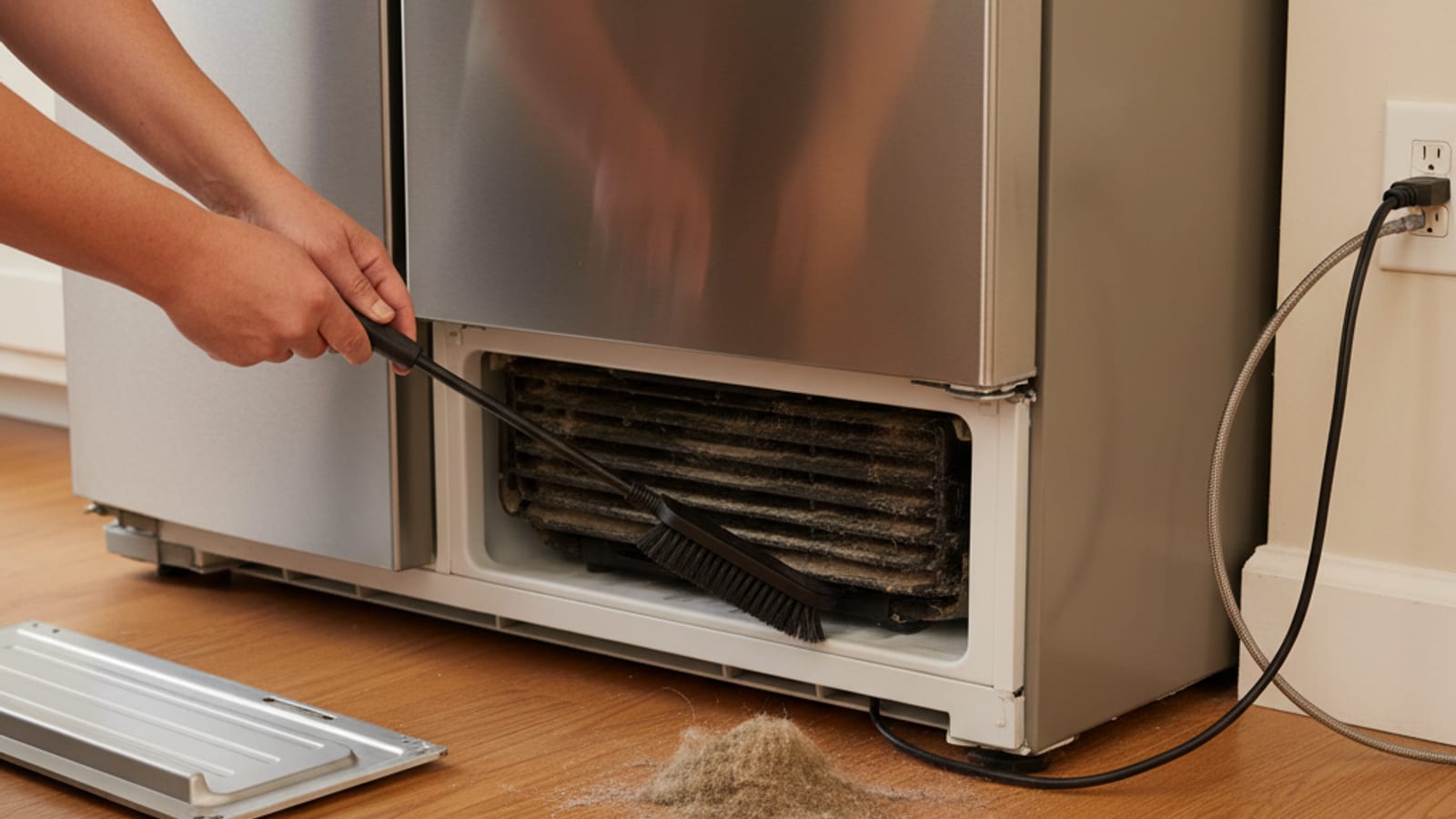
Check your refrigerator manual before cleaning condenser coils. Some models have accessible coils; others need no routine cleaning or require a technician.
What you'll learn
- How to check whether your model has owner-accessible condenser coils
- Why the cleaning schedule depends on your model and household conditions
- Which brush or vacuum attachment your manual recommends
- When to leave inaccessible coils to a qualified technician
Step by step
- Read the model manual to confirm that coil cleaning is recommended and locate the approved access grille.
- Disconnect power before cleaning. Do not pull or strain the refrigerator water line.
- Remove only the grille identified in the owner-maintenance instructions.
- Gently remove accessible dust with the recommended soft brush or vacuum attachment. Avoid bending tubing or fins.
- Refit the grille securely before restoring power.
Do not dismantle a built-in refrigerator to reach hidden coils. If cooling remains poor, record the temperatures and symptoms for a technician; dirty coils are only one possible cause. GE says many models manufactured since 2001 use a NeverClean condenser that does not require owner cleaning. Confirm that against your model instructions.
Source instructions
- Whirlpool: when and how to clean condenser coils
- GE Appliances: condenser coil locations and NeverClean models
Use the instructions for your exact model before starting maintenance.
Rather have a pro handle it?
We match you with a vetted local appliance tech across San Diego County. Leave a message and we call you back.
Keep learning.
Clean your dryer vent line
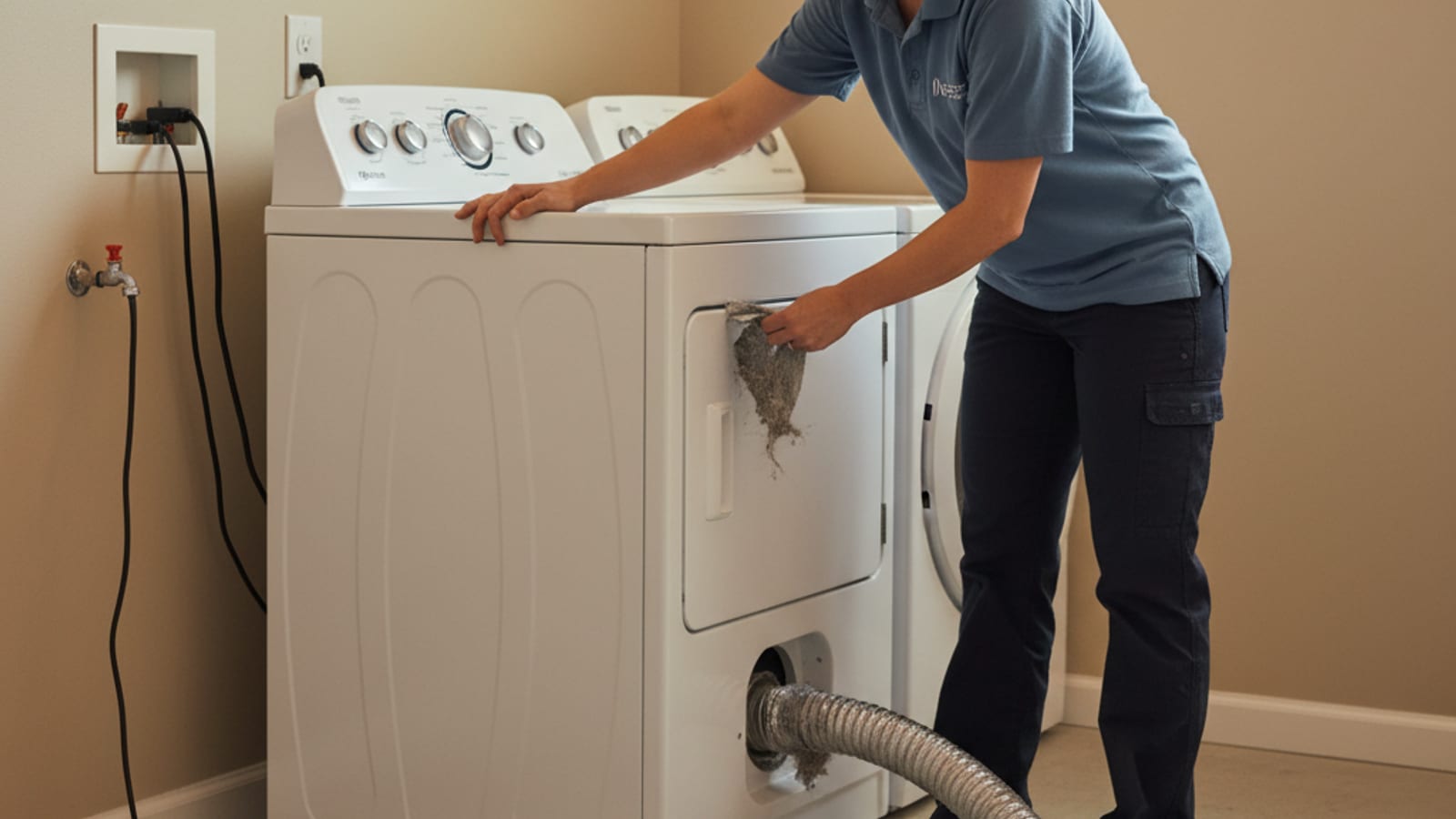
Lint buildup and restricted venting can increase dryer fire risk and slow drying. Check the lint filter and accessible venting, following your model manual.
Check and replace washing machine supply hoses
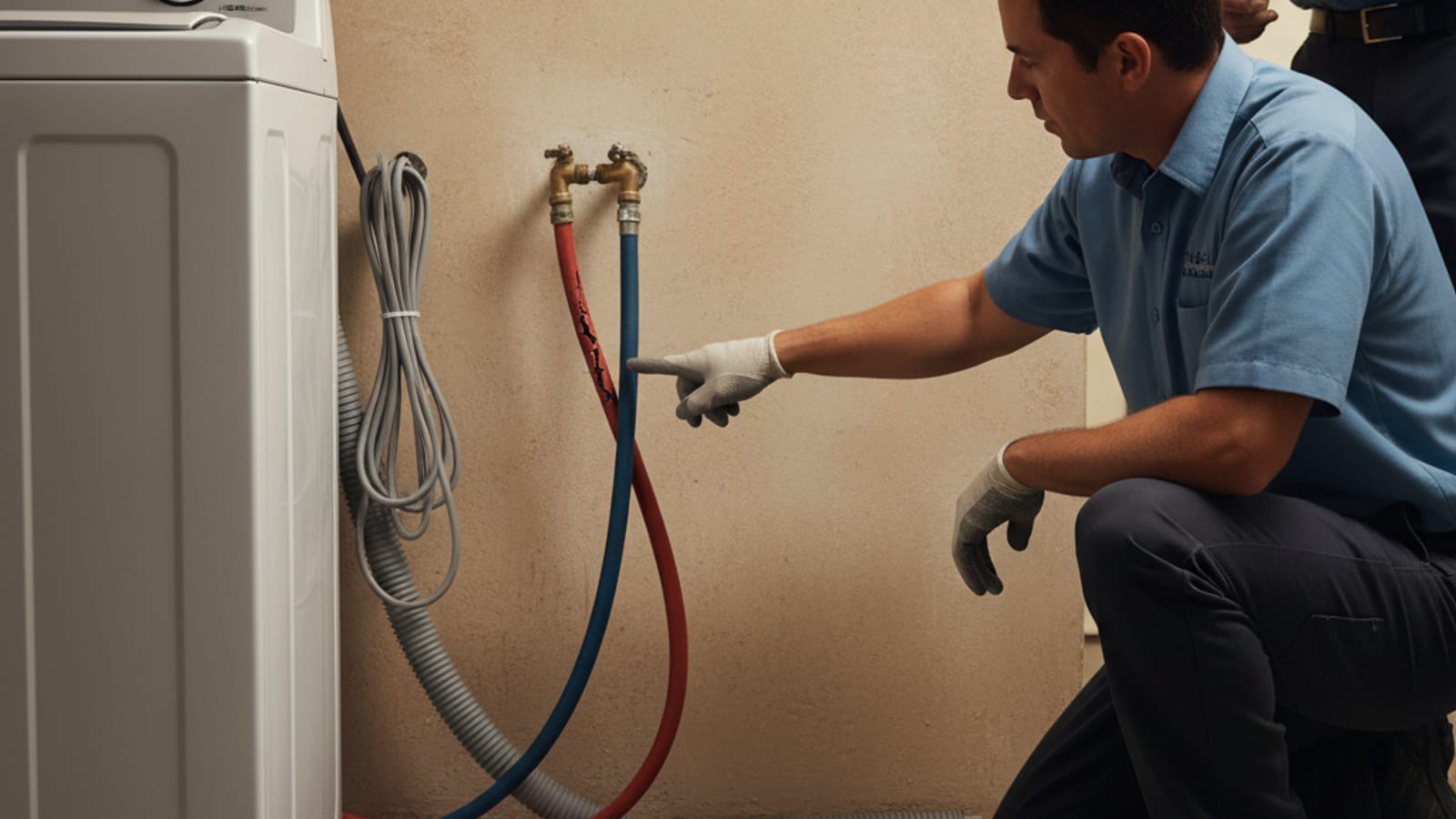
Inspect washer supply hoses for leaks, bulges, cracks, kinks, or worn connections. Follow the washer and hose instructions for replacement and installation.
Clean your dishwasher filter
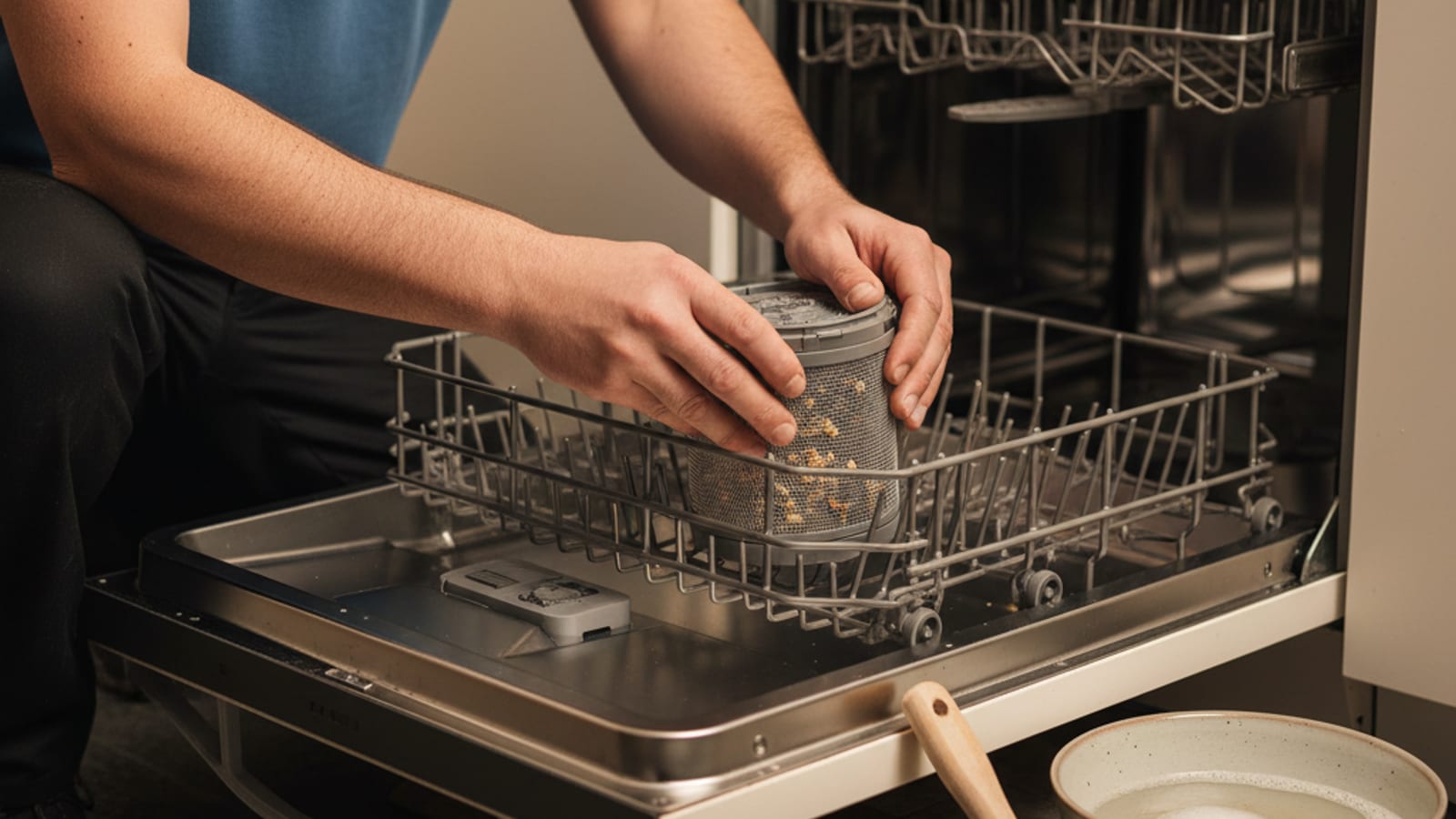
A dirty removable filter can leave food residue on dishes. Check your model manual first: some dishwashers use a filter that needs no routine cleaning.