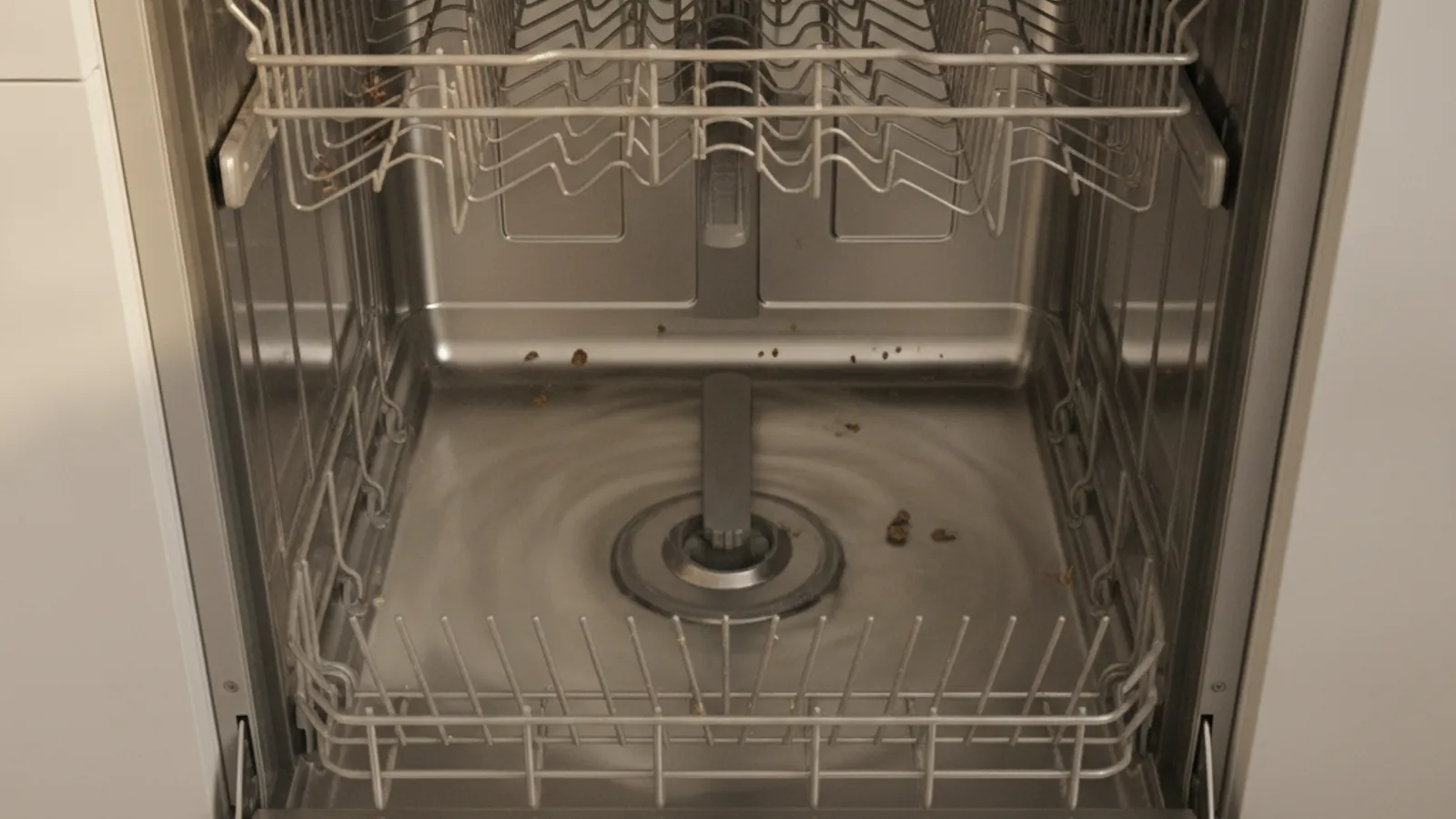
A Whirlpool dishwasher that leaves water in the tub has a drain-path problem. A clogged filter, restricted hose, or a pump that cannot move water are possible. Do not treat that list as almost always true, and do not treat Whirlpool, KitchenAid, and Maytag platforms as interchangeable without the exact model number.
Standing water after a cycle is a common complaint. The cause is still a test, not a 20-minute owner guarantee.
How these dishwashers drain
Wastewater is pumped through a drain hose, over a high loop or air gap, into a sink drain or disposal. Filter designs differ: some older units use a chopper; many newer units use a manual filter you twist out. Confirm which yours is in the manual.
A check valve in the drain path can stick. San Diego hard water can contribute to grease and scale on that valve and on the filter. Treat hardness as a possible contributor, not the local cause.
Start with a drain cycle
Press Cancel or Cancel/Drain as the control map shows. If water leaves, the cycle may have been interrupted. Match any lights or codes to the owner’s manual, not a shared-platform guess. A door that is not fully latched can stop a cycle.
Check the filter and sump
Pull the bottom rack if the book allows it. Bail standing water. Twist out a manual filter only as the diagram shows. Rinse the mesh. See dishwasher not draining for the brand-agnostic version.
Garbage disposal knockout and drain hose
Do not punch a disposal knockout or disconnect the drain hose. If this is a new install that never drained, photograph the disposal inlet and tell the matched technician. You may look for a visible kink or pop an air-gap cap if the fitting is made for that, without pulling hoses off.
Drain pump
If the filter is clean and water still sits, the pump may be jammed or worn. Do not pull the spray arm and sump cover to reach the impeller. That is technician work. For model-specific service context, see Whirlpool appliance repair in San Diego.
DIY versus when to call
Cancel/drain and manual filter rinsing are owner checks. Pump replacement, boards, and repeating codes need a qualified technician. Dishwasher repair matches you after a voicemail.
Frequently asked questions
Why won’t my Whirlpool dishwasher drain?
Possible causes include a clogged filter, a restricted hose, a knockout left in on a new disposal, or a failed pump. Confirm the platform from the model sticker.
How do I manually drain a Whirlpool dishwasher?
Use Cancel/Drain. If that fails, scoop water from the sump after cutting power, then inspect the filter as the manual shows.
How do I unclog a Whirlpool dishwasher drain?
Rinse the owner filter and look at the air gap. Do not detach the hose or knock out a plug from this page. KitchenAid or Maytag siblings still need their own model confirmation.
Does San Diego hard water cause drainage problems?
It can contribute to scale. Cleaning the filter on the interval in the manual helps. It does not prove the cause.
When to call us
If the filter is clear and water still will not drain, leave a voicemail at (858) 988-7787. We match you with a local technician.