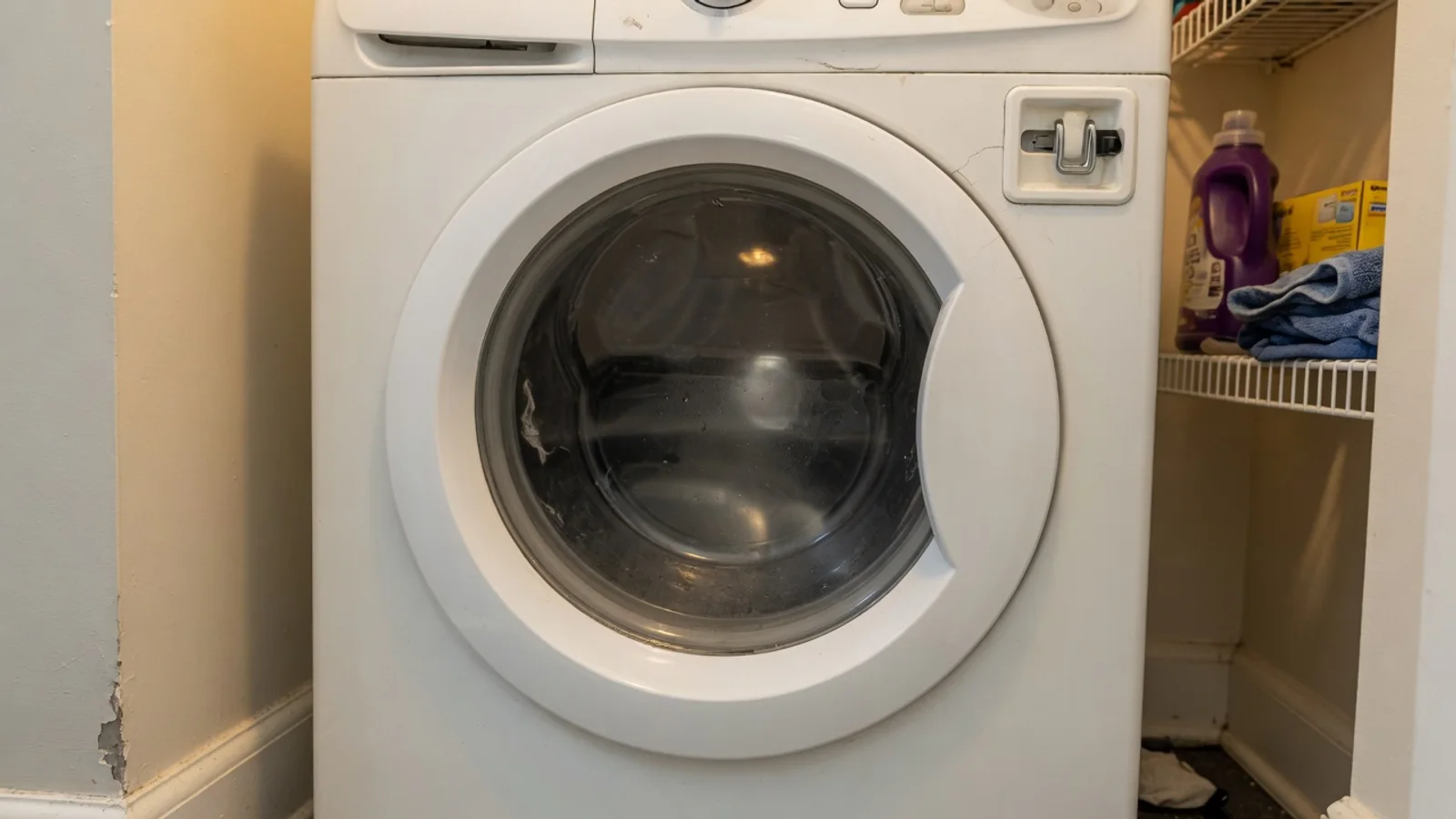
A front-load washer that refuses to lock will not fill. The machine is doing what the interlock requires: it will not run with the door open. The customer task is to record whether the door physically catches, whether the lock solenoid clicks, and whether a code names the lock, then match a technician who can test that assembly.
Drain pages mention a door lock only as one reason a washer will not pump out. This page is the lock itself. If the tub is already full of standing water, use a drain guide first and keep the floor dry.
Split a latch problem from a drain problem
Three different complaints get called “the door won’t lock”:
- The door will not click shut at all. The strike and the latch never meet.
- The door shuts, but the lock never pulls in. The cycle never starts. A lock or door code sits on the display.
- The door locked, the cycle ran, and now it will not unlock. That is a stuck-lock visit, not a start visit.
Write which of those three you have. They are not the same part order.
Top-load lid locks are a cousin, not a clone. A lid switch that will not close stops spin. Photograph that lid strike the same way. Do not pry the lid against a locked cycle.
Owner checks that stay on the door
Unplug the washer, or switch the circuit off, before you look closely at the latch. Do not reach into a tub that still has water. Do not force the door with a screwdriver.
Look at the door strike, the plastic hook on the door. If it is cracked, bent, or missing, the lock has nothing to grab. Look at the lock opening on the cabinet. Lint, a sock, or a coin in that pocket will keep the hook from seating.
Close the door slowly. You should feel the hook enter. You may hear a click from the lock when power is restored and a cycle is selected. No click with a live display is useful. A click with an immediate error is also useful. Write the exact code. Do not translate it into a part name.
Confirm the child lock or control lock is off, using the sequence in the owner’s manual. A locked console looks like a dead latch.
Front-load units in tight San Diego closets take a beating on the hinge side. A door that has dropped a few millimeters from a tired hinge will miss the lock even with a good switch. Photograph the gap at the top and bottom of the door.
Do not remove the lock assembly from this page. The harness, the wax motor or solenoid, and the door switch sit behind the front panel on many models. That is technician access.
What technicians test on a no-lock complaint
The independent technician you match with should test the strike, the lock, the door switch, and the control input that commands the lock. A failed lock is common. So is a door that no longer lines up, a chewed strike, or a control that never sends the lock signal.
If the washer also failed to drain, say so. A lock that will not release after a failed drain is a different sequence than a door that never locked at the start. Keep washing machine repair in San Diego in the voicemail as the service family, and keep this page’s facts in the notes.
Repair Pro San Diego does not stock lock kits and does not perform the repair. We match you with insured local technicians for washing machine repair. Ask about their diagnostic fee and whether it is credited toward the repair. The technician quotes in writing before work begins.
California appliance repair businesses register with BHGS. Confirm a dealer on the DCA lookup.
There is no verified government rule that says replace the washer when a lock fails. A lock assembly is often an economical part on a machine that otherwise still washes. Compare the written quote with a new unit yourself.
When to call us
If a washer in San Diego County will not lock, will not start because of a door code, or will not unlock after a cycle, match with a licensed local appliance repair pro. Call (858) 988-7787 to leave a voicemail requesting a match with a local appliance repair pro. The technician you are matched with inspects the unit, quotes in writing, and does the work.