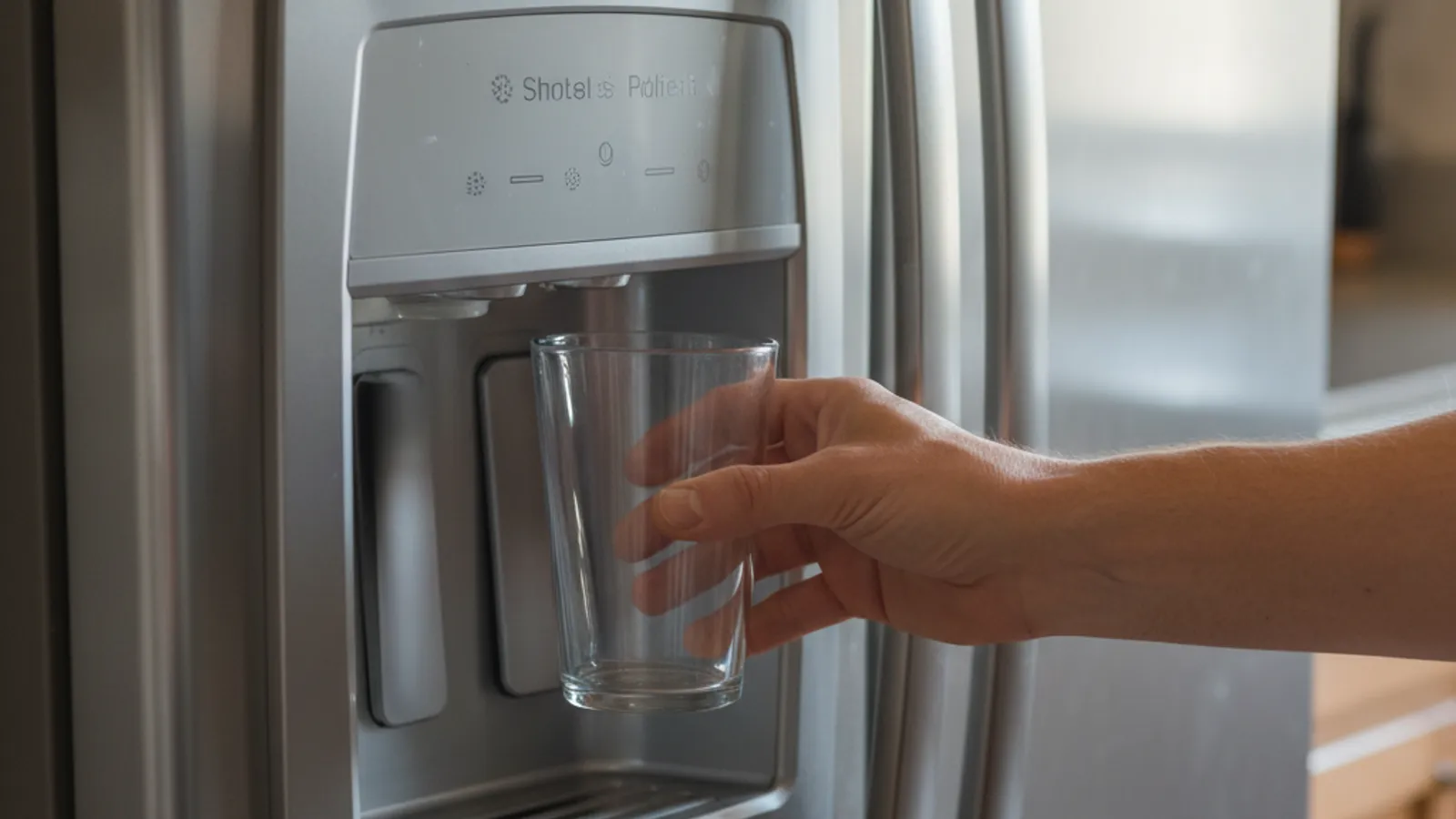
A refrigerator water dispenser not working can come from a frozen line, a clogged filter, a failing inlet valve, or low water pressure. Those are possible links on the path. They are not a ranked diagnosis. Owner checks stay at the lock, the filter, and what you can see without unplugging the fridge overnight.
The dispenser is a simple system with a few failure points. Water runs from your home supply, through a valve, past the filter, up into the door, and out the spout. A problem anywhere along that path stops the flow. The trick is finding which link broke.
Start by noticing what kind of failure you have. No water at all points to a frozen line, a dead valve, or a locked dispenser. A slow trickle points to a clogged filter or weak pressure. That one detail narrows things fast.
A frozen water line in the door
A frozen door line is worth checking first. It is not ranked as the single most common cause. The thin water tube runs through the door, often kinking at the hinge, and water sitting in that bend can freeze solid. It happens most when the freezer or fridge runs too cold.
You’ll get no water at all, even though everything else seems fine. Do not unplug the refrigerator overnight to thaw a line. The FDA’s food-safety guidance for outages uses refrigerator and freezer holding temperatures and time above 40°F, not an overnight power-off test. Unplugging overnight can put perishables into the discard window. Record whether the dispenser lock is off, whether the filter is seated, and any visible kink or ice you can see without pulling panels. Valve, pressure, and line thaw belong to the technician.
A clogged or overdue water filter
Filters trap sediment, and over months that buildup can choke the flow. Follow the interval in the owner’s manual, not a universal six-month rule. If yours is past due, a slow trickle or no water is one possible cause.
One catch: a brand-new filter can cause the same symptom. Cheap aftermarket filters sometimes restrict flow or seat poorly. If the problem started right after a swap, reseat the filter or try a manufacturer original. To rule the filter out entirely, remove it and run the dispenser in bypass mode if your model allows it.
The water inlet valve
The inlet valve sits at the back of the fridge and opens to let water in when you press the lever. When the valve fails or the screen behind it clogs, you get little or no water. Press the dispenser and listen. A faint hum or click without water often points to a valve that’s trying but not opening.
Valve replacement means pulling the fridge out and disconnecting the water line. That’s a job for a professional repair service, since a loose fitting can leak behind the wall. If you’re already dealing with pooling, our guide on a refrigerator leaking water covers what to check.
Low household water pressure
The dispenser needs enough house pressure to fill. This page does not publish a psi range. If other faucets in the house run weak, tell the technician. A partly closed shutoff valve under the sink or behind the fridge is a frequent offender.
Check that the saddle valve or shutoff feeding the fridge is fully open if you can see it without crawling into a leak. Test a nearby faucet to confirm whole-house flow looks normal. If only the fridge is weak, the problem may be downstream, in the line, filter, or valve. Pressure diagnosis stays with the technician.
The dispenser switch, actuator, or control board
When you press your glass against the lever, a microswitch tells the valve to open. If that switch or the actuator behind the pad breaks, nothing happens, no hum, no click. A failing control board can do the same thing on newer models.
These are electrical diagnoses that need a meter and the right wiring map. A qualified technician can test the switch and board quickly rather than guessing at parts.
A kinked supply line behind the fridge
The plastic or copper line behind the unit can crimp when the fridge gets pushed too close to the wall. A kink chokes the flow the same way a clogged filter does. Pull the fridge out a few inches and look for a sharp bend or a pinch point in the tubing.
Check the dispenser lock first
Before anything else, make sure the dispenser isn’t locked. Many models have a child-lock or dispenser-lock button that disables the lever. It’s easy to bump on. Hold the lock button for a few seconds to toggle it off, then try again. This thirty-second check saves a lot of headaches.
Diagnosis order, step by step
Work it in this order:
- Confirm the dispenser isn’t locked.
- Check or replace the water filter if the manual shows how.
- Press the lever and listen for the valve, then tell the technician what you heard.
- Record visible kinks or ice. Do not unplug overnight to thaw.
- Note whether other faucets in the house also run weak.
The lock and filter checks are owner-side. The valve, switch, control board, and any thaw of a hidden line belong to a professional repair service.
The San Diego hard-water angle
Our county runs hard water, and that can matter here. Mineral content can clog filters and scale inlet valves. If your dispenser slowed down sooner than the interval in the manual, mention that to the technician. For recurring trouble, our page on refrigerator repair in San Diego walks through what local conditions can do to these systems.
Frequently asked questions
Why is my refrigerator water dispenser not working?
Possible reasons include a frozen line in the door, a clogged or overdue filter, a failing inlet valve, or low water pressure. Check that the dispenser isn’t locked, then start with the filter and what you can see on the line.
How do I thaw a frozen water line in my fridge door?
Do not unplug the fridge overnight to thaw a line. Keep the door closed and follow FDA holding guidance if the refrigerator or freezer has already warmed: perishables above 40°F are a time-and-temperature problem, not a thaw test. Tell the technician if you already see ice at a visible tube. Hidden-line thaw is their job.
Should I fix the water inlet valve myself?
We don’t recommend it for most people. Replacing the valve means pulling the fridge out and disconnecting the water line, and a loose fitting can leak behind the wall. A professional refrigerator repair tech can swap it safely and test the result.
When to call us
If you’ve checked the lock, filter, and frozen line and the dispenser still won’t run, the problem is likely the valve, switch, or board. Call us at (858) 988-7787 and we’ll match you with a local tech.