You’re searing steaks or frying bacon, and the kitchen starts to fill with smoke. You reach up to flip on the range hood, and nothing happens. No hum from the fan, no light, just silence. A non-working range hood is more than an inconvenience; it affects your home’s air quality and can leave lingering smells for days.
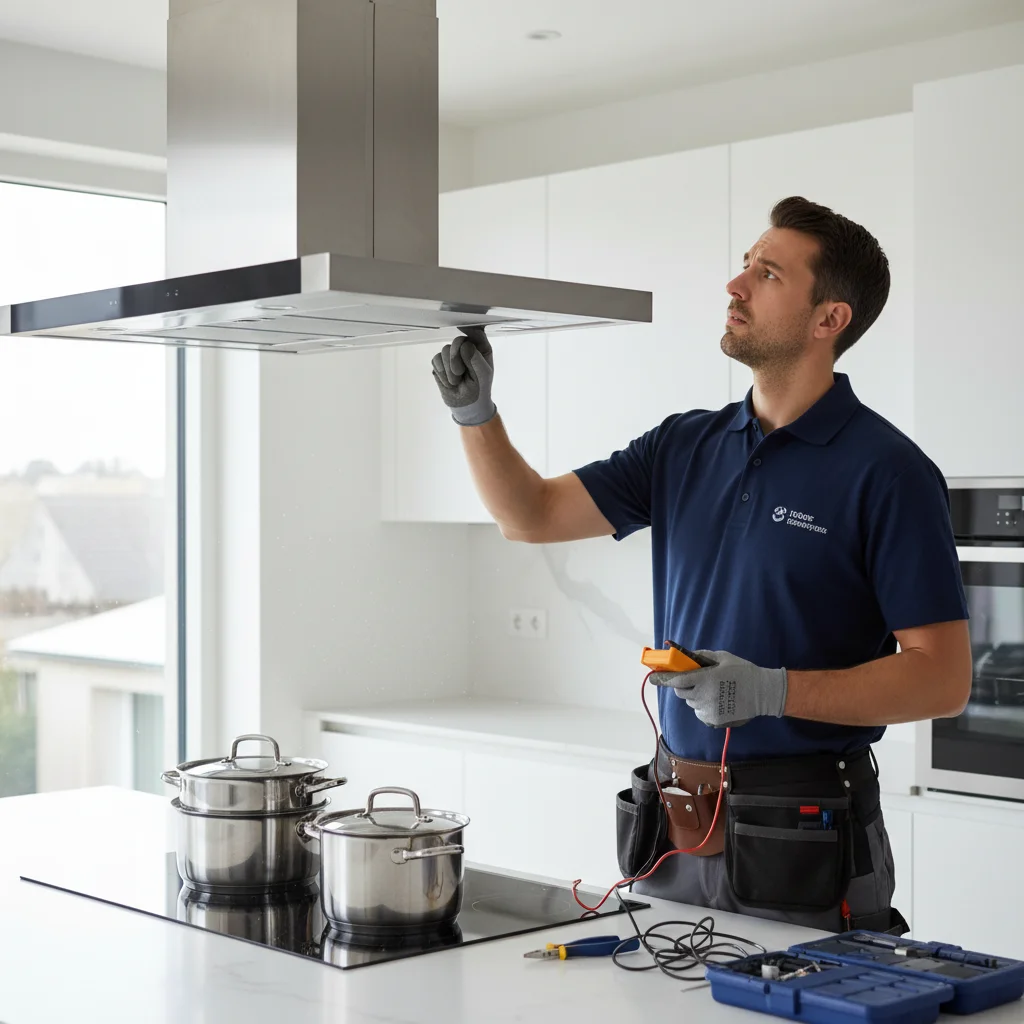
Before you assume the worst, there are a few simple troubleshooting steps you can take. Many common range hood problems have simple solutions you can safely handle yourself. This guide will walk you through the basics to help you diagnose the issue.
First: check the circuit breaker
Before you start investigating the appliance itself, always start with its power source. A range hood that’s completely dead—no fan and no lights—is often just the victim of a tripped circuit breaker. This is the easiest fix, so it should always be your first step.
Your home’s electrical panel, or breaker box, is usually located in a garage, closet, basement, or utility room. It’s a metal box containing a series of switches. Each switch, or breaker, controls the flow of electricity to a different part of your home. If a circuit draws too much power, the breaker “trips” to prevent overheating and a potential fire.
Here’s how to check it:
- Locate the panel. Open the door and look at the rows of switches.
- Identify the tripped breaker. A tripped breaker will be in the “off” position or, more commonly, stuck in a middle position between “on” and “off.” Most breaker switches are labeled, so look for one marked “Kitchen,” “Appliances,” or “Range Hood.”
- Reset the breaker. To reset it, you must first push it firmly to the “off” position, then flip it back to the “on” position. You should hear a distinct click.
If the breaker trips again immediately, there might be a short circuit in your range hood or its wiring. Don’t keep resetting it. This indicates a more serious electrical problem that requires a professional. If the breaker stays on but the range hood still doesn’t work, you can move on to diagnosing the appliance itself.
When the fan won’t turn on (but the light works)
If your range hood’s light turns on but the fan doesn’t spin, you’ve successfully narrowed down the problem. This tells you the unit is receiving power, but there’s a fault specifically within the fan system. This is a common scenario, often related to the motor or the switch that controls it.
The most likely culprit is a failed fan motor. Over years of use, grease and cooking residue can build up inside the motor, causing it to work harder and eventually burn out. You might have noticed warning signs before it failed completely, like a loud humming or grinding noise, or the fan spinning slower than usual. Once the motor seizes or the internal windings fail, it won’t start at all.
Another possibility is a faulty fan switch. The buttons or knob you use to control the fan speed are physical switches that can wear out over time. The internal contacts can become corroded or broken, preventing them from sending power to the motor. If you have multiple fan speeds and only one has stopped working, it’s more likely a switch issue. If all fan speeds are dead, the motor is a more probable cause.
While it’s tempting to order parts online, replacing a fan motor or switch is a complex task. It involves disassembling the range hood, handling delicate wiring, and ensuring you have the exact replacement part. For safety and to avoid causing further damage, this is typically where we recommend calling a professional technician.
When the light is out (but the fan works)
This is the opposite problem, and thankfully, it often has a much simpler solution. If the fan is humming along just fine but the light won’t turn on, you’re dealing with an issue isolated to the lighting components.
The first and most obvious thing to check is the light bulb itself. Range hood bulbs live a tough life, exposed to heat, grease, and vibration. They can burn out just like any other bulb in your home.
Before you do anything, turn off the power to the range hood at the circuit breaker. Never try to change a light bulb with the power on. Once you’re sure it’s off, carefully remove the light cover (it might have clips or small screws) and unscrew the bulb. Check the filament for any breaks. Take the old bulb with you to a hardware store to ensure you get the correct replacement. Range hoods can use incandescent, halogen, or LED bulbs, and using the wrong type or wattage can cause problems.
If a new, correctly-sized bulb doesn’t solve the problem, the issue lies deeper. The light socket itself could be corroded or damaged, preventing a good electrical connection. In other cases, the light switch or the wiring leading to the socket has failed. These are issues that involve direct electrical work and should be handled by an experienced technician to ensure a safe and proper repair.
If nothing works at all: diagnosing the switch or board
You’ve checked the circuit breaker, and it’s fine. But your range hood is completely unresponsive—no fan, no lights, no signs of life. This points to a problem with the central controls of the unit itself. The power is getting to the appliance, but it isn’t being distributed correctly.
In this case, the problem is almost always one of two components: the main control switch assembly or the electronic control board.
For older, simpler range hoods with mechanical knobs or push-buttons, the issue is often a failed selector switch. This is the central component that directs power to either the fan motor or the light assembly. Over time, the mechanical parts can break or the electrical contacts can wear out, causing a complete failure.
For more modern range hoods, especially those with digital displays, touchpads, or remote controls, the culprit is more likely the main control board. This circuit board is the “brain” of the appliance, processing your commands and sending power to the correct components. A power surge, moisture, or simple component failure can cause the board to die, rendering the entire unit useless.
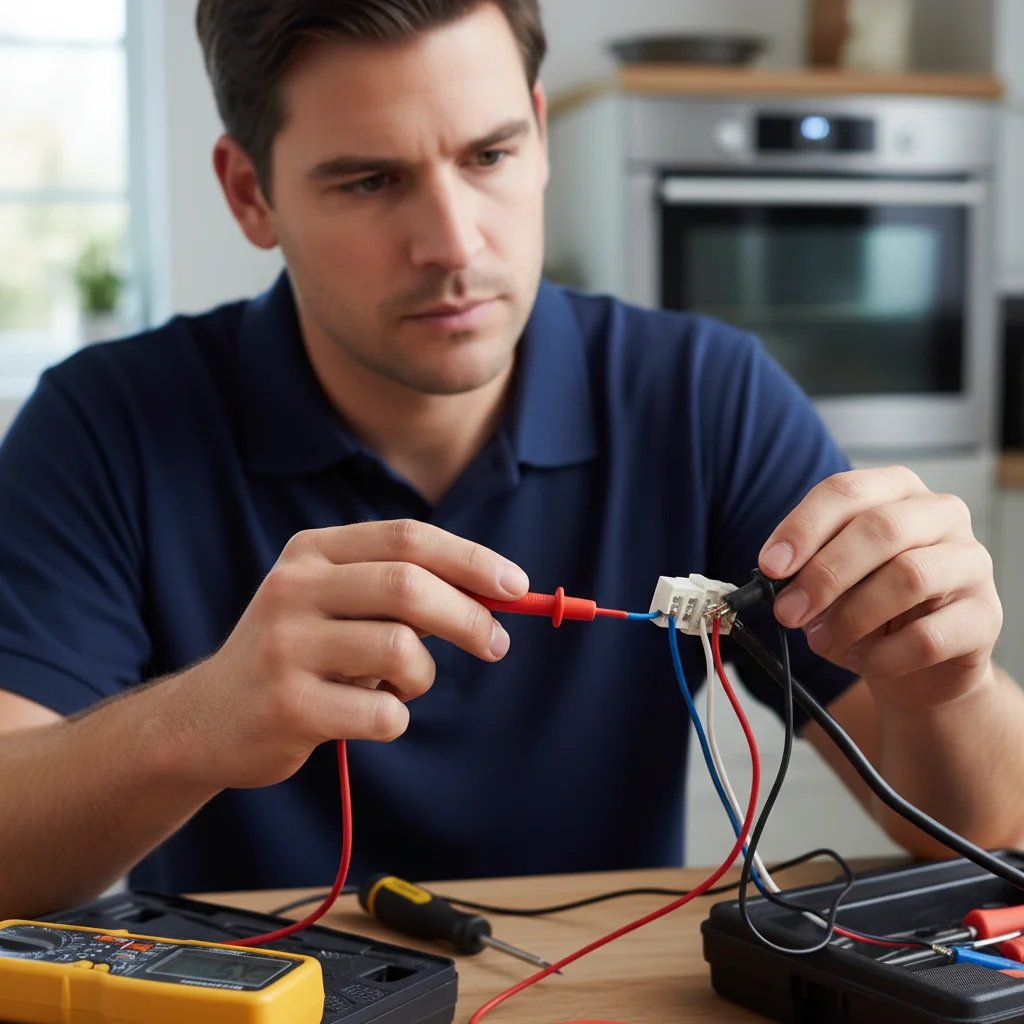
Diagnosing a faulty switch or control board is a complex task that requires specific tools, like a multimeter, and a thorough understanding of electrical circuits. This is not a safe or practical DIY project. Attempting to test or replace these components without proper training can lead to electrical shock or permanent damage to the appliance. When faced with a completely dead unit, it’s time to consider professional range hood repair. Our technicians have the diagnostic equipment to pinpoint the exact point of failure and replace it safely.
Is it time for a repair call?
Walking through these troubleshooting steps can help you solve simple issues like a tripped breaker or a burnt-out bulb. But it’s just as important to recognize when a problem is beyond a simple fix. Your safety is the top priority, and appliance repair often involves working with electricity, which carries inherent risks.
You should call a professional appliance repair technician if:
- The circuit breaker keeps tripping after you reset it.
- You suspect a problem with the fan motor, switches, or internal wiring.
- The range hood is completely dead and you’ve confirmed the breaker is on.
- You hear grinding, buzzing, or other unusual noises from the fan motor.
- You’re simply not comfortable performing any of the troubleshooting steps yourself.
At Repair Pro San Diego, our technicians are licensed, insured, and trained to work on all major brands of range hoods. We can quickly diagnose the root cause of the problem and perform a lasting repair with the right parts and tools. Don’t let a broken kitchen exhaust fan fill your home with smoke and stress.
Call us at (858) 925-5546 for a same-day estimate.