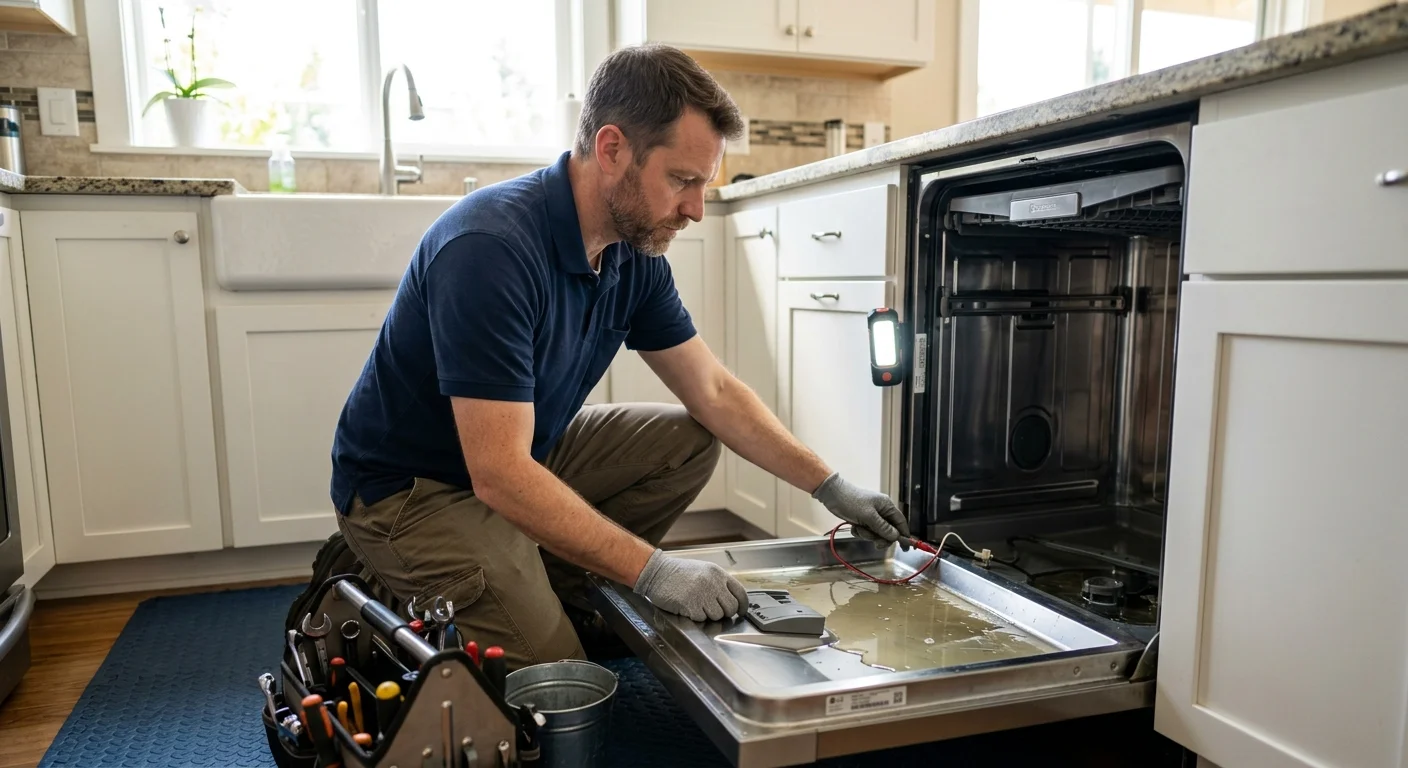
Standing water after an LG dishwasher cycle usually points toward the filter, drain hose, sink connection, or drain system. Start with the accessible checks below. If the water remains or an OE code returns, request LG dishwasher repair from an independent technician.
Confirm the model and standing-water symptom
Start by documenting exactly what happened. Note whether the cycle stopped early, completed normally, or displayed a code. Photograph the water level before removing anything. Also record unusual sounds, recent plumbing work, and whether water returns after the tub drains.
Next, find the model number. LG says the label location varies, although it may appear on the side of the open door or the side of the unit. A phone photo is easier than copying a long number from a narrow label. The model number helps locate the correct manual and parts diagram.
That detail matters because LG filter layouts and control commands aren’t identical across models. Some units have removable filter assemblies. Others use a different filtering system. The buttons used for a drain-only function can also vary.
Look at the water location as well. Water covering the tub floor after the cycle is the clearest no-drain symptom. Water appearing later may point toward a sink connection or another drain-path issue. Share that sequence with the technician rather than simply reporting “water inside.”
San Diego County kitchens don’t all use the same connection layout. Homes across central San Diego, South Bay, East County, and North County may connect through a disposal, an air gap, or another approved arrangement. Don’t assume instructions for a neighboring home match your installation.
For broader brand coverage, see our LG appliance repair guide. The model number and symptom history remain the best starting points for any LG service request.
What owners can check without opening panels
Begin inside the tub. Remove the lower rack and look for visible food debris around the filter area. Follow the model manual when removing or reinstalling a filter. A filter that isn’t seated correctly can create another problem.
LG’s current OE troubleshooting guidance identifies food debris, a clogged filter, a kinked hose, and a blocked sink connection as common places to check. Clean only the accessible filter pieces described in your manual. Don’t open the pump cover or remove the lower access panel.
Next, inspect the drain hose under the sink. It usually appears as a ridged or corrugated hose. Look for a section crushed by stored items or sharply bent near the cabinet wall. Don’t pull the dishwasher out to reach a hidden section.
Check the visible sink-side connection. If the kitchen has an air gap, inspect its accessible cap for debris. If the dishwasher drains through a garbage disposal, note whether the disposal was installed recently. LG says a new disposal connection may still contain its knockout plug. Removing that plug is work for the installer or a plumber.
Use the drain or cancel function described in the model manual. LG notes that the button combination varies. If the machine drains once, run another empty test only as directed by the manual. A repeat failure still deserves diagnosis.
Our general dishwasher drainage checklist covers symptoms shared by several brands. For model-specific service, the dishwasher repair page explains how we match homeowners with independent local pros.
What technicians inspect along the drain path
An LG dishwasher technician follows the water from the tub toward the sink connection. The first inspection covers the filter assembly and the opening leading toward the drain system. Debris can collect where an owner can’t reach without removing protected parts.
The technician can then inspect the drain pump area. Depending on the model, that may involve checking for an obstruction, damaged pump components, or a pump that receives a command but doesn’t move water. A humming sound alone doesn’t prove which condition exists.
The hose comes next. A visible section may look clear while another section remains pinched behind the machine. The pro can inspect the full route and compare its placement with the model’s installation instructions. They can also examine any model-specific valve or connector along that path.
At the sink, the technician checks where the hose meets an air gap, disposal, or drain fitting. A restriction there can resemble a dishwasher failure. If the problem belongs to the household drain rather than the appliance, the technician can explain why plumbing service is the better next step.
Diagnosis should separate the failed point before parts are discussed. A drain complaint doesn’t automatically mean the pump needs replacement. The filter, hose, connection, wiring, controls, and pump can produce overlapping symptoms.
The matched technician diagnoses first and quotes in writing before work begins. Ask about their diagnostic fee and whether it is credited toward the repair. Repair Pro San Diego doesn’t perform the work, set technician fees, or stock LG parts.
South Bay homeowners can also review our local Chula Vista appliance repair guide before requesting a match.
How error codes may narrow the diagnosis
OE is the main LG code connected with a drainage complaint. LG describes it as an outlet or drain issue. The code means the machine detected water that wasn’t leaving as expected. It doesn’t identify the failed part by itself.
Record the code exactly as displayed. Letter shapes can look similar on a small screen. A photo helps the technician distinguish OE from another message. Include the cycle selected and the point when the code appeared.
LG also warns that codes vary by model. Some displays show status information that isn’t a failure. For example, a numbered delay-start setting shouldn’t be interpreted as a repair diagnosis. Check the model manual before clearing a message or ordering a part.
A first-cycle OE code deserves special context. Tell the technician if the dishwasher is newly installed, recently moved, or connected to a new disposal. LG’s guidance says installation conditions can cause that code. Those details may redirect the inspection toward the hose route or sink connection.
If OE disappears after an accessible filter or hose check, watch the next cycle. Note whether the tub drains fully and whether water returns afterward. A recurring code suggests that the visible check didn’t resolve the full restriction or component problem.
Don’t rely on an online parts list that matches only the brand name. The complete model number matters. LG revises assemblies and control layouts across product lines. A technician should confirm compatibility before installing any replacement component.
When to request LG dishwasher repair
Request service when standing water remains after accessible checks. Repeated OE codes are another clear reason. The same applies when the drain function produces noise but little water reaches the sink connection.
Stop at the point where diagnosis requires moving the dishwasher, opening a panel, disconnecting wiring, or reaching the pump. Those steps go beyond a filter and under-sink visual check. An independent technician can inspect the protected drain components and test the machine under the correct model procedure.
Also request help when the symptom follows a kitchen remodel, disposal replacement, or dishwasher installation. The appliance may be working against a blocked or incorrectly routed connection. A technician can separate an appliance fault from an installation or household drain problem.
Prepare four details before the appointment: the model number, displayed code, water location, and recent changes near the sink. Photos of the label, tub, and visible hose can make the service conversation more precise. Keep the dishwasher unloaded so the technician can reach the filter area.
San Diego County homeowners can verify a California service dealer through the Department of Consumer Affairs search. The state registration system is separate from a technical diagnosis. You should also ask the independent pro for written terms covering the proposed work.
When to call us
Persistent standing water, repeated OE codes, pump-access work, or an unclear drain path call for a licensed appliance repair pro. We connect homeowners across San Diego County with licensed, insured, independent local technicians. Call (858) 988-7787 to leave a voicemail requesting a match with a local appliance repair pro.