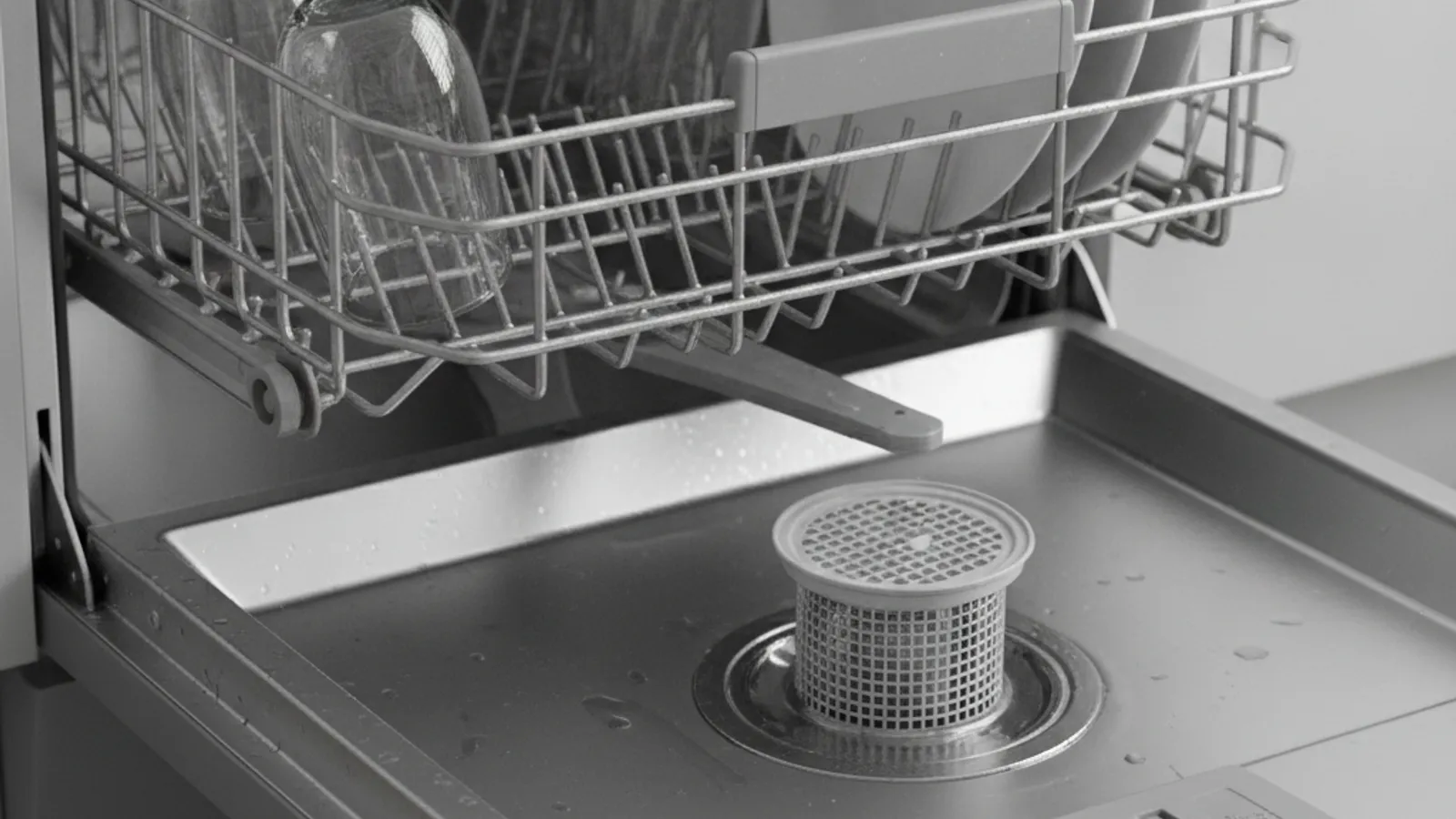
A GE dishwasher that leaves water in the tub has a drain-side problem. A clogged filter, restricted hose, air gap, or a pump that cannot move water are all possible. None of those is “almost always” the cause on every Profile, Cafe, Adora, GDT, or GDF cabinet. Start with power-off and the filter steps in the exact model manual.
What a GE drain failure looks like
GE dishwashers may stall a cycle, blink a light, or beep when they cannot finish a drain. Error codes vary by panel. Do not chase a code from a generic chart. Photograph the display and match it to GE’s chart for that model number.
Modern GE units often use a drain pump separate from the wash pump. A machine that washed but will not empty is still a drain-path question, not proof the whole dishwasher is dead.
Start here: cancel, drain, and clear the water
Run the cancel or drain cycle only if the manual shows how for your panel. Give it the time the book lists.
If water remains, kill power at the breaker before you reach inside. Pull the lower rack if the manual allows it and bail standing water with a cup and towels so you can see the filter area. The general dishwasher not draining troubleshooting guide covers the same first-aid for other brands.
Check the GE filter the way the model shows
GE filter and sump layouts differ. Some units need the lower spray arm off before the filter comes out; others use a different twist. Follow the diagram for your model. Twist out only parts the manual says are owner-removable. Rinse the filter under the tap. Look for glass, pits, or labels in the open sump. Do not pry a check valve or flapper unless the owner instructions show that part as user-serviceable.
Hard water as a possible contributor
San Diego County water is often hard. Mineral film plus grease can collect on filters and valves. Treat that as something to mention, not as the diagnosis. A gritty sump does not prove scale is the only fault.
Drain hose, air gap, and disposer connections
If the filter is clean and water still sits, a kinked hose or a packed air gap can stop the drain. You can look under the sink without disconnecting hoses. A high loop or air gap is an install detail to photograph.
Do not knock out a garbage-disposal plug yourself. If this is a new install and the dishwasher never drained, tell the matched technician. Punching a knockout is installer work, not an owner step on this page.
Drain pump testing stays with the technician
A hum with no water movement can mean a jammed or failed pump. Continuity tests and pulling the dishwasher out to reach the pump are not owner jobs. That is the line for a qualified technician.
DIY versus a service call
Rinsing a manual-described filter, running cancel/drain, and photographing the hose and air gap are fair homeowner checks. If water will not leave after those, request a match. For GE context across appliances, see GE appliance repair in San Diego.
Frequently asked questions
Why is my GE dishwasher not draining?
Possible causes include a clogged filter, a restricted hose or air gap, a stuck valve, or a drain pump that cannot move water. Hard-water scale can contribute. The model manual and a technician’s inspection separate those.
How do I manually drain a GE dishwasher?
Use the cancel or drain control in the owner’s manual. If water remains, cut power and bail the tub so you can see the filter. Do not pull the unit.
Can a clogged garbage disposal stop a GE dishwasher from draining?
Yes, if the dishwasher drains into the disposer. A full disposer or a knockout left in place can block the path. Run and clear the disposer if it is safe to do so, then retry. Leave knockout removal to the installer or technician.
When to call us
If the filter, visible hose, and air gap are clear and the GE still holds water, leave a voicemail at (858) 988-7787. Technicians in our network handle dishwasher repair across San Diego County. They diagnose and quote in writing. The brand does not stock parts or promise a first-visit finish.