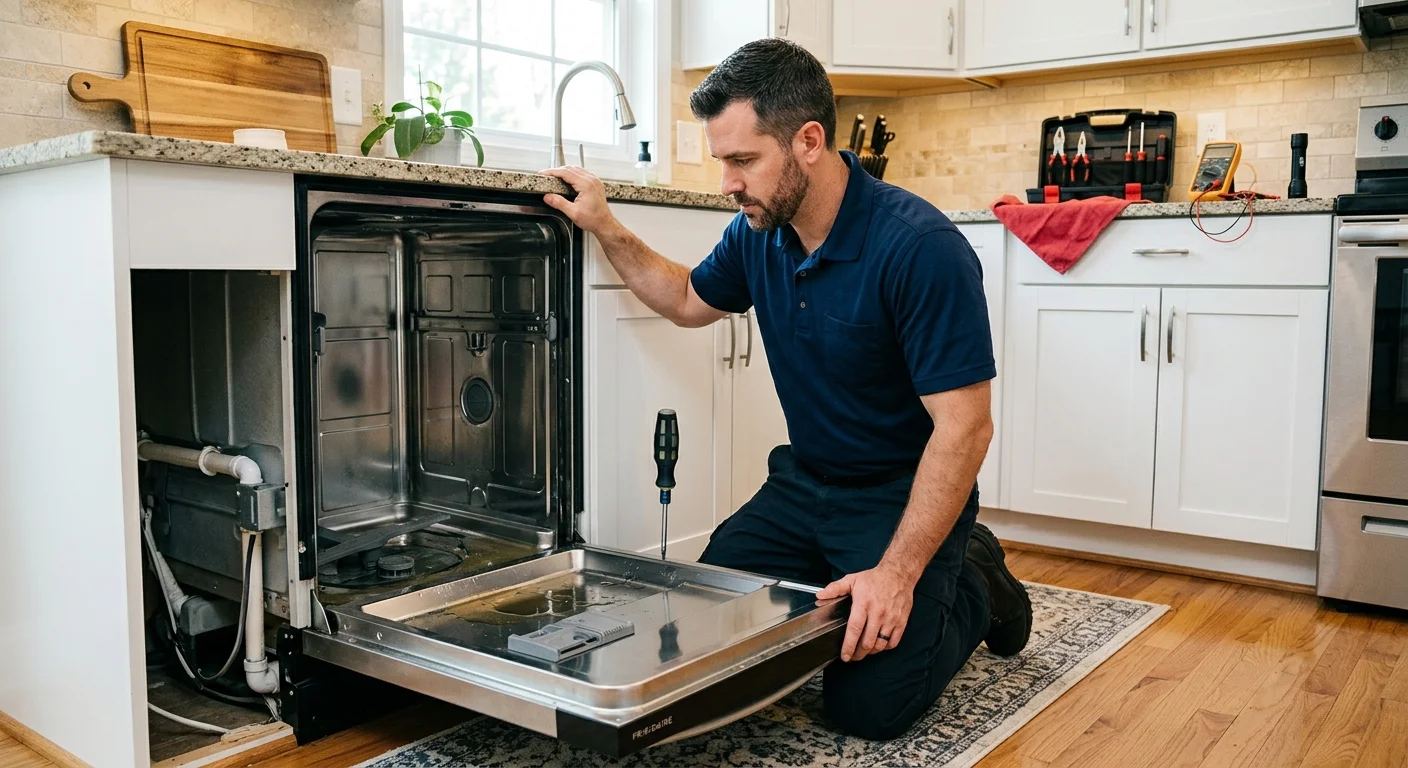
Standing water after a cycle points to a drain problem. The cause could be a dirty filter, pinched hose, disposer connection, pump, or control fault. Frigidaire dishwasher repair starts by recording the water pattern and checking the visible drain path.
Confirm the model and standing-water pattern
Start by copying the complete model and serial numbers from the product label. Record every letter, number, and suffix. Frigidaire uses different controls, filters, and drain arrangements across its dishwasher line. A reset or code explanation for another model may not match yours.
Next, describe where the water sits. Note whether it forms a shallow pool near the filter or covers the tub floor. Record whether it remains immediately after the cycle or returns later. Also confirm that the cycle finished and wasn’t paused before its final drain.
Pressing Cancel may produce a drain sound, water movement, or silence. Write down what happens without treating that observation as a diagnosis. A quiet machine and a running pump can lead a technician toward different checks.
Look for changes made before the problem began. These might include:
- A newly installed garbage disposal
- Recent sink or drain work
- Items moved inside the sink cabinet
- A filter removed for cleaning
- A power interruption during a cycle
Photograph the display before clearing any code. Include the selected cycle and visible water level. Those details give a Frigidaire dishwasher technician a better starting point.
San Diego County homes have many kitchen layouts, from compact central-city condos to larger inland kitchens. Access around the dishwasher and sink can vary widely. Tell the technician about tight cabinets, flooring changes, or anything blocking the toe-kick area. South Bay homeowners can also review our Chula Vista appliance repair guide for local referral details.
What owners can check without removing panels
Keep the first inspection limited to visible, owner-accessible parts. Confirm that the dishwasher completed its cycle and isn’t paused. Frigidaire includes this among its current no-drain checks.
Remove the lower rack and inspect the glass trap or filter. Follow the model’s Use and Care Guide because removal methods differ. Frigidaire advises checking that the filter is clear and installed correctly. Rinse removable filter pieces with warm water when the model instructions permit it. Don’t force a stuck assembly or reach into the pump area.
Next, inspect the visible drain hose beneath the sink. Look for a sharp bend, pinch, or object pressing against it. Trash bins, cleaning supplies, and stored cookware can shift against the line. Photograph any questionable bend before moving things around. Don’t detach fixed plumbing connections during this check.
A recently installed garbage disposal deserves special attention. Frigidaire lists an unremoved knockout plug at the disposer inlet as a possible no-drain cause. If you can’t confirm the connection, ask the installer or a technician to inspect it. The same applies after sink or disposer service.
Notice how the sink and disposal behave, then share that information with the technician. It doesn’t prove where the dishwasher fault sits, but it adds useful context.
Use the model’s documented Cancel or drain command once after completing the visible checks. Avoid copying a button sequence from an unrelated Frigidaire model. Our broader dishwasher not-draining checklist explains how filters, hoses, pumps, and sink connections fit together across different brands.
What technicians inspect along the drain path
When visible checks don’t solve the problem, the next step moves inside the machine. The matched technician can trace the drain path without guessing from standing water alone.
That inspection usually begins around the filter and sump. The technician checks whether food soil or another obstruction is limiting the route into the pump. They can then inspect the drain pump, its connections, and the hose beyond the cabinet. The sink or disposer connection also matters because every section belongs to the same exit path.
Several faults can produce a similar result. Debris before the pump may stop water from reaching it. A pump fault may prevent water movement. A restriction farther along the hose may let the pump run without clearing the tub. Water that leaves and later returns shifts attention toward hose routing and the sink-side connection.
The technician may need to remove access panels, test pump operation, and inspect wiring or controls. These aren’t owner-level filter checks. The exact model number also matters when identifying the correct pump, control, or hose arrangement.
If the dishwasher stopped draining after installation, the technician can compare the drain setup with Frigidaire’s model instructions. If it failed after years of operation, the inspection can focus on what changed along the working drain path.
Repair Pro San Diego doesn’t perform that inspection or employ the technician. We match homeowners with licensed, insured independent local pros. The matched technician diagnoses the fault and performs any approved Frigidaire dishwasher drain repair.
For problems beyond the drain system, see our Frigidaire appliance repair guide. It covers the referral process for the brand’s other kitchen and laundry appliances.
How error codes can narrow the next step
An error code helps only when it’s copied exactly and matched to the correct model. Record capitalization, numbers, and flashing indicators before pressing any control buttons.
Frigidaire’s current dishwasher error-code guide identifies i20 as an incomplete-drain condition. Its listed checks include the filter, sump, drain hose, and disposer knockout plug. The same guide identifies i40 with a clogged filter or sump.
Those codes overlap, but they don’t name the failed part. An i20 code doesn’t automatically mean the drain pump needs replacement. An i40 code also needs confirmation through the filter and sump inspection. The code narrows the path rather than completing the diagnosis.
Some models use flashing lights during a drainage problem. Other displays show cycle time, delay information, or door status. Those messages aren’t interchangeable. Check the Use and Care Guide tied to your model before interpreting the display.
Frigidaire’s current not-draining support article says to hold Cancel for five to ten seconds to clear the existing cycle, then start a new cycle to drain. Other Frigidaire support instructions describe different reset options for specific conditions. That means there isn’t one reset sequence this article can confirm for every model.
Use the exact procedure in your owner’s guide. Record the code before resetting it. A reset can clear a cycle or displayed condition, but it doesn’t remove a blockage or repair a failed component. A code that returns after the documented checks gives the technician useful diagnostic context.
When to request Frigidaire dishwasher repair
Request service when standing water remains after the visible checks and model-specific drain command. Recurring i20 or i40 codes also warrant a closer inspection. The same applies when the drain hose disappears behind cabinetry or a fixed connection must be opened.
Other useful service signals include water returning after the tub empties, an unusual pump sound, or silence during the drain portion. These observations don’t identify the failed part. They help the technician decide where to begin testing.
Prepare the following information before requesting a match:
- Complete model and serial numbers
- Exact error code or flashing-light pattern
- Water level after the completed cycle
- Whether Cancel starts a drain routine
- Recent disposer, sink, or dishwasher work
- Photos of the display and visible hose route
Ask the technician to explain the diagnosis and proposed repair. The matched technician diagnoses first and quotes in writing before work begins. You can also ask for written terms covering any warranty that technician offers.
California appliance repair businesses must register with the Bureau of Household Goods and Services. You can check a business through the state Department of Consumer Affairs lookup. This registration is separate from Repair Pro San Diego’s referral role.
Our dishwasher repair service page explains how to request a local match. The network serves homeowners across San Diego County, including coastal North County, central San Diego, East County, and the South Bay.
When to call us
Persistent standing water, repeated drain codes, or an internal pump fault calls for a licensed appliance repair pro. Repair Pro San Diego makes the referral, and the independent technician diagnoses and performs the repair. Call us at (858) 988-7787 and we’ll match you with a licensed local tech.