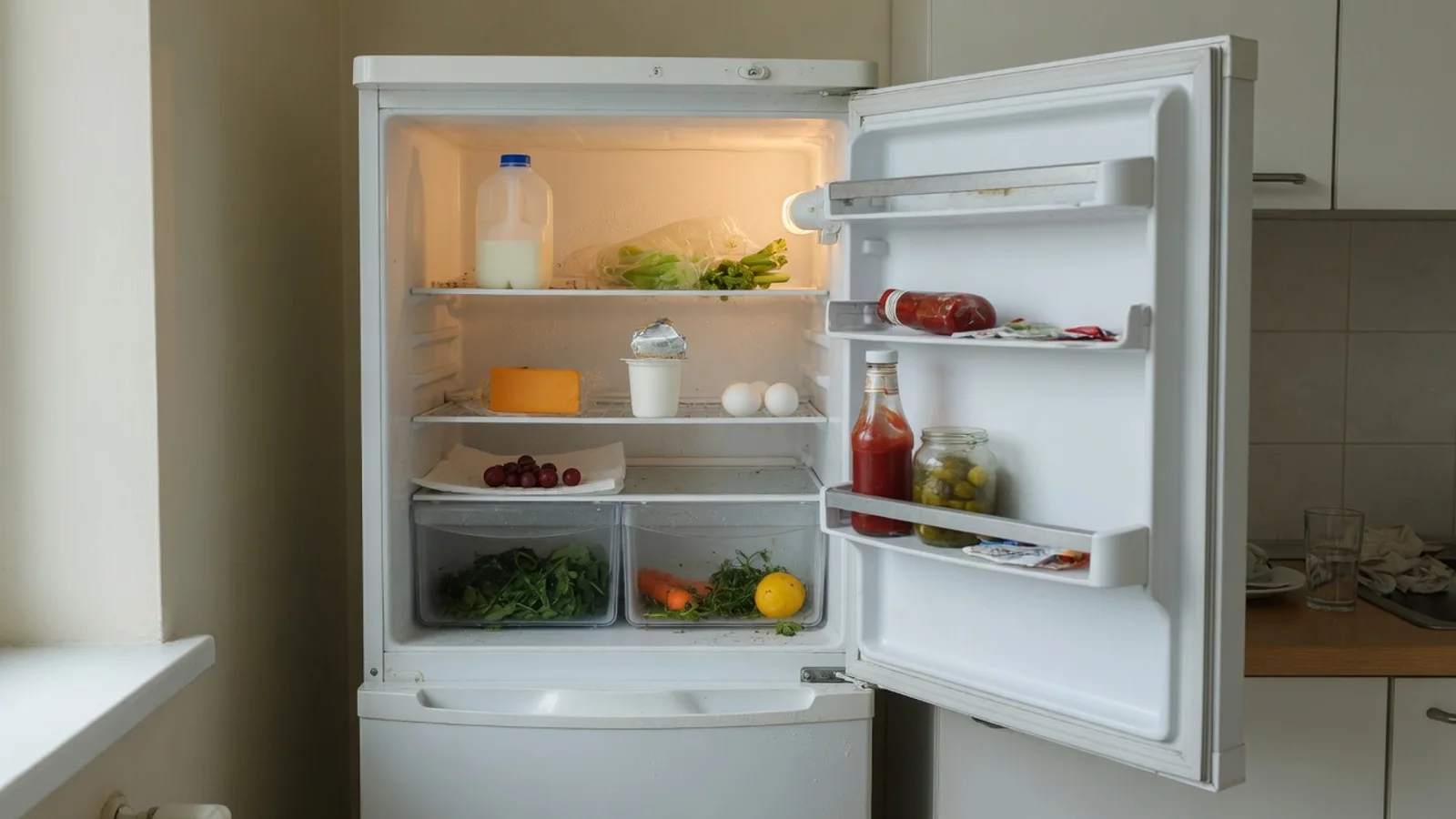
A refrigerator that lets milk warm while ice cream stays hard is not the same failure as a cabinet that is warm in both boxes. Cold air is still being made. It is not reaching the fresh-food section, or it is not being shared the way that design intends.
The fridge not cooling checklist covers owner steps for any cooling complaint. Stay here when the freezer is still at or below 0°F and the fresh-food section is above the FDA 40°F ceiling.
Measure both compartments before you name a part
The FDA ceiling for the refrigerator compartment is 40°F. The freezer should sit at or below 0°F. Practical manufacturer guidance aims near 37°F in the fresh-food box, often in a 35-38°F band. Put a thermometer on a middle shelf, close the door, and wait. Repeat in the freezer. Do it again after several hours. A hand on a jar is not a reading.
Four notes split this job from a dead sealed system:
- Freezer still hard-frozen, fresh food dull and warm
- Frost sheet on the freezer back wall or around the vents
- Vents between the freezer and the fridge blocked by pizza boxes or a crisper that does not seat
- Doors that do not pop closed on a packed French-door shelf
If both compartments are rising together, leave this page and use the checklist. That pattern can still be coils, a condenser fan, or the compressor. This page is the split-temperature pattern.
Food safety sets the clock. Perishables that have been above 40°F for more than 2 hours should be discarded. That window is 1 hour if the kitchen itself is above 90°F, a real indoor reading in uncooled East County rooms. Those figures are from the FDA and FoodSafety.gov.
Owner checks: vents, damper path, and door seal
Leave the evaporator cover in place. Do not chip frost with a knife. Do not pierce a refrigerant line.
Look at the vents inside the fresh-food section and at the freezer. If they are packed, move the food. That is an owner step. A blocked return in a Chula Vista French-door unit can warm the fridge while the freezer still makes ice.
Check both door gaskets. Slip a bill in the gasket and close the door. If it slides out with no drag, the seal is tired. A leaking fresh-food door dumps cold air and makes this same pattern.
Listen at the freezer. A fan that should run when the doors are closed, and stops when they open, is an observation on many designs. Silence in the freezer with a running compressor is useful. Do not name the failed fan from the sound alone.
If the front grille lifts without tools, look at the condenser coils. Pet hair can still be part of a split-temperature story if the machine is heat-starved, but coils more often warm both boxes. Coil cleaning is an owner job when access is open.
A heavy frost wall often points at defrost. Moving food to coolers and letting the box thaw can show whether cooling returns for a day and then fails again. That rebound is useful. It is not a repair.
What technicians inspect on this pattern
The independent technician you match with should start with airflow, not gauges. They check the evaporator fan, the damper that meters cold air into the fresh-food section, the defrost heater and bi-metal, and whether the evaporator is a block of ice. Only after those fail do they talk about a sealed-system leak.
Technicians who attach gauges, add or recover refrigerant, or open the circuit must hold EPA Section 608 certification under the Clean Air Act. You can keep using the refrigerator already in the kitchen. The EPA HFC phasedown limits new production and new equipment. It does not ban repair of a refrigerator already installed.
National cost guides such as HomeGuide put a full refrigerator compressor replacement at $700-$1,250 on average. That is a named national guide, not a San Diego market average and not a Repair Pro San Diego fee. A damper or a fan is a different job. The matched technician diagnoses first and quotes in writing before work begins.
Repair Pro San Diego is the match, not the shop. The licensed, insured pro you are matched with performs the refrigerator repair. Confirm BHGS registration on the DCA lookup.
When to call us
If a San Diego County refrigerator stays above 40°F in the fresh-food section while the freezer remains frozen, match with a licensed local appliance repair pro. Call (858) 988-7787 to leave a voicemail requesting a match with a local appliance repair pro. The technician you are matched with inspects the unit, quotes in writing, and does the work.