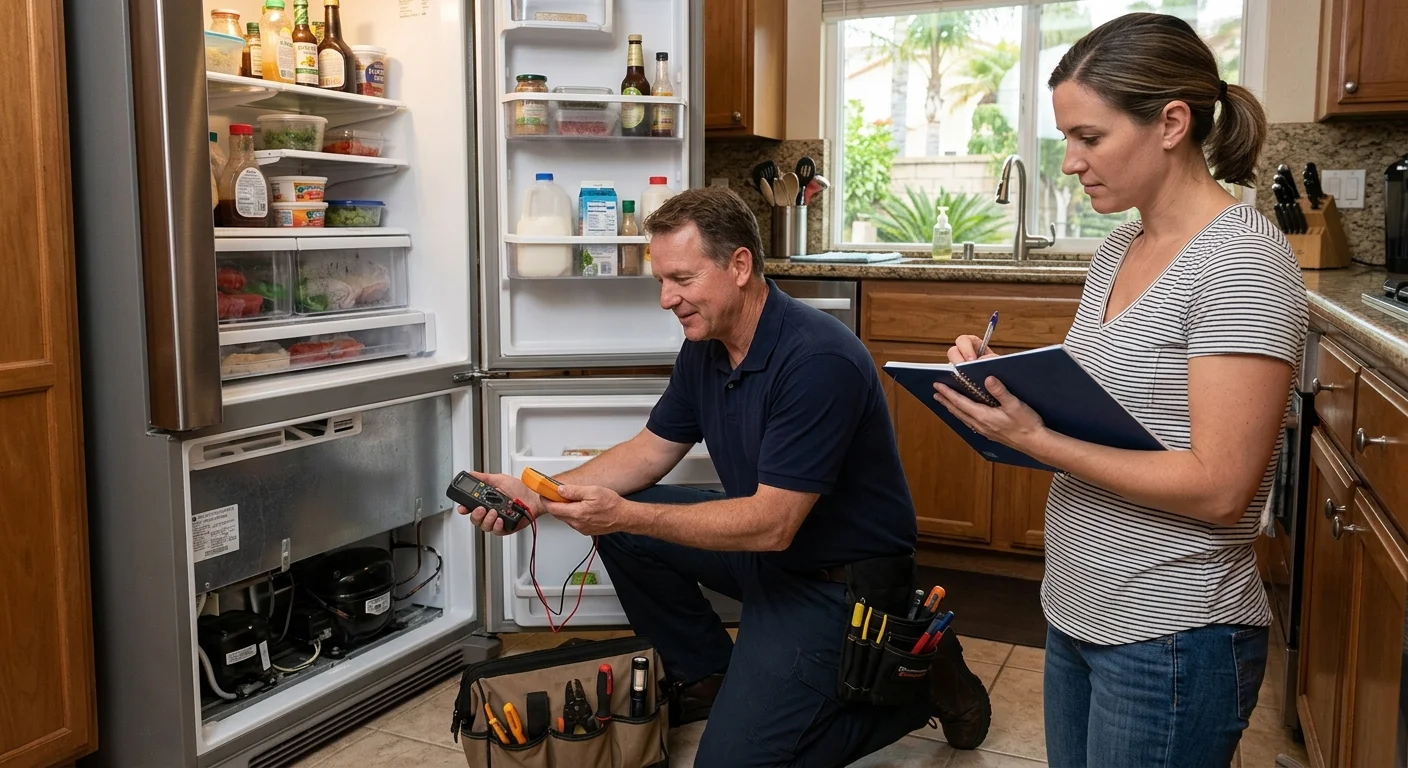
A warm refrigerator turns a normal San Diego morning into a time-sensitive problem. Prompt attention matters when cooling stops, temperatures rise, or water keeps spreading. A few careful checks can help you request the right refrigerator repair without opening the appliance.
Which refrigerator symptoms need prompt attention
Temperature is the first thing to check. The FDA says a refrigerator should stay at or below 40°F. A freezer should stay at or below 0°F. If either compartment is warming, note the temperature and the time you noticed it.
A fridge that stopped cooling suddenly deserves prompt diagnosis. So does a freezer with a steadily rising thermometer reading. Keep the doors closed while you gather information. Frequent opening lets more cold air escape and makes the temperature history harder to judge.
Other symptoms can help define the problem:
- The refrigerator is running, but neither compartment feels cold.
- The freezer is cold, but the fresh-food compartment is warm.
- The appliance repeatedly clicks without starting normal cooling.
- An error code remains on the display.
- Water continues appearing under or behind the refrigerator.
- The doors no longer close or seal normally.
- Cooling changed after a power interruption or control adjustment.
A new noise alone doesn’t identify the failed part. Record when it happens and whether cooling changed at the same time. A short video can preserve an intermittent sound for the technician.
Use our guide to what counts as an appliance emergency when several appliances or utilities are involved. For a cooling failure, the emergency appliance repair service explains how the referral works. Repair Pro San Diego matches you with an independent local pro. The matched technician inspects and repairs the refrigerator.
What to check without opening sealed components
Start with observations that don’t require tools or disassembly. Read the control panel and copy every code exactly. Photograph the display before pressing anything. If the screen alternates between messages, record a short video.
Check whether each door closes completely. A package, drawer, or shifted shelf can prevent a seal. Look for visible gaps around the gasket. Don’t pull or cut the gasket while checking it.
Place an appliance thermometer inside if one is available. Record the compartment, reading, and time. “Feels cool” gives a technician less information than an actual reading. Keep the door closed after taking it.
Listen from outside the refrigerator. Note whether you hear a fan, hum, click, or silence. Describe the pattern without naming a failed component. Repeated clicking, for example, doesn’t prove that the compressor caused the problem.
Look at the breaker position and note whether it tripped. Check the manufacturer’s manual before trying any control reset. Model-specific instructions matter, and an online reset sequence may apply to a different refrigerator.
For water on the floor, photograph where it first appears. Note whether the dispenser or ice maker was recently used. Don’t force the refrigerator away from a wall if it resists or has a built-in surround.
Stop before removing rear panels, opening electrical enclosures, or disturbing refrigerant lines. Technicians who service equipment containing covered refrigerants must hold the appropriate EPA Section 608 certification. The pros matched for refrigerant and sealed-system work are certified for it. Our fridge not cooling checklist offers more observation-based steps that don’t require opening sealed components.
How to verify current food-storage guidance
Repair scheduling and food decisions are separate. Use current government guidance and measured temperatures. Don’t assume the refrigerator kept food cold because the interior still feels cool.
The FDA sets these food-storage limits:
- Keep the refrigerator at or below 40°F.
- Keep the freezer at or below 0°F.
- Discard perishables held above 40°F for more than two hours.
- Use a one-hour limit when the ambient temperature exceeds 90°F.
- Food may be refrozen when a thermometer shows 40°F or below.
That shorter ambient-temperature window can matter when a refrigerator sits in a hot garage. San Diego conditions vary between coastal neighborhoods and inland East County. Use the measured room temperature instead of relying on the neighborhood or season.
Power-outage guidance has separate timing. The FDA says a full freezer can hold its temperature for about 48 hours when kept closed. A half-full freezer can hold it for about 24 hours. Those figures apply to an outage with the door closed. They aren’t a promise for a refrigerator with a mechanical cooling failure.
Write down when power stopped, when it returned, and when each compartment was opened. If you don’t know how long food stayed above 40°F, the refrigerator’s current reading can’t recreate the missing history.
Before making a food decision, verify the latest version of the FDA’s “Food and Water Safety During Power Outages and Floods” guidance. FoodSafety.gov also publishes federal outage guidance. If current official instructions differ from an older appliance manual or blog, follow the current government source.
What to document for the matched technician
Good notes help the matched technician understand the failure before diagnosis. Start with the refrigerator’s brand, full model number, and serial number. Photograph the entire label so no characters get lost. Label placement varies, so check the owner’s manual if you can’t find it.
Build a short symptom timeline. Include when cooling changed, the first temperature reading, later readings, and any error codes. Add recent power interruptions, control changes, filter replacements, or repair work. Don’t guess which component failed.
Photograph anything visible:
- The control display and error code
- Thermometer readings in each compartment
- Frost or moisture patterns
- Water beneath or behind the unit
- Door-seal gaps
- The model and serial label
Mention the refrigerator style and installation. A built-in refrigerator presents different access needs than a freestanding unit. Tell the pro if the appliance sits in a tight cabinet, garage, outdoor-adjacent room, or secondary kitchen.
San Diego access details also matter. A Downtown condo may require parking or loading instructions. A Chula Vista gated community may need an entry code. A North Park apartment may have stairs or a narrow kitchen entrance. These details don’t diagnose the refrigerator, but they help the independent pro understand the setting.
Check the model through the federal CPSC recall database. Record the result rather than assuming a familiar symptom means a recall applies. Keep purchase records and manufacturer warranty documents available. Repair Pro San Diego doesn’t provide a repair warranty. Ask the matched technician to explain their written warranty terms before authorizing work.
How to request emergency refrigerator repair
Lead with the cooling problem, not a suspected part. Say that you need emergency refrigerator repair, then give the service address and refrigerator type. Include the current temperatures and when the change began.
A useful request sounds like this: “The fresh-food compartment rose above 40°F this morning. The freezer temperature is also increasing. The display shows this code, and the model number is attached.” That gives the technician facts without locking the diagnosis onto one component.
Also mention active leaking, unusual sounds, door problems, or a recent outage. Say whether the refrigerator is built in or difficult to access. If food-storage timing is involved, keep following FDA guidance while arranging the repair.
Repair Pro San Diego provides referrals across San Diego County. We don’t perform the repair, set the technician’s schedule, or promise an arrival window. The independent technician confirms availability and handles the diagnosis.
Our phone line uses voicemail. The greeting provides a recording-consent notice before your message is recorded and transcribed. Leave your name, service location, appliance details, and a clear symptom summary.
Before authorizing work, you can check the service dealer’s registration through the California Department of Consumer Affairs lookup. California appliance service dealers register with the Bureau of Household Goods and Services. That registration is separate from CSLB contractor licensing.
Ask the technician about their diagnostic fee and whether it’s credited toward the repair. The matched technician diagnoses first and quotes in writing before work begins. Repair Pro San Diego has no repair price list and doesn’t set the independent technician’s charges. Our refrigerator and freezer repair page explains the types of refrigerator problems a matched local pro can evaluate.
When to call us
A continuing cooling failure, rising compartment temperature, persistent leak, or sealed-system concern needs an appliance repair pro. Repair Pro San Diego makes the referral, and the matched independent technician performs the diagnosis and repair. Call (858) 988-7787 to leave a voicemail requesting a match with a local appliance repair pro.