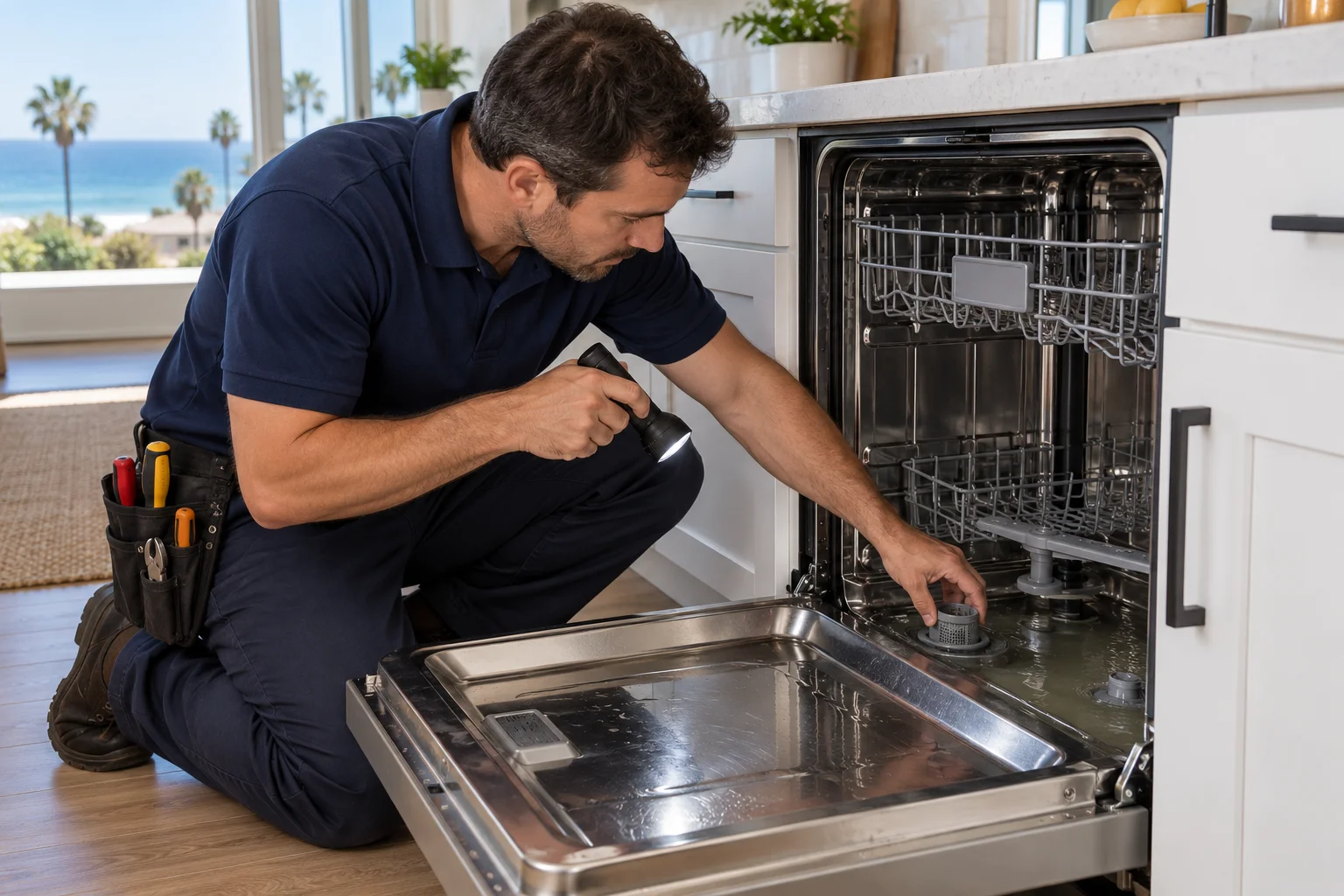
Standing water after a cycle usually means the dishwasher’s drain path needs attention. Before requesting Oceanside dishwasher repair, record what happened and check the visible areas without opening any panels.
Confirm the model and exact no-drain pattern
Start with the model number, not just the brand name. Dishwasher designs vary across product lines from the same manufacturer. The model number helps the matched technician locate the correct service information and identify the machine’s drain arrangement.
Look for the model label around the door opening. Its exact position varies, so check the owner’s manual if it isn’t obvious. Take a clear photo instead of copying a long string by hand. Include the serial number in that photo, but don’t post it publicly.
Next, describe the water pattern. Note whether water remains after every cycle or only certain cycles. Record whether the dishwasher stops early, completes normally, or displays a code. If a code appears, copy every letter and number exactly. Don’t translate it into a guessed diagnosis.
Listen during the point when draining should begin. A hum, repeated clicking, silence, or normal pump sound can help narrow the inspection. Note whether the problem began after a power interruption, sink backup, disposal change, or kitchen work. Timing can matter, but it doesn’t prove the cause.
Also distinguish a true no-drain complaint from poor cleaning or leaking. Those symptoms follow different diagnostic paths. Our broader dishwasher drainage troubleshooting guide explains how technicians separate common symptom groups.
Keep the owner’s manual nearby. Follow only the model-specific controls described there. A reset sequence from another model may not apply to yours.
What owners can observe without opening panels
Wait until the machine has stopped before documenting the water level. Note whether the water covers the tub floor, reaches the filter area, or sits only in a small recessed section. A photo taken before anything is moved gives the technician a useful starting point.
Remove loose dishes and look for visible debris. If your manual describes a removable filter, follow those instructions exactly. Don’t force a filter, fastener, or cover that resists. Record any glass, label fragments, food buildup, or damaged pieces you can see.
Check the sink beside the dishwasher. Write down whether that sink drains normally. If the dishwasher shares an under-sink area with a garbage disposal, mention whether the disposal was recently installed or replaced. Record only what you can see around the disposal and plumbing.
You can also inspect the visible drain hose under the sink without disconnecting it. Note obvious flattening, sharp bends, moisture, or a changed position. A photo of the complete under-sink layout is more helpful than a close-up with no context.
If there’s a visible air-gap fitting near the sink, include it in your notes. Don’t assume every Oceanside kitchen has the same drain arrangement. Installation details can differ between detached homes, condos, rentals, and remodeled kitchens.
Document any water escaping onto the floor or cabinetry. A matched pro can evaluate areas beyond ordinary owner observation using the correct service information.
For other dishwasher symptoms and service options, see our dishwasher repair service page.
What technicians inspect along the drain path
A dishwasher technician usually begins by confirming the complaint through the controls. The observed cycle stage matters because filling, washing, and draining involve different components. The technician can compare the machine’s behavior with its model-specific service material.
The inspection may begin inside the tub. The pro can examine the filter area, sump, drain cover, and accessible passages. Debris may be present, but visible debris isn’t the only possible explanation. A technician still needs to trace the full path before recommending a repair.
The next checks can include the drain pump and its electrical connections. The technician may determine whether the pump receives the expected command, whether its moving parts are obstructed, or whether the component has failed. Those tests require access beyond ordinary owner observation.
The hose route also matters. The pro can inspect connections, bends, internal restrictions, and the point where dishwasher water enters the household drain system. If a disposal, air gap, or sink drain is involved, that connection becomes part of the diagnostic picture.
Controls and sensors may also need evaluation. A displayed code can guide testing, but it shouldn’t replace testing. The same visible symptom can have more than one cause.
Ask the technician to explain what failed and how that finding was confirmed. Before work begins, request a written quote showing the proposed repair. National figures can’t account for your model, access, parts, or the actual fault.
Our San Diego dishwasher repair guide offers more context about requesting local service.
Which Oceanside property details need confirmation
An Oceanside address alone doesn’t describe the kitchen. Give the referral service the property details that affect access and diagnosis. This prevents a technician from receiving a vague “dishwasher broken” request.
Start with your neighborhood or nearby cross streets. Oceanside stretches across areas near the coast, I-5, and the SR-78 corridor. A home in South Oceanside, a downtown condo, and an inland address near Rancho Del Oro can require different parking and building-access notes. These location details don’t diagnose the appliance, but they help identify the service setting.
Confirm the property type. State whether it’s a detached home, condo, apartment, townhome, or managed rental. If building staff control entry or require vendor instructions, include that information. Don’t assume a matched technician can enter a gated property without prior arrangements.
Describe the dishwasher’s installation. Note whether it sits beneath a standard counter, behind a cabinet panel, or beside an appliance that limits access. Mention recent flooring, countertop, cabinet, sink, disposal, or plumbing work. Don’t guess whether those changes caused the problem.
Under the sink, record what you can see without disconnecting anything. Useful notes include a disposal, visible air gap, shared drain connections, moisture, and the dishwasher hose route. If a plumber or building manager has already inspected the household drain, say what was checked without adding conclusions they didn’t provide.
For broader local service information, visit the Oceanside appliance repair guide. It covers the city at a wider level, while this page focuses on dishwasher drainage.
How to request a matched dishwasher technician
Repair Pro San Diego is a referral service. We match Oceanside homeowners with licensed, insured, independent appliance technicians. The matched pro diagnoses the dishwasher and performs any approved work.
Send a concise symptom summary with your request. Include the brand, model number, displayed code, last successful cycle, and current water pattern. Add photos of the model label, standing water, control display, and under-sink layout. Mention leaks, unusual sounds, recent disposal work, and previous repair attempts.
State the address and access details separately. Include the Oceanside neighborhood, property type, parking instructions, gate information, and any building-management requirements. Tell the referral service if you’re the owner, tenant, property manager, or authorized contact.
Check your purchase records and manufacturer materials before approving paid work. If you believe coverage may apply, ask the manufacturer or seller what documentation and service process they require. Don’t assume an independent repair automatically follows that process.
You can check a California business registration through the Department of Consumer Affairs search. Ask the matched technician about their diagnostic fee and whether it’s credited toward the repair. The matched technician diagnoses first and quotes in writing before work begins.
Clear notes won’t replace diagnosis. They can help the technician arrive with the correct model information and a focused account of the failure.
When to call us
Request a licensed appliance repair pro when the dishwasher repeatedly leaves water, shows a persistent code, leaks, or needs internal testing. Call (858) 988-7787 to leave a voicemail requesting a match with a local appliance repair pro.