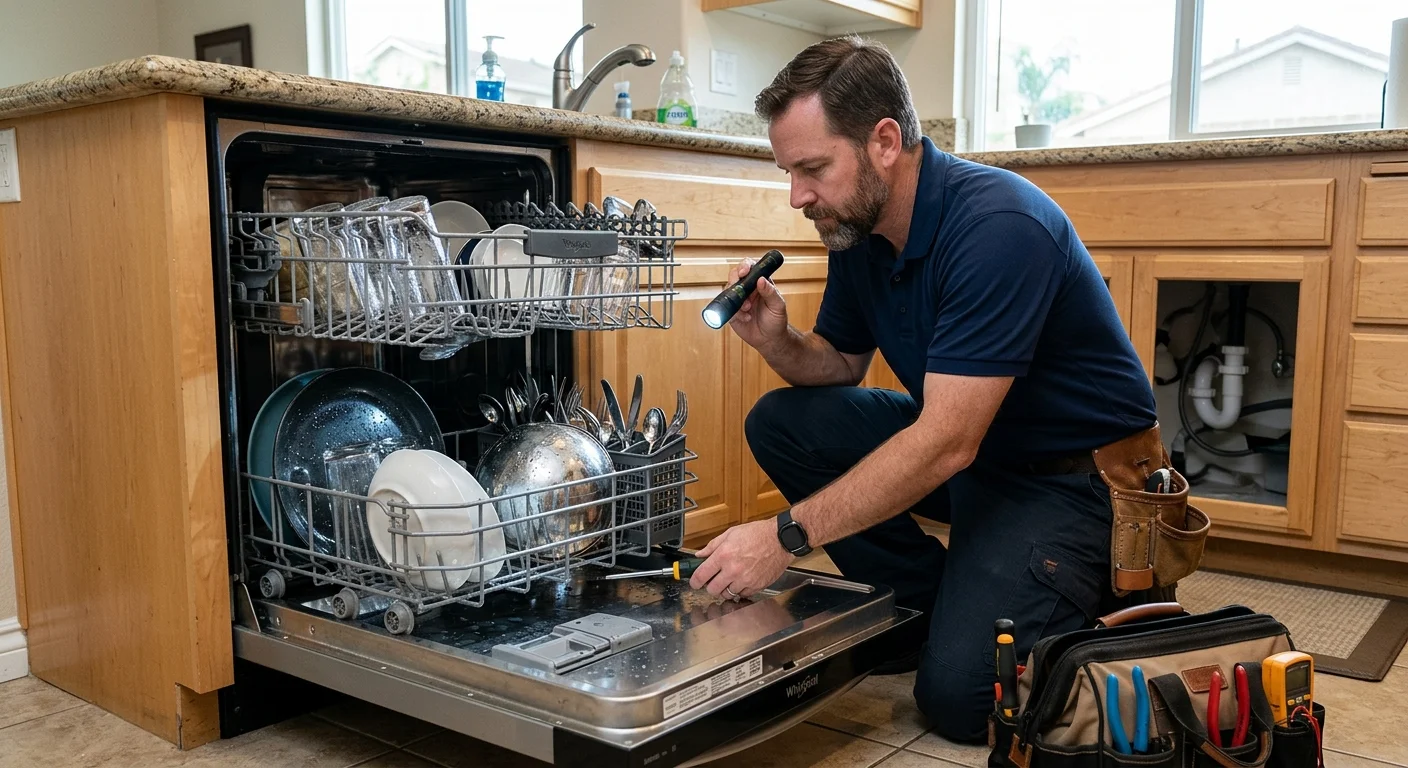
If your dishwasher finishes but leaves everything wet, start with its drying option, rinse-aid level, and loading. If the cycle stops early, leaves water behind, or displays an error, your Santee dishwasher technician needs to diagnose more than drying.
Confirm whether dishes stay wet or the cycle stops
First, confirm that the dishwasher reaches the end of its cycle. A drying complaint can look similar to an interrupted wash or drain problem. That distinction gives the technician a better starting point.
After the normal cycle ends, note what you see:
- Is the control panel showing a completed cycle or an error?
- Is water standing above the filter area?
- Are glasses and plates wet, or mainly plastic items?
- Do droplets cover everything, or collect in recessed surfaces?
- Did the detergent release and dissolve?
- Did the same problem occur on another cycle?
- Was a heated or enhanced drying option selected?
Write down the cycle name and every selected option. Labels vary between models. Terms such as heated dry, extra dry, sanitize, air dry, and energy-saving dry don’t always describe the same process. Your model’s manual is the right source for its settings.
Also record whether the machine lost power or stopped unexpectedly. A dark display, a breaker change, or an unfinished timer matters. Electrical testing and panel removal aren’t owner checks. Leave those steps for the technician.
Standing water points toward a separate drain complaint. Food residue suggests the wash performance also needs attention. Our guide to a dishwasher that isn’t cleaning can help you document those symptoms without confusing them with poor drying.
One clear description beats several guesses. “The normal cycle completed, all dishes stayed wet, and no error appeared” gives the matched pro something useful to test.
What owners can check without opening panels
Start with the controls and items you can reach normally. Don’t remove the toe kick, door panel, or electrical covers. The purpose of these checks is to gather facts, not diagnose internal parts.
Find the model label and read the manufacturer’s cycle instructions. The label may sit along the door edge, tub opening, or another location named in the manual. Take a clear photo of the full model and serial information.
Next, confirm the selected cycle and drying option. A saved setting may differ from the option you expected. If the machine has a rinse-aid dispenser, check its visible indicator and follow the model manual when refilling it. Don’t substitute another product unless the manufacturer permits it.
Review the load after the cycle. Bowls, cups, and containers can hold water in recessed areas. A large pan or cutting board may also change how water reaches nearby dishes. Note the pattern instead of rearranging the load and forgetting what happened.
Check the accessible filter and spray areas using the manual’s directions. Record any visible debris, damaged rack parts, or blocked movement. If the machine also leaves residue, that detail may connect the drying complaint to a wash or drain issue.
You can also document the power and water symptoms without changing connections. Note whether the display works, whether the cycle fills, and whether water remains afterward. If a breaker has changed position, include that fact in your request. The technician can determine what it means.
Finally, search the exact model number in the CPSC recall database. Don’t assume that a similar-looking model has the same notice.
What technicians inspect for drying complaints
The matched technician starts with the exact model and the symptom record. Dishwasher drying systems aren’t identical. Internal parts and test procedures depend on the machine’s design.
The technician may check the heating system, control output, sensors, wiring, vent, or fan when those parts exist. They can also confirm whether the machine reaches the correct stages during the selected cycle. That separates an internal failure from a setting or loading issue.
Water movement matters too. The pro may inspect fill behavior, wash performance, draining, and the rinse-aid release. A machine that stops early or retains water needs a broader diagnosis. An error code helps, but it doesn’t prove that one named component has failed.
A trained technician can test internal electrical parts against the manufacturer’s service information. That work may require panel access and proper measuring equipment. Avoid buying a heater, control board, or sensor based only on an online symptom list. Several faults can produce similar wet-dish results.
Share any recent changes. A new error, a power interruption, plumbing work, flooring work, or a moved appliance can narrow the inspection. So can photos of standing water, the display, and the loading pattern.
Repair cost depends on the diagnosis, model, access, required part, and related faults. Repair Pro San Diego doesn’t set service prices or diagnostic fees. The matched technician diagnoses first and quotes in writing before work begins. Ask whether the diagnostic fee is credited toward an approved repair.
Our dishwasher repair service explains how the referral works. You can also verify a California repair business’s registration status through the state’s Department of Consumer Affairs search.
Which Santee property details may affect access
A Santee address doesn’t reveal the kitchen layout. Homes near Mission Gorge Road, Mast Boulevard, Carlton Hills Boulevard, and Town Center Parkway can have very different appliance access. Give the technician the actual property details instead of relying on the ZIP code.
Start with the building type. State whether the dishwasher is in a detached home, townhouse, condo, apartment, or rental property. Mention stairs, gates, parking instructions, and building access rules that apply to your address. If a property manager must approve entry, say that before scheduling with the independent pro.
Describe how the dishwasher is installed. Useful details include a custom cabinet panel, raised flooring, a tight toe-kick area, or trim that overlaps the machine. Note whether the unit sits beside the sink and whether the adjacent cabinet is accessible. Don’t disconnect hoses, wiring, or mounting hardware just to take photos.
Recent flooring or cabinet work is also relevant. A machine can be harder to remove when the finished floor sits higher than the space beneath it. Don’t assume that applies to your kitchen. A photo from floor level can show the actual clearance.
Santee’s State Route 52 and State Route 125 connections help identify the general part of town, but they don’t predict property access or arrival time. Share a nearby cross street only when it helps locate the address. The independent technician sets scheduling details directly with you.
If you coordinate another property outside Santee, use the guide for that service area. Our El Cajon appliance repair guide covers requests for nearby El Cajon homes and businesses.
How to request a matched dishwasher technician
A useful request starts with the service address and appliance details. Say that you need dishwasher repair in Santee, then describe what happens at the end of the cycle. Avoid diagnosing the part yourself.
Include these details when available:
- Dishwasher brand and full model number
- Selected cycle and drying option
- Any displayed error code
- Whether the cycle reaches its normal end
- Whether water remains in the tub
- Which dishes stay wet
- Any recent power, plumbing, cabinet, or flooring changes
- Property access instructions
- Photos of the display, model label, and wet-dish pattern
Mention leaks, unusual odors, unexpected noises, or breaker changes even when drying is your main concern. Those observations may change what the technician needs to inspect.
Repair Pro San Diego uses this information to match homeowners with licensed and insured independent local appliance technicians. The referral service doesn’t perform the diagnosis or repair. It also doesn’t control the pro’s schedule, diagnostic fee, parts pricing, written quote, or warranty terms.
Ask the matched technician about those terms before approving work. Confirm who will perform the repair and how they handle authorization for additional findings. For a rental or managed property, identify the person allowed to approve the quote.
If you’re searching for dishwasher repair near Santee, accurate model and access details make the request clearer. They also help the independent pro prepare for the actual machine and property, without promises about parts or timing.
When to call us
Request a match when the dishwasher repeatedly finishes with wet dishes, stops before drying, retains water, or needs internal testing. A licensed and insured appliance repair pro can diagnose the machine and provide written terms for your approval. Call (858) 988-7787 to leave a voicemail requesting a match with a local appliance repair pro.