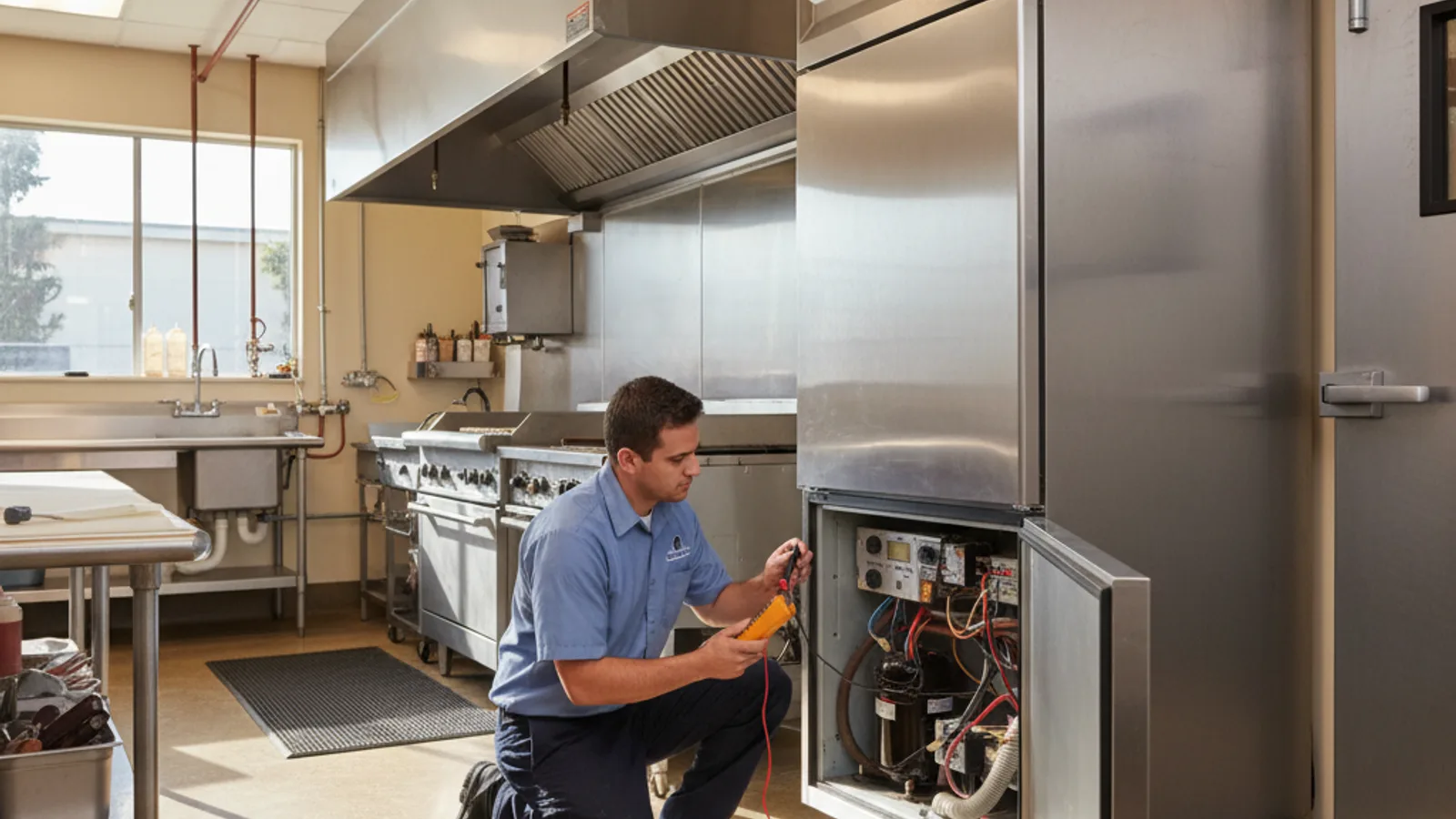
A walk-in cooler that drifts up to 50 degrees overnight is not a slow leak you schedule around. It’s spoiled inventory, a health-code problem, and a service window you can’t open. Commercial appliance repair in San Diego runs on a different clock than the fix at home, and the gear is built to a different standard.
This guide covers what commercial repair actually includes, which units fail most often in San Diego kitchens, what downtime really costs, and how to tell a stopgap fix from a real one.
What commercial appliance repair covers
Residential repair is one fridge, one washer, one oven. Commercial repair is the whole back-of-house, and the equipment is heavier, hotter, and run far harder. A restaurant fridge cycles open hundreds of times a service. A laundromat dryer runs sixteen hours a day. That duty cycle is why commercial parts wear differently and why the diagnosis takes a trained eye.
Here’s the equipment we get called for most across San Diego County:
- Reach-in and undercounter refrigeration in restaurants, cafes, and breakrooms
- Walk-in coolers and freezers, including the condensing unit and evaporator
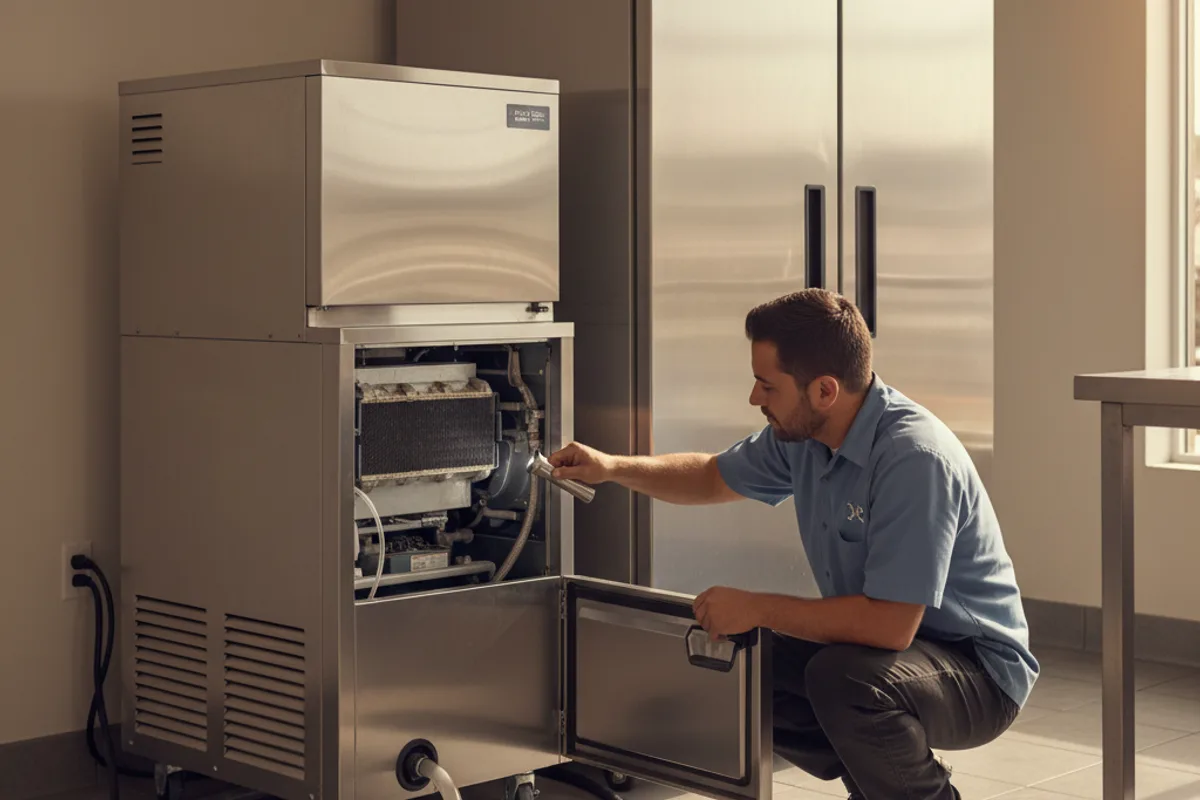
- Commercial ice machines, the single most-neglected unit in most kitchens
- Prep tables and sandwich units with built-in refrigerated rails
- Commercial dishwashers and glass washers
- Commercial ranges, ovens, and griddles
- Stacked or coin-op laundry in apartment buildings and laundromats
For the residential side of these same appliances, our refrigerator and freezer repair coverage handles homes. The commercial work is its own service line because the parts, the access, and the urgency are all different.
The units that fail most in San Diego kitchens
Two things make San Diego hard on commercial refrigeration: heat and water.
A condenser dumps heat. When the kitchen behind a Convoy Street restaurant or a Gaslamp cafe hits 90 degrees on a summer afternoon, that condenser has to work against ambient heat that’s already high. Skip the quarterly coil cleaning and the unit runs hotter, the compressor strains, and you lose cooling capacity right when you need it most.
Then there’s the water. San Diego’s water is hard, and scale builds fast on anything that uses it. Ice machines take the worst of it. Mineral scale coats the evaporator plate and the water lines, output drops, the ice goes cloudy or soft, and eventually the machine seizes. Technicians in our network pull machines that haven’t been descaled in two years and find a quarter inch of buildup on the plate.
The usual failure list, in rough order of how often we see it:
- Ice machines that lose output or stop making ice from scale and dirty condensers
- Reach-in coolers that won’t hold temp because of a failing compressor relay or a clogged condenser
- Walk-in evaporator coils that ice over from a stuck defrost cycle
- Prep-table rails that warm up while the rest of the unit stays cold
- Commercial dishwasher drain and heating-element failures from scale and grease
What downtime actually costs
The repair bill is rarely the real number. The real cost is what the dead unit takes down with it.
A failed walk-in freezer in a busy restaurant can hold thousands of dollars of inventory. Lose temperature for a few hours and you’re not just paying for the fix, you’re paying for everything inside, plus the loss of the food you can’t sell tonight. A cafe with a dead ice machine on a hot Saturday turns away drink orders all day. A laundromat with two dryers down loses a chunk of its capacity during peak weekend hours.
That math is why you should say in the voicemail if the unit is losing temperature or taking a kitchen down. The matched technician sets timing and starts parts sourcing after reviewing the request. Waiting three days for a fridge part is fine at home. In a kitchen, three days is a closure. When the unit is past saving, our guide on how to decide between repair and replacement lays out the same logic we use on a service call.
Repair versus replace on commercial gear
Commercial equipment is expensive to replace, so the repair-or-replace line sits in a different place than it does for a home appliance. A 15-year-old home fridge is usually a replace. A 15-year-old commercial reach-in with a fresh compressor might have years left, because the cabinet and insulation were built to last.
We weigh a few things on every commercial call:
- Age against expected service life. Commercial refrigeration often runs 12 to 15 years with maintenance, sometimes longer.
- The cost of the part against the cost of the unit. A relay or a fan motor is an easy yes. A failed sealed system on an old unit is where it gets close.
- Whether the failure is the symptom or the cause. A compressor that burned out from a dirty condenser will burn out again if the condenser stays dirty. Fix the root cause or you pay twice.
- Downtime tolerance. Some operations can limp on a backup unit. Others can’t lose an hour.
The honest answer changes case by case. The mistake is replacing a unit that needed a cheap part, or sinking repair after repair into a cabinet that’s already failing.
Preventing the calls you don’t want
Most commercial breakdowns are not surprises. They’re skipped maintenance catching up.
Three habits prevent the majority of emergency calls:
- Clean condenser coils quarterly. A coated coil is the number-one cause of compressor failure in San Diego kitchens. It’s a 20-minute job that saves a far more expensive one.
- Descale ice machines twice a year. Hard water is not optional here. Build it into the calendar or the machine will build the schedule for you.
- Check door gaskets and walk-in seals. A torn gasket makes the compressor run nonstop, drives the bill up, and shortens the unit’s life.
For ice specifically, our breakdown of why an ice machine stops making ice covers the early signs to watch before output drops to nothing. And when a walk-in or reach-in starts losing temp, the same diagnostic path in our freezer repair guide applies, just at commercial scale.
When to call a pro
Some checks you can do yourself before you call. Make sure the unit has power and the breaker hasn’t tripped. Clear anything blocking the condenser airflow. Confirm the door seals fully and nothing’s propping it open. Wipe down a dirty condenser coil if you can reach it safely.
Past that, commercial refrigeration is sealed-system territory. Refrigerant work, compressor diagnosis, and control-board faults need the right tools and training, and getting it wrong on a commercial unit is an expensive mistake. If the unit is losing temperature, making a new noise, or the ice machine output has dropped, that’s a call.
Repair Pro San Diego connects you with commercial appliance and refrigeration repair across San Diego County, from Oceanside down to Chula Vista. The techs in our network work on reach-ins, walk-ins, ice machines, prep units, and commercial laundry. See our commercial appliance repair page for the full service area, or leave a voicemail at (858) 988-7787 and we match you with a local tech covering your area.
Frequently asked questions
How fast can you get to a commercial breakdown?
Say in the voicemail if a walk-in or reach-in is losing temperature. Arrival times vary and we don’t promise one. The matched technician sets the window after reviewing the request.
Do you work on walk-in coolers and freezers?
Yes. Techs in our network work on the condensing unit, the evaporator, defrost controls, and the door hardware. A walk-in losing temp usually traces back to the condenser, a stuck defrost cycle, or a failing compressor.
Why does my commercial ice machine keep failing?
In San Diego, it’s almost always hard-water scale. Mineral buildup coats the evaporator plate and clogs the water line, which cuts output and eventually stops production. Descaling twice a year prevents most of it.
Is it worth repairing older commercial equipment?
Often, yes. Commercial cabinets are built to outlast home units, so a 12-year-old reach-in with a good cabinet and fresh parts can have real life left. We weigh the part cost against the unit cost and the root cause before we recommend either way.
Do you service restaurants and apartment-building laundry too?
Yes. We cover restaurant kitchens, cafes, breakroom units, and coin-op or stacked laundry in apartment buildings and laundromats across the county.