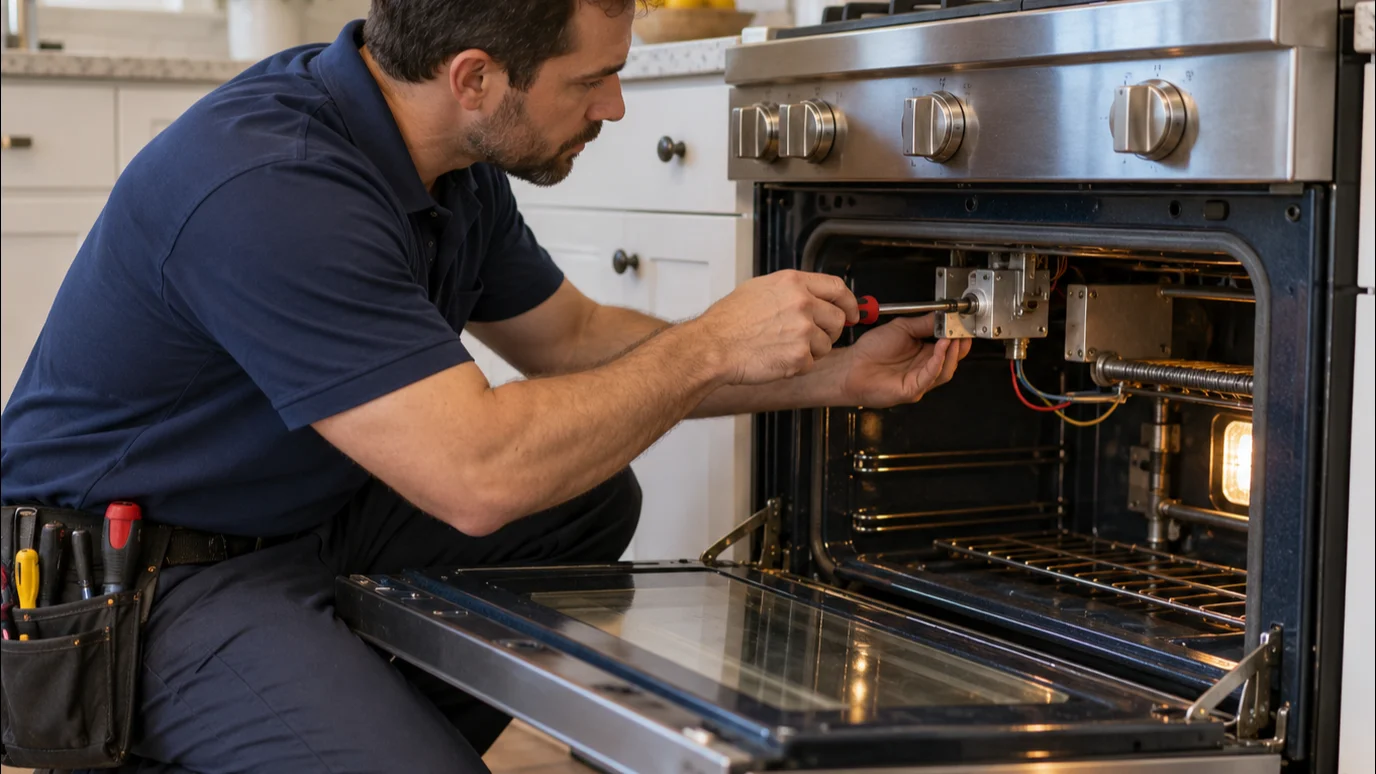
An AGA stove that stays cold needs a model-specific diagnosis. Start by identifying which oven, plate, or cooking zone failed and whether any controls still respond.
Confirm the model and failed heating pattern
AGA is a product brand, not one interchangeable stove design. The model number and configuration shape every useful diagnostic step. Don’t rely on appearance alone, especially when the range came with the home.
Look for the model information where the appliance documentation directs you. A manual, purchase record, or prior service invoice may also identify it. Take a clear photo instead of copying a long number by hand. One incorrect letter can lead a technician toward the wrong controls or parts information.
Next, describe exactly what isn’t heating. “The AGA is cold” gives less information than these observations:
- One oven stays cold while another becomes warm.
- A cooking plate doesn’t heat, but the ovens do.
- Every cooking area remains cold.
- The controls appear active, but no heat develops.
- Heat begins, then drops away or becomes inconsistent.
- The problem started after an outage or other electrical interruption.
Note whether the failure was sudden or gradual. Also record any display message, indicator behavior, unusual sound, or change in control response. Don’t clear a displayed code before photographing it.
This information helps separate a single-zone complaint from a broader supply or control problem. It also prevents confusion between an oven failure and a cooktop failure. Our broader oven no-heat troubleshooting guide explains common patterns, but an AGA stove still requires its own model information.
Repair Pro San Diego can match homeowners across San Diego County with licensed, insured independent appliance technicians. The matched technician, not Repair Pro San Diego, diagnoses and performs the work.
What owners can observe without opening panels
Useful observations don’t require removing covers or touching internal parts. Begin with the controls you normally use. Record their positions, indicator lights, display messages, and any response when you select a cooking function.
Check whether the entire appliance appears unpowered. If only one area fails, write down which area still works. A precise heating map can be more useful than repeatedly changing settings.
Give each cooking area a simple status:
- Normal response
- Weak or uneven heat
- No heat
- Starts heating, then stops
- Control or display doesn’t respond
Keep notes about when the problem occurs. A failure that appears after several cooking selections is different from an oven that’s cold from startup. If the issue comes and goes, record the control setting and affected zone each time.
Record what happens during normal operation and leave internal tests to the matched technician.
Owners sometimes search for an AGA “7 minute rule.” We couldn’t confirm a universal rule from approved manufacturer material for this page. Check the manual for your exact model before relying on any timed operating practice.
San Diego homes also create practical access differences. A technician may need parking instructions for a downtown condo, gate details in North County, or a clear route through a compact South Bay kitchen. Share those details when requesting a match. Also mention whether the range is fitted between cabinets or near other fixed surfaces.
For wider local service information, see our San Diego stove repair guide.
How controls and fuel type narrow the complaint
The technician needs to know how your specific AGA stove is controlled and supplied. Don’t classify it from memory if you aren’t certain. Use the model label, manual, or purchase paperwork.
Photograph the control panel with the appliance off, then photograph any message shown during the fault. Include the full panel so the relationship between buttons, knobs, and indicators is clear. A close crop can hide the selected mode.
Tell the technician whether the home recently experienced an outage, electrical work, remodeling, or a change involving the appliance connection. Don’t assume the timing proves the cause. It’s simply useful diagnostic context.
For an appliance with gas-connected functions, describe what you can observe during normal operation. Our gas range safety checklist covers general warning signs and owner-level precautions.
Control behavior can narrow the complaint before parts are discussed. For example, a dead display across the appliance suggests a different path than one cold cooking zone with otherwise responsive controls. A setting that won’t register also differs from a registered setting that produces no heat. These patterns aren’t a final diagnosis.
Avoid ordering a component from an online symptom chart. Similar symptoms can arise from different causes, and model variants may use different parts. A technician should confirm the failed component and exact part identification first.
Manufacturer authorization for any particular technician can’t be assumed. If authorization matters for current coverage, confirm it with the manufacturer or warranty administrator before approving work. Keep the appliance paperwork available for that conversation.
What technicians inspect during diagnosis
The matched technician starts by confirming the complaint. That means comparing the owner’s notes with the appliance’s actual response. The model identification, control behavior, affected zones, and supply type guide the inspection.
Depending on the configuration, the diagnostic path may include the incoming supply, user controls, internal connections, temperature-control components, heating components, or ignition-related components. These are inspection categories, not a prediction about your stove. The exact sequence depends on the model and observed failure.
A technician may also compare a single failed area with sections that still operate. That comparison helps determine whether the problem is isolated or shared. If everything is cold, the inspection may begin farther upstream than it would for one weak oven.
Expect the technician to look for evidence, not replace parts from a symptom alone. Useful findings can include whether a control receives and sends the expected input, whether a heating path is complete, or whether a component responds as the model documentation specifies. Internal testing should stay with the technician.
Ask these questions before authorizing a repair:
- What failed, and how was that conclusion tested?
- Is the quoted part identified for this exact model?
- Does another fault need correction before that part can work?
- What labor and parts coverage does the technician provide?
- Are any manufacturer or supplier delays affecting the decision?
No verified AGA-specific repair range appears in the approved cost sources for this site. Repair Pro San Diego also has no repair price list or diagnostic fee. Ask the independent technician about their diagnostic fee and whether it is credited toward the repair. The matched technician diagnoses first and quotes in writing before work begins.
For related service details, visit oven, range, and cooktop repair.
When to request stove repair
Request a professional diagnosis when normal controls don’t restore heat, the fault returns, or one cooking area behaves differently from the others. A persistent display message, intermittent shutdown, or several cold zones also deserves model-specific testing.
Stop repeating resets when they don’t change the pattern. Repeated attempts can erase useful timing details without identifying the cause. Photograph the display and write down what happened before requesting a match.
Have this information ready:
- Full model and serial information
- Which ovens, plates, or zones are affected
- What still works normally
- Display messages or unusual indicator behavior
- Whether the failure began suddenly or gradually
- Any recent outage or work near the appliance connection
- Photos of the appliance and control panel
- Access, parking, or gate instructions
Those details matter across San Diego County. A home near the I-5 corridor may have different access constraints than an inland property near El Cajon or Escondido. Clear notes help the matched pro understand the appliance and visit conditions. They don’t guarantee a diagnosis before inspection.
If the appliance may still have warranty coverage, check the purchase documents and current warranty terms. Don’t assume independent work is covered or excluded. The responsible manufacturer or warranty administrator sets those terms.
Repair can make sense when a confirmed component fault has a suitable replacement and the written quote fits your plans. Replacement may deserve consideration when parts can’t be identified, required components aren’t available, or the repair scope no longer suits the kitchen. There’s no approved universal percentage or age threshold for that choice.
When to call us
When your AGA stove won’t heat and owner-level observations don’t reveal the problem, the next step is a licensed, insured local Appliance Repair pro. Repair Pro San Diego can match you with an independent technician who will diagnose the appliance and provide their own written quote.
Call (858) 988-7787 to leave a voicemail requesting a match with a local appliance repair pro.