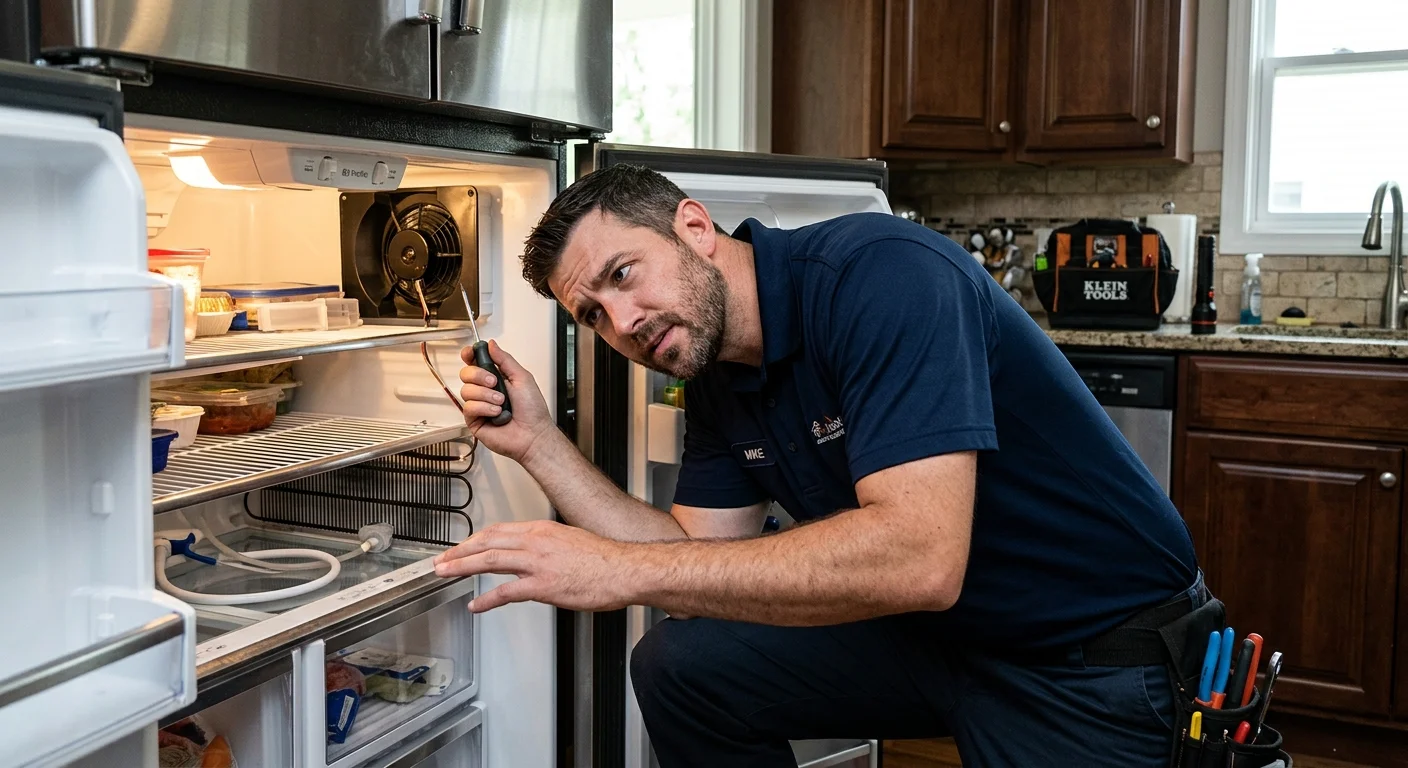
A buzzing refrigerator is usually the compressor straining, the condenser fan hitting debris, or the water inlet valve buzzing when the ice maker calls for water. Only one of those is urgent, and here’s how to tell them apart.
Normal vs. problem noises: a quick guide
Refrigerators are complex machines with many moving parts, so they’re rarely silent. A low hum from the compressor, the gentle gurgle of refrigerant, or the clatter of ice dropping into the bin are all normal, expected sounds. You might also hear a slight click as the thermostat cycles on and off, or a soft whir from fans circulating air. These are just part of your fridge’s routine operation, especially common in modern, energy-efficient models.
However, some noises point to a problem. You should pay attention if a sound is new, suddenly much louder, or persists over time. A change in pitch or intensity, or a noise accompanied by other issues like poor cooling or leaking water, usually means it’s time to investigate. Before jumping to conclusions, try a few simple checks. Make sure the refrigerator isn’t touching a wall, that no items inside are vibrating, and that the door seals are clean and tight. Sometimes, the fix is as simple as repositioning a loose food container or cleaning a dusty coil. If these quick checks don’t stop the noise, it’s time to dig a little deeper.
Buzzing: usually the compressor or condenser fan
A buzzing sound is one of the most common complaints, and it often points to a couple of key components. Understanding where the buzz is coming from helps narrow down the cause.
The compressor
Located at the bottom back of your refrigerator, the compressor is like the heart of the cooling system. It circulates refrigerant, which makes the cooling possible. A gentle hum from the compressor is normal. However, a loud, persistent buzzing or vibrating noise coming directly from this area is a significant red flag. It could mean the compressor is struggling, failing, or that there’s an issue with the sealed refrigeration system. These are complex problems that require expert diagnosis. If you suspect the compressor is the source of a loud buzz, you should contact a professional for refrigerator repair right away. Continuing to run a struggling compressor can lead to more extensive and costly damage.
The condenser fan
Also situated at the bottom rear of your fridge, usually near the compressor, the condenser fan is vital for cooling the condenser coils. These coils release heat from the refrigerant into the air. If the fan blades get clogged with dust, pet hair, or debris, they can vibrate and create a distinct buzzing sound. You can often clean these coils and fan blades yourself after unplugging the unit. If the buzzing continues after a thorough cleaning, the fan motor itself might be worn out and need replacement.
Evaporator fan
Another potential source of buzzing or whirring is the evaporator fan, located inside the freezer compartment. This fan circulates cold air throughout both the freezer and fresh food sections. If ice buildup gets too thick and hits the fan blades, or if the motor itself is failing, you’ll hear a buzzing or grinding noise from inside the fridge. A manual defrost can sometimes resolve ice buildup issues, but a failing motor needs professional attention.
Clicking: could be the start relay or a bad ice maker
Clicking sounds can be particularly unnerving because they often indicate something is trying to start but failing. Here are the usual suspects.
The start relay
The start relay is a small electrical component usually attached to the compressor. Its job is to provide a brief jolt of power to get the compressor motor running. If you hear repeated clicking sounds, often with a pause in between, and the compressor isn’t actually starting, it’s likely a faulty start relay. The relay is attempting to start the compressor but can’t, or it’s overheating and shutting off. This means your refrigerator isn’t cooling properly, and you’ll need a professional to diagnose and replace the relay.
The ice maker
If your refrigerator has an automatic ice maker, it’s a very common source of clicking noises. The ice maker cycles through various stages: filling with water, freezing, and then ejecting ice. During these cycles, motors, gears, and solenoids can click. If the ice maker is trying to cycle but isn’t getting water, or if ice is jammed, it might click repeatedly. Check your water line, the ice bin for obstructions, and ensure the ice maker switch is on. If the clicking is persistent and the ice maker isn’t producing ice, it might have a faulty motor, sensor, or a broken component. A professional can quickly troubleshoot and repair your ice maker.

Defrost timer or thermostat
Older refrigerators with mechanical defrost timers can produce a soft click as the timer advances through its cycles. This is usually a normal, infrequent sound. Similarly, the thermostat in your fridge will click as it opens and closes to cycle the compressor on and off, which is also normal. If these clicks become loud, rapid, or constant, it might signal a failing component that needs to be checked by a technician.
Gurgling or hissing: often normal, but sometimes not
Many liquid-related sounds from a refrigerator are perfectly normal, but it’s important to know when to be concerned.
Normal refrigerant sounds
A gentle gurgling, bubbling, or even a soft rushing water sound is typically the refrigerant flowing through the coils. As the refrigerant changes from liquid to gas and back again, these sounds are a natural part of the cooling process. You might hear them more distinctly when the compressor first kicks on. Similarly, a soft hissing sound can occur during the defrost cycle as melting ice drips and evaporates. These are all signs of a healthy, functioning system.
Drain pan and drain line issues
If you hear more pronounced gurgling, especially combined with dripping sounds, it could be related to the defrost drain system. When your fridge defrosts, the melted water flows down a drain line to a collection pan at the bottom. If this drain line becomes clogged with food debris or ice, water can back up, causing gurgling as it tries to drain. It can even lead to leaks inside or outside the refrigerator. Cleaning the drain line and pan can often resolve this.
Water line and air
If you have a water dispenser or ice maker, occasional gurgling when you use them is often just air moving through the water line. This is usually nothing to worry about. However, if the gurgling is accompanied by water pressure issues or a leak, it could indicate a problem with the water inlet valve or the supply line itself.
While most gurgling and hissing sounds are harmless, be wary if they become unusually loud, are constant, or are coupled with other problems like your refrigerator not cooling adequately or visible leaks. A loud, persistent hiss, for example, could potentially point to a refrigerant leak, which is a serious issue requiring immediate professional attention. Modern, high-efficiency refrigerators often use variable-speed compressors and advanced cooling systems, which can sometimes produce a wider range of sounds than older models. For more information on energy-efficient appliance operation, you can check resources like the California Energy Commission.
When a noisy fridge needs a professional
While some refrigerator noises are harmless and easily fixed, others signal serious trouble. Knowing when to call in an expert can save you from bigger headaches and potential food spoilage. You should definitely consider professional appliance repair if:
- The noise is new, loud, or persistent: A sudden change in sound, especially if it’s jarring or won’t stop, indicates an underlying problem.
- The noise comes from the compressor or sealed system: Issues with these components, like a loud buzzing compressor or a suspected refrigerant leak (hissing accompanied by poor cooling), are complex and require specialized tools and expertise. Attempting DIY repairs on the sealed system can be dangerous and costly.
- The noise is accompanied by other performance problems: If your fridge is noisy and not cooling properly, leaking water, or excessively frosting up, it’s a clear sign of a malfunction. For issues like a fridge not cooling, you can also consult our fridge not cooling checklist for initial troubleshooting.
- You’ve tried simple fixes with no success: If cleaning the coils, defrosting, or checking for loose items hasn’t resolved the issue, the problem is likely internal and mechanical.
- You’re unsure of the source: Sometimes, diagnosing the exact noise can be tricky. A trained technician can quickly pinpoint the problem.
Attempting to repair complex components without proper training can be dangerous and often voids warranties. The technicians in our network are familiar with all major refrigerator brands and models, and can safely diagnose the issue and provide an efficient, lasting repair. Investing in timely professional repair can extend the life of your appliance, often making it a much more cost-effective solution than premature replacement.
Frequently asked questions
Is a buzzing sound from a refrigerator always a problem?
Not always. A steady, low hum from the compressor and a soft gurgle from refrigerant flowing through the coils are normal. The buzzing becomes a problem when it’s sudden, loud, or paired with other issues like food not staying cold, water pooling, or the compressor clicking repeatedly without starting.
What causes a refrigerator to buzz near the bottom back?
The two most likely sources are the compressor and the condenser fan. A loud buzz from the compressor means it’s struggling and needs professional diagnosis before it fails completely. A vibrating buzz from the condenser fan usually means the blades are clogged with dust or pet hair; cleaning the coils and fan after unplugging the unit often stops it.
Why does my fridge buzz when the ice maker runs?
The water inlet valve makes a buzzing hum when it opens to fill the ice maker. That’s normal and lasts only a few seconds per fill cycle. If the buzzing is constant or the ice maker isn’t producing ice, the valve may be sticking or failing, which the technicians in our network can test and replace.
When should I stop ignoring a noisy refrigerator?
Call for service when the noise is new and loud, when the compressor area buzzes and the fridge isn’t cooling, or when any noise comes with ice buildup, leaking water, or repeated clicking that stops the compressor from starting. Running a struggling compressor longer accelerates the damage and raises the repair cost.
When to call us
Don’t let a noisy refrigerator disrupt your peace of mind or put your food at risk. If you’ve identified a serious issue or prefer an expert diagnosis, Repair Pro San Diego is ready to help. The technicians in our network serve all of San Diego County, offering reliable appliance repair to get your kitchen back to normal. Call us at (858) 988-7787 and we’ll match you with a local tech.