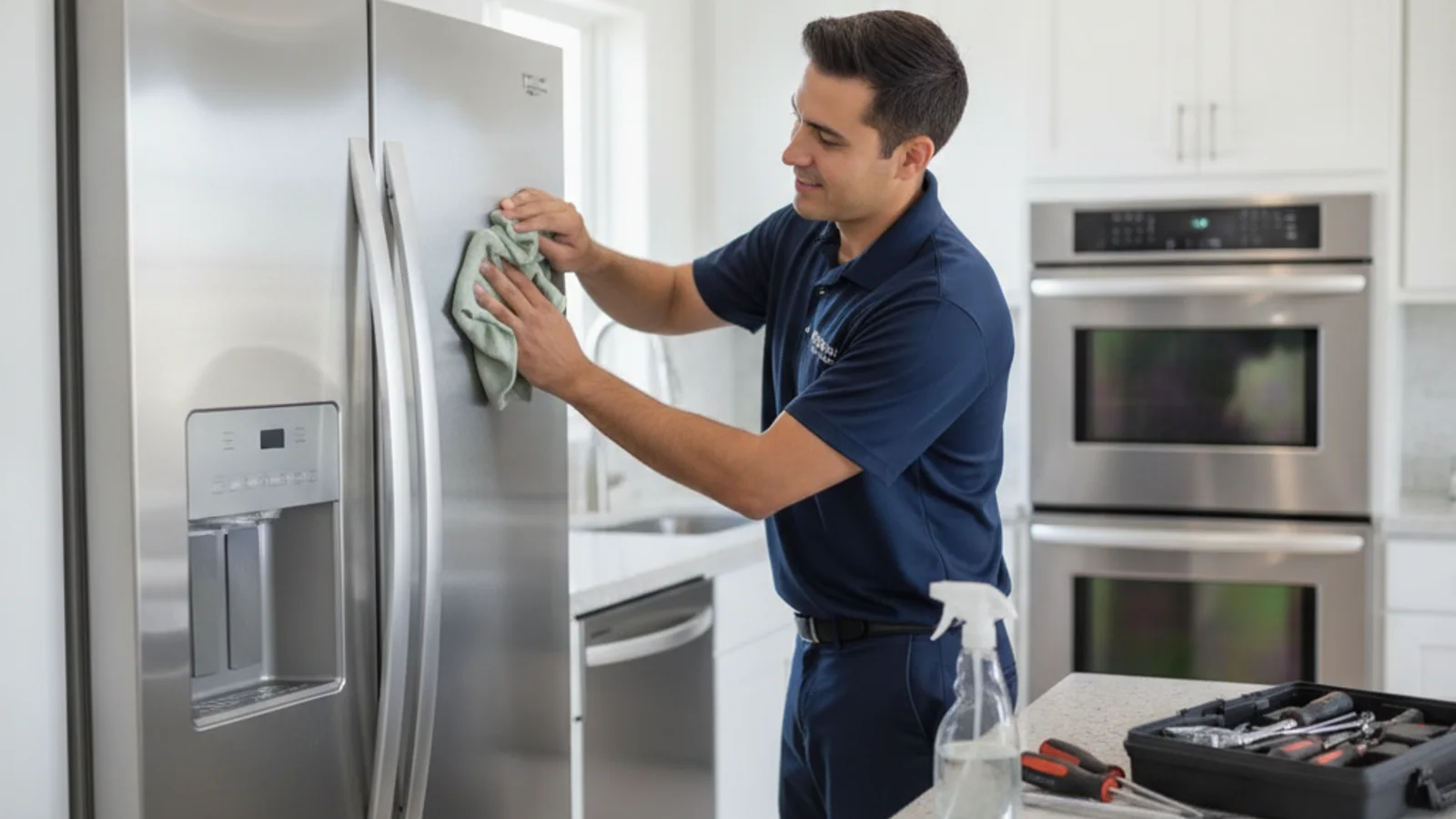
To clean stainless steel appliances, wipe with the grain using warm water and a microfiber cloth. For fingerprints, add a small drop of dish soap to the cloth. For water spots and mineral deposits, spray white vinegar directly on the surface, let it sit for 30 seconds, then wipe with the grain. Finish every cleaning session with a few drops of olive oil or mineral oil on a clean cloth, buffed with the grain, to protect the surface and reduce future smudging. Always go with the grain, never across it.
Find the grain direction first
Before you touch the surface, look for the grain. Hold the appliance door at an angle in good light. You’ll see faint parallel lines running either horizontally or vertically, usually horizontal on refrigerators and ranges, sometimes vertical on dishwasher panels.
Run your fingernail very lightly across the surface in both directions. One direction feels smoother. That’s the grain. All wiping, rubbing, and polishing goes in that direction only. Wiping against the grain pushes residue into the microscopic channels and creates visible scratches over time.
If you have multiple stainless appliances, check each one independently. The grain direction sometimes varies by model or brand.
Everyday cleaning: warm water and microfiber
For routine cleaning after cooking, warm water alone handles most of it.
Dampen a microfiber cloth with warm water, wring it out well, and wipe the surface with the grain from top to bottom. Go over each section once with a dry part of the cloth to pick up any remaining moisture. That’s it.
Don’t use paper towels. They’re abrasive enough to dull a stainless finish over months and years of regular use. A dedicated microfiber cloth ($3 at any hardware store) is the right tool and lasts hundreds of washes.
Fingerprints and smudges, especially with kids or pets
Fingerprints are the main complaint with stainless steel, and they’re more obvious on “fingerprint-resistant” coated models than people expect. The fix is straightforward.
Put one small drop of regular dish soap on a damp microfiber cloth. Work it into the cloth first, then wipe with the grain across the smudged area. Follow immediately with a clean damp cloth (water only, no soap) to lift the soap residue. Dry with a clean cloth going with the grain.
Don’t skip the rinse step. Soap residue left on stainless dries into a faint film and looks like a streak.
For households with kids or a dog who noses the fridge at face height, the oil-polish step at the end of this guide does more to cut fingerprint buildup than any product marketed as “fingerprint-resistant.”
Hard-water spots and mineral deposits
San Diego tap water is hard, ranging from moderately hard in coastal areas to quite hard in Santee, El Cajon, and much of the inland county. That mineral content leaves chalky white spots on stainless when water dries on the surface, around the water dispenser, the ice maker tray, and the door bottom where condensation drips.
White vinegar is the right tool here. The mild acidity dissolves calcium and magnesium deposits without harming the stainless.
Spray undiluted white vinegar directly on the spotted area. Let it sit for 30 to 60 seconds. Wipe with the grain using a microfiber cloth. For heavier buildup, a second pass usually clears it. Rinse with a damp cloth and dry completely.
If you’re near the coast, the combination of salt air humidity plus hard water means mineral spotting shows up faster than it does inland. A weekly wipe-down with a damp cloth keeps it from accumulating.
What NOT to use on stainless steel
The surface is more durable than it looks, but a handful of common cleaning products cause permanent damage.
Avoid:
- Steel wool, Brillo pads, or any abrasive scrubbing pad. These scratch deeply and permanently.
- Bleach and chlorine-based cleaners. Chlorine pits stainless steel at the microscopic level. Over time the surface corrodes.
- Glass cleaner (Windex and similar products). Most formulas contain ammonia, which can dull the finish and leaves a chemical residue that attracts more grime.
- Oven cleaner. Far too harsh for exterior stainless surfaces.
- Spray cleaners with grit or “scrubbing particles.” Check the label if you’re unsure.
If something has been sitting on the surface long enough to require scrubbing, try baking soda. Make a paste with water, apply with the grain using a soft cloth, let it sit a few minutes, then wipe away with a damp cloth. Baking soda is mildly abrasive but unlikely to scratch stainless at normal cleaning pressure.
Commercial stainless cleaners vs. DIY
The shelf at any hardware store has a dozen products specifically marketed for stainless steel: Weiman, Bar Keepers Friend spray, Cerama Bryte, and others. Most of them work. Most of them also cost more than the DIY approach.
The advantage of commercial cleaners is convenience. They’re formulated to clean and condition in one step, which saves time on a full kitchen’s worth of appliances.
The disadvantage is cost and the tendency to use too much product, which creates its own residue problem.
For most households, the DIY route (warm water for everyday cleaning, dish soap for fingerprints, white vinegar for mineral deposits, mineral oil for polish) handles everything. Keep commercial stainless cleaner on hand for a quarterly deep clean or for stubborn stains that need a surfactant boost.
The oil-polish finishing step
This step gets skipped more than any other and it makes the biggest difference.
After cleaning, put two or three drops of food-grade mineral oil on a clean, dry microfiber cloth. (Olive oil works but oxidizes faster and can go rancid in a warm kitchen. Mineral oil is odorless, food-safe, and stable.) Work the cloth against the grain first just to distribute the oil, then buff with the grain in smooth, overlapping strokes until the surface has a faint sheen.
The oil fills the microscopic channels in the stainless grain, which makes fingerprints less likely to stick and makes the next cleaning session faster.
Do this after every deep clean, or about once a week on high-touch surfaces like the fridge door.
Fridge vs. dishwasher vs. range: what’s different
Refrigerator. The largest surface and the one touched most. Pay extra attention to the handle and the door bottom around the water dispenser. If your fridge has a stainless interior trim or shelf edging, the same rules apply. See our guide to refrigerator repair if you notice anything off while cleaning, like a door that isn’t sealing flat or condensation forming on the outside.
Dishwasher. The control panel area is prone to heat and steam damage over time, which can cause the finish to look faded or discolored. Avoid spraying liquid directly at the control panel. Dampen the cloth first, wipe carefully. The lower door panel picks up foot scuffs; baking soda paste removes these without scratching.
Range and oven exterior. Grease splatter is the main challenge here. Let the surface cool completely before cleaning. Grease responds to dish soap better than any commercial cleaner. A warm soapy cloth, wiped with the grain, handles most stovetop splatter. For baked-on grease, baking soda paste left for five minutes loosens it. Rinse and dry carefully since water sitting around burner grates can cause rust on adjacent steel components.
For a full seasonal overview of appliance care across all your kitchen equipment, the seasonal appliance maintenance checklist covers what to inspect and when.
If cleaning turns up anything unexpected, a fridge door that feels warm when closed, a dishwasher that’s leaving water pooled at the bottom, or a range igniter that’s clicking but not lighting, same-day repair is available across San Diego County. Call (858) 988-7787. Those small signs are usually easier and cheaper to fix early.
Looking for appliance repair in Encinitas or other parts of the county? We cover all 67 San Diego County cities with same-day and next-day scheduling.
Frequently asked questions
What should you not use on stainless steel appliances?
Avoid bleach, chlorine-based cleaners, ammonia-based glass cleaners like Windex, steel wool, abrasive scrubbing pads, and spray products with scrubbing particles. Bleach and chlorine cause surface pitting over time. Abrasive pads create visible scratches that permanently dull the finish. When in doubt about a cleaning product, test a hidden spot, such as the side of the appliance, before using it on the front.
How do you get fingerprints off stainless steel appliances?
Add one drop of dish soap to a damp microfiber cloth, work it in, and wipe with the grain. Follow with a clean damp cloth to remove soap residue, then dry. For prevention, buff a few drops of mineral oil into the surface with the grain after cleaning, it fills the microscopic channels that fingerprints grip and makes the next cleanup much faster.
Can you use white vinegar on stainless steel?
Yes. Undiluted white vinegar is one of the best tools for dissolving hard-water mineral deposits on stainless steel. Spray it on, let it sit for 30 to 60 seconds, then wipe with the grain. Rinse with a damp cloth and dry. Don’t leave vinegar on the surface for extended periods (more than a few minutes) and always wipe and dry after. For routine cleaning where there’s no mineral buildup, warm water and a microfiber cloth is all you need.
Why does my stainless steel fridge look streaky after I clean it?
Two common causes: wiping against the grain, or leaving soap residue on the surface. Wiping across the grain pushes residue into the microscopic lines in the steel rather than along them. Soap that isn’t rinsed and dried properly dries into a faint film. Fix both by always wiping in the direction of the grain, following any soap application with a clean damp cloth to rinse, then drying immediately. The oil-polish step (a few drops of mineral oil buffed with the grain) is the most reliable way to eliminate residue buildup and keep the surface looking clean between sessions.
How often should you clean stainless steel appliances?
For the refrigerator and range, a quick wipe with a damp microfiber cloth two or three times a week handles everyday smudges. Do a full clean (dish soap for fingerprints, white vinegar for spots, mineral oil finish) once a week. If you’re in an inland San Diego community with harder water, mineral spotting around water dispensers may need attention more often. Also see the best refrigerator brands for 2026 if your fridge is aging and you’re weighing a replacement.