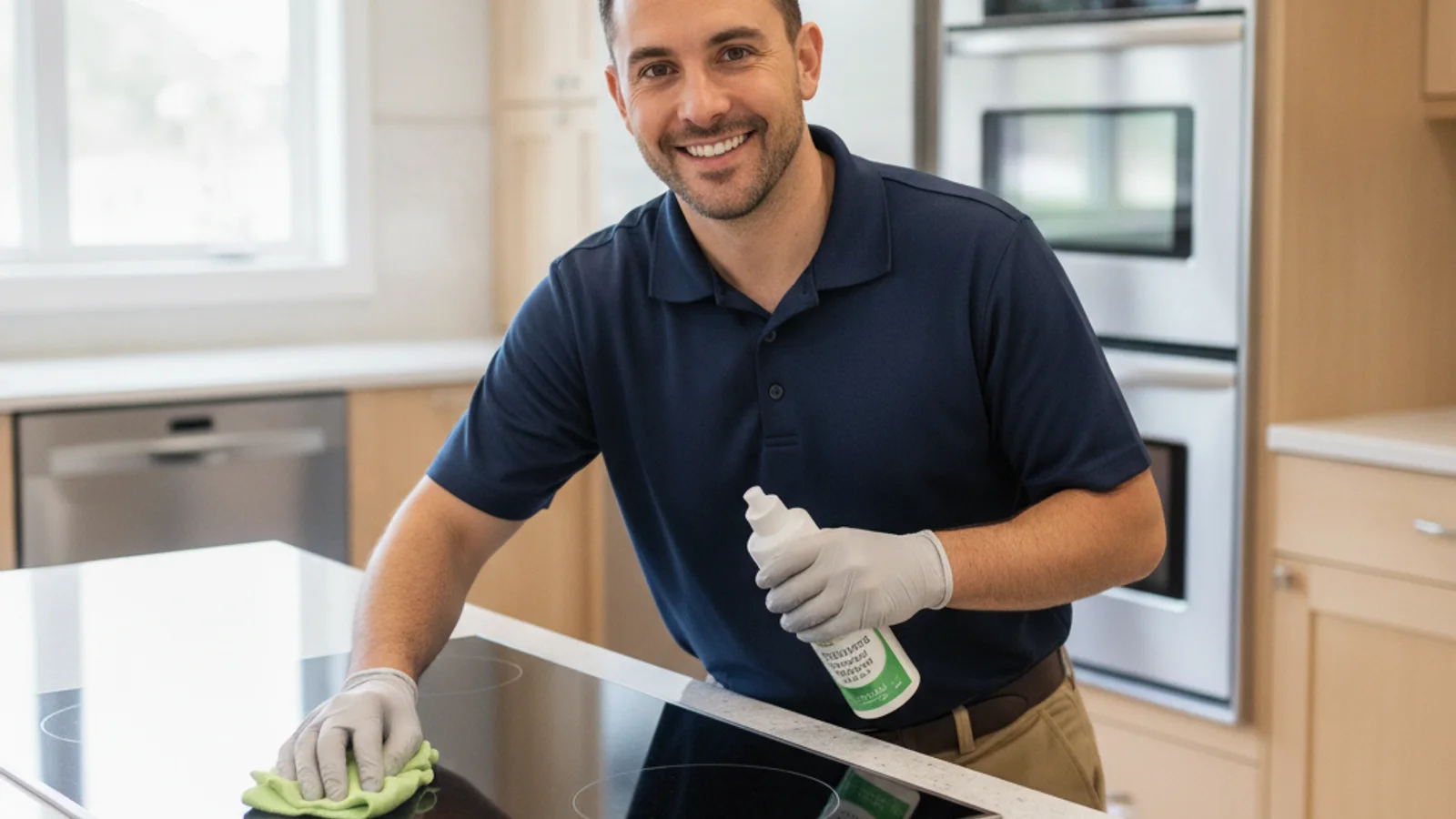
Let the cooktop cool completely, then sprinkle baking soda over the surface and work it into a paste with a few drops of warm soapy water. Wipe with a damp microfiber cloth using circular motions. For burnt-on spots, hold a single-edge razor blade scraper at a 30-degree angle, nearly flat, and push the debris toward you in short strokes. Finish with a dedicated cooktop cream polish (Cerama Bryte or equivalent), buffed dry with a clean cloth. That’s the full safe method for a glass or ceramic glass cooktop.
Daily wipe vs. deep clean
Most of the time a quick wipe is all you need. After the surface cools, dampen a microfiber cloth with warm water and wipe down the whole cooktop. This takes about two minutes and stops small spills from baking on over repeated heat cycles.
The deeper clean with baking soda, razor scraper, and polish is for anything that’s already bonded to the surface. Plan on doing it every two to four weeks depending on how much you cook.
Supplies you need
- Baking soda
- Dish soap
- Two microfiber cloths (one for cleaning, one for buffing)
- Single-edge razor blade scraper rated for cooktops (found at hardware stores, typically a dollar or two each)
- Cooktop cream polish (Cerama Bryte, Weiman, or Affresh cooktop cleaner)
- Optional: white vinegar in a spray bottle for mineral spots
Do not substitute a regular kitchen scrubber or a green Scotch-Brite pad. Those abrasives scratch the glass surface. The scratches start shallow but collect grease and darken over time, and there’s no fixing them.
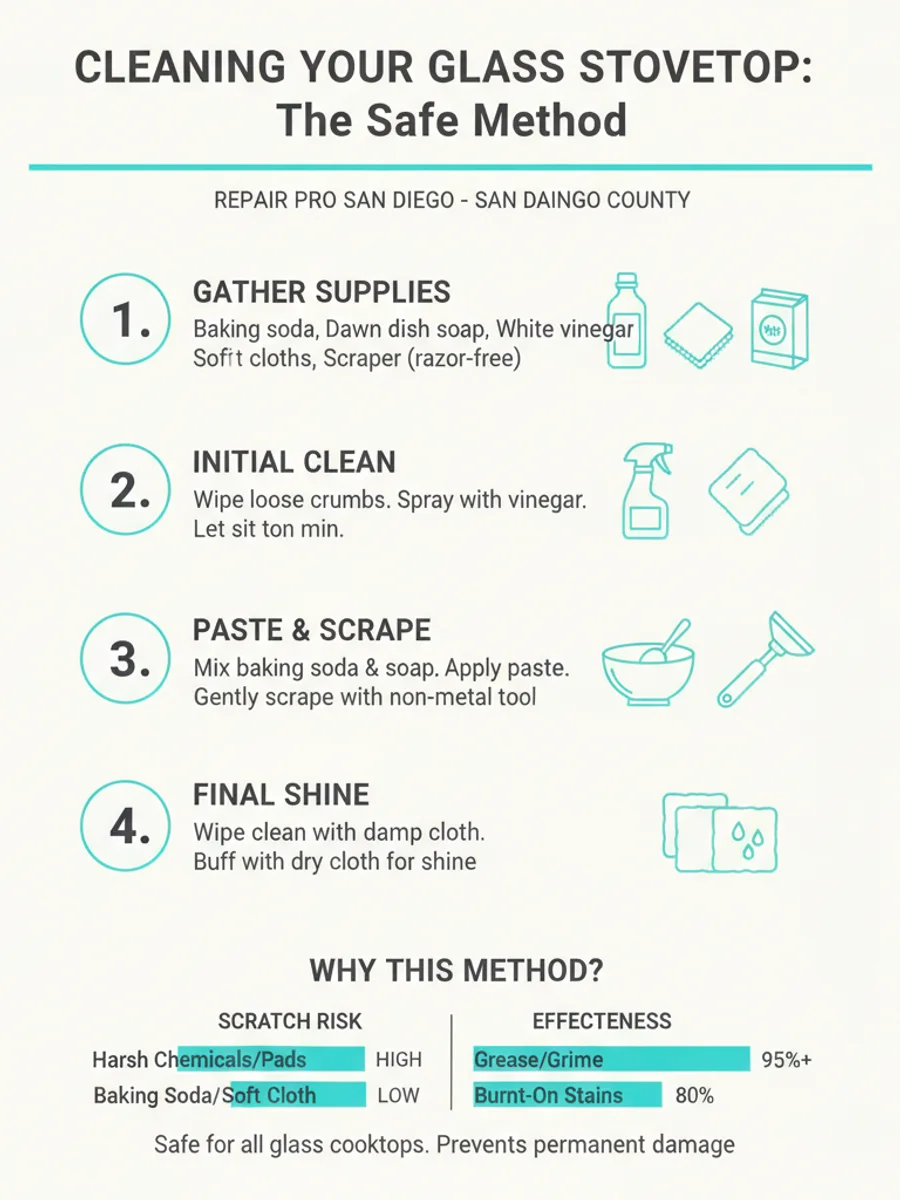
Step-by-step deep clean
Step 1: Confirm the surface is cold. Glass stovetops retain heat long after the indicator light goes off. A cool surface is also a safety check before you handle it closely.
Step 2: Remove loose debris. A dry microfiber cloth picks up crumbs and loose particles before you add any liquid.
Step 3: Apply the baking soda paste. Sprinkle baking soda generously, then add a few drops of warm soapy water. Let it sit for five to ten minutes on stubborn spots, the mild alkaline chemistry softens burnt-on food without scratching.
Step 4: Wipe and scrub gently. Circular motion with a damp microfiber cloth. Don’t press hard. The baking soda is doing the work.
Step 5: Razor scraper on stuck residue. Hold the blade nearly flat (about 30 degrees from horizontal). Never stand it upright, an upright blade gouges the glass. Short, controlled strokes. Keep the blade wet. This step removes hardened food and sugar spills that wiping alone won’t touch.
Step 6: Wipe clean. Remove all baking soda residue with a damp cloth, then a dry one.
Step 7: Apply cooktop polish. A small dab of cream polish, buffed in with a clean microfiber cloth. This step fills micro-abrasions, restores the shine, and leaves a thin protective layer that makes the next cleanup easier.
Burnt-on and melted spills
Some spills need more than a standard deep clean.
Melted plastic or melted sugar
Both are the same situation: something bonded to the glass while the surface was hot. The best time to act is while the cooktop is still slightly warm (not hot). Wear an oven mitt to protect your hand, then use the razor scraper to lift the material before it fully cures. If it’s already cold and hard, the razor scraper still works, it just takes more short strokes. Never try to peel melted plastic by hand; pulling it tends to smear it into a wider mess.
For residual staining after you’ve scraped the bulk off, the baking soda paste soak followed by the cream polish usually finishes the job.
Heavy grease spills
Grease that’s cooked on over multiple uses needs a longer baking soda soak, ten to fifteen minutes rather than five. A second pass with the razor scraper after the soak helps. Follow with the cream polish.
What not to use on a glass cooktop
This is where most surface damage comes from.
Abrasive scouring pads. Any pad with a scratchy surface, including the green side of a dual-sided sponge, leaves fine scratches that dull the glass permanently. Stick to microfiber.
Glass cleaner with ammonia (like Windex). Ammonia can damage the surface and is not rated for cooktop glass. It also leaves a residue that creates smoke on the next use. If you want a streak-free shine after cleaning, use diluted white vinegar or the cooktop-specific polish.
Bleach or general-purpose cleaners. Same issue, not formulated for ceramic glass, and the residue can discolor the surface under heat.
Razor blade at the wrong angle. The scraper is safe when held nearly flat. Tilted upright it’s a gouge risk. Replace blades regularly, a dull blade drags instead of gliding.
For a broader view of kitchen appliance care, our gas range safety checklist covers maintenance habits that apply to the whole cooking suite.
San Diego hard-water spots
San Diego’s tap water is moderately hard, municipal water here typically runs 200-400 parts per million of dissolved minerals. Evaporated water leaves a white mineral film on glass surfaces, which is easy to confuse with scratching or damage.
White vinegar cuts it. Spray a light coat of diluted white vinegar (equal parts vinegar and water), let it sit for two minutes, then wipe with a microfiber cloth. Rinse with a damp cloth to remove any vinegar residue. If you’re already doing the baking soda clean, add the vinegar step at the end before the cream polish.
For a full year-round maintenance approach, see our guide on seasonal appliance maintenance in San Diego.
When a clean surface isn’t the issue
Cleaning keeps the glass looking good and prevents buildup from affecting heat distribution. But if a burner element heats unevenly, takes longer than usual to reach temperature, or stops working altogether, that’s a mechanical problem no amount of cleaning will fix.
Ceramic glass cooktops have induction coils or radiant elements beneath the surface. When those fail, the cooktop needs repair, not a polish. If you’re in La Mesa or anywhere else in San Diego County, our oven and range repair service connects you with a technician across the county. Call (858) 988-7787 and we’ll get a tech out.
Frequently asked questions
Can you use a razor blade on a glass stovetop?
Yes, with one condition: hold it nearly flat, around 30 degrees from horizontal. A razor blade scraper rated for cooktops is actually one of the safest tools for removing hardened burnt-on food because it lifts the debris without requiring scrubbing pressure that could scratch the glass. Never hold the blade upright, and keep the surface slightly wet when scraping.
What should you not use to clean a glass cooktop?
Avoid abrasive scouring pads (including the rough side of a kitchen sponge), glass cleaners that contain ammonia (like standard Windex), bleach, and general-purpose spray cleaners not rated for cooktops. All of these either scratch the ceramic glass surface or leave chemical residue that smokes or discolors under heat. Stick to baking soda, dish soap, microfiber cloths, and a dedicated cooktop cream polish.
How do you remove burnt-on stains from a glass stove?
Apply a baking soda and warm soapy water paste directly over the stain and let it sit for 10 to 15 minutes. Wipe with a damp microfiber cloth. For anything that doesn’t lift with that, run a single-edge razor scraper across it at a low angle using short strokes, keeping the surface wet. Finish with cooktop cream polish to restore the shine and protect the surface.
Why does my glass stovetop have white marks?
White marks on a glass cooktop are almost always mineral deposits from evaporated water or cleaner residue, not scratches. San Diego’s moderately hard tap water is a common culprit. A diluted white vinegar solution (equal parts vinegar and water) applied for two minutes and then wiped clean removes mineral film effectively. If the marks don’t wipe away with vinegar, they may be light surface scratches from abrasive cleaning tools, which are not reversible.
How often should you deep-clean a glass stovetop?
For average home cooking use, a full deep clean with baking soda, razor scraper, and cream polish every two to four weeks keeps buildup from hardening into a bigger project. A quick wipe with a damp microfiber cloth after each use prevents most of the buildup in the first place and makes the scheduled deep clean much faster.