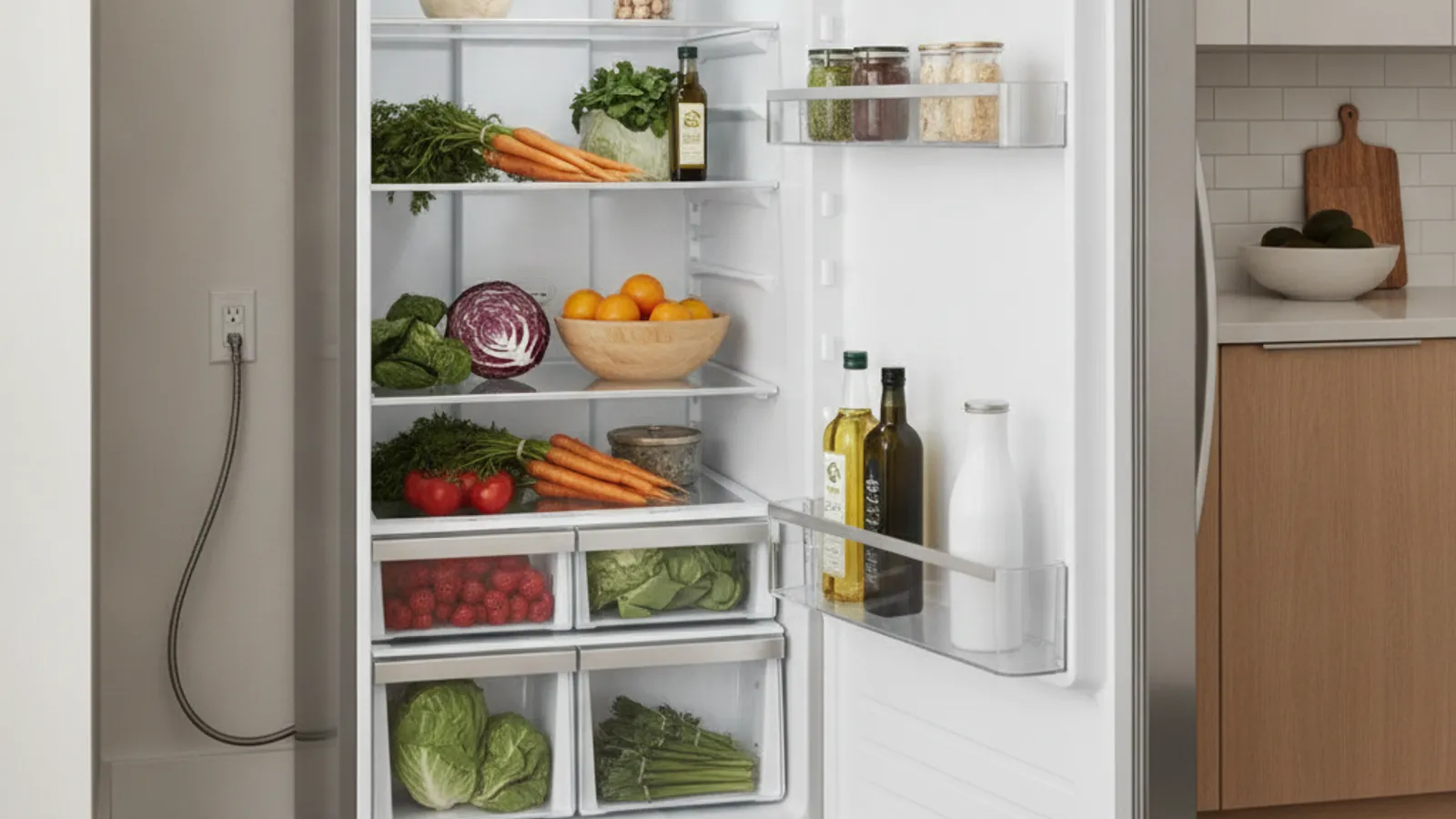
A GE refrigerator that is not cooling needs a recorded pattern: one section warm, or both. That split helps the technician. It does not name a frosted evaporator, fan, or start relay by itself.
Start by reading the symptom pattern
GE refrigerators fail in two distinct ways, and the difference matters. If the fresh food side is warm but the freezer stays cold, the problem is often airflow or defrost, pending diagnosis. Cold air gets made in the freezer, then a fan pushes it up into the fresh food section. Block that path and the top gets warm while the bottom stays frozen.
If both compartments are warm, the issue runs deeper. That points to the compressor, the start relay, or a sealed-system fault. The fridge isn’t making cold at all.
So before anything else, check which section is failing. It saves you from chasing the wrong part.
Fresh food warm, freezer cold: airflow and defrost
A warm fresh-food side with a cold freezer can involve airflow or defrost. Do not pull the freezer back panel. Do not test heater or thermostat continuity. If the model manual allows it, inspect the visible gasket and clean accessible condenser coils. Leave the rest to the technician. See the fridge not cooling checklist.
Both compartments warm: compressor and relay
When both compartments are warm, the compressor path, start components, inverter, or sealed system can be involved. Linear-compressor and inverter diagnosis stays with an EPA Section 608 certified technician and the GE document for that model. Do not treat inverter failure as a known GE fact from the kitchen. See GE appliance repair in San Diego.
A diagnosis order that works
First, confirm power and that the temperature isn’t set too warm. Second, read the symptom pattern: one section warm or both. Third, stay outside the cabinet: gasket and accessible coils if the manual allows. Fourth, for both sides warm, note sounds without opening panels. Do not pull the freezer panel or run continuity tests.
What you can safely do yourself
Two jobs are genuinely DIY. Cleaning the condenser coils is the first. GE coils sit on the bottom or behind a lower kick panel, and dust chokes them over time. A coil brush and a vacuum bring cooling back when the problem is just heat buildup. The second is the door seal. A loose or torn gasket lets warm air leak in, and you can clean or replace it without tools.
Beyond that, the work gets technical. Sealed-system repair, control board replacement, and inverter diagnosis all call for a professional repair service. Refrigerant work in particular is regulated and needs the right equipment. If you’re past coils and gaskets, our refrigerator repair referral matches you for the rest.
The San Diego angle
Inland garage heat can load a condenser. Coastal dust can pack coils. Treat climate as context, not a cause. There is no approved yearly coil-cleaning statistic for this site. Follow the GE manual’s cleaning steps if it allows owner coil access. Refrigerant work is regulated. Refrigerator repair is a referral to independent technicians.
Frequently asked questions
Why is my GE refrigerator not cooling?
Record which compartments are warm. Frosted coil, fan, relay, and inverter faults are technician diagnoses.
How do I reset a GE refrigerator?
Follow the reset in the GE manual for that model. A reset that does not last is a reason to request diagnosis.
Can a GE refrigerator cool the freezer but not the fridge?
Yes, and it’s common. Cold air is made in the freezer and a fan moves it up to the fresh food section. A frosted coil or dead evaporator fan blocks that airflow, so the freezer stays cold while the top warms up.
When to call us
Call us at (858) 988-7787 to get matched with a local technician.